




Article: What to Look for in a Natural Wine Subscription (and How Club Argaux Compares)
What to Look for in a Natural Wine Subscription (and How Club Argaux Compares)
So you want to send someone a natural wine subscription. Maybe it’s a gift for the friend who’s always the first to try the cloudy orange wine at dinner. Maybe it’s for you, and you’re tired of standing in the shop guessing which bottle actually has nothing weird added to it.
Either way, you’ve probably noticed the same thing we did: “natural” is doing a lot of work on a lot of labels, and almost none of it is regulated. There’s no legal definition. A box that calls itself natural might be low-intervention, organic, biodynamic, or just marketed that way. When you’re paying for a subscription, or gifting one where you don’t get a second chance to get it right, that vagueness matters.
We went to sommelier school so you don’t have to, so here’s the checklist we’d actually use. Then, because you asked, we’ll show you honestly where Club Argaux fits and where it doesn’t.
First, what “natural wine” actually means
Natural wine is a spectrum, not a certification. At the strict end, it’s grapes farmed organically or biodynamically, fermented with native yeast, and bottled with little or nothing added, most importantly little to no added sulfites. At the looser end, it’s any wine made with a lighter hand than industrial bottling.
If you want the full version, we wrote one: Organic Wine, Natural Wine, and Sulfites: a Complete Guide. The short version for shopping purposes: nobody polices the word, so you have to read past it.
One more thing worth naming up front. The search data tells us more people are looking for organic wine subscriptions than strictly natural ones right now, and interest is climbing fast. Organic has a real certification behind it; natural doesn’t. If certainty matters to you, especially for a gift, knowing which one you’re actually buying is half the battle.
The natural wine subscription buyer’s checklist
Six things separate a subscription worth its price from a monthly mystery box. Run any club you’re considering, ours included, through these.
1. Sourcing and low-intervention transparency
Can you find out who made the wine and how? A club that stands behind its natural bottles will tell you the producer, the region, the farming (organic, biodynamic, sustainable), and what’s in the bottle. If a subscription won’t say more than “small-batch and natural,” that’s not transparency. That’s a slogan.
Look for: named producers, stated farming practices, a note on sulfites, and a real person you could ask.
2. Who’s actually choosing the wine
There’s a difference between a wine picked by a person who tasted it and a wine matched to you by a quiz. Algorithm-driven clubs are fine at not offending you. They’re not built to surprise you with the Jura pét-nat you’d never have found on your own. For natural wine especially, where quality swings hard bottle to bottle, human curation is the whole point.
Look for: a named curator or sommelier, and tasting notes that read like someone drank it, not a spec sheet.
3. Flexibility, because life happens
The best subscription is one you don’t resent. Can you skip a month, pause, or cancel without a phone call? Can you choose your bottles, or are you locked into whatever ships? For a gift, can the recipient swap something they won’t drink?
Look for: “cancel anytime” that’s real, skip/pause options, and the ability to self-select at least some bottles.
4. Price and honest value
Natural wine runs a little pricier than conventional. Lower yields, more hand-work, smaller producers. That’s fair. What’s not fair is a subscription where you can’t tell what you’re paying per bottle. Do the math: total price divided by bottles, minus shipping if it isn’t included.
Look for: a clear per-bottle cost, free or transparent shipping, and pricing that matches the quality in the glass.
5. Gifting done properly
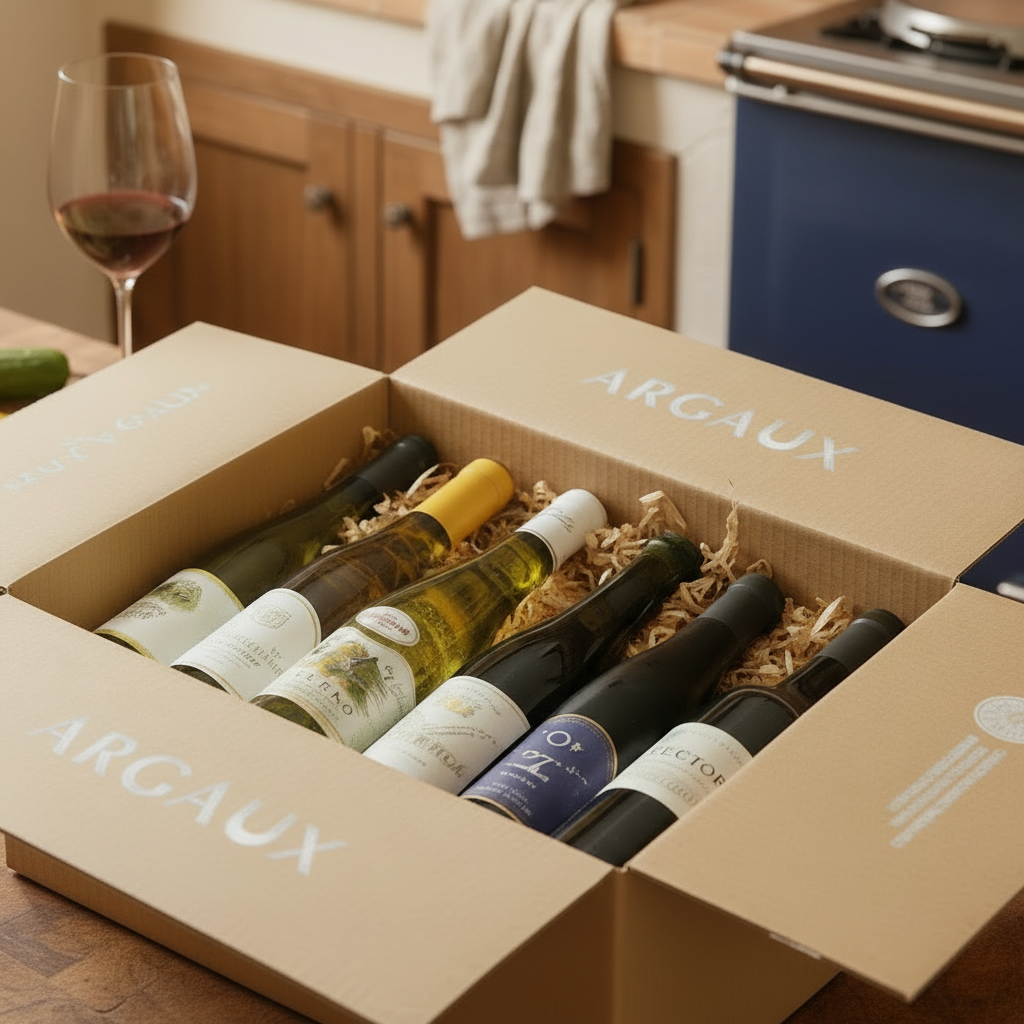
If this is a gift, the subscription has to feel like one. That means a real gift option (not a forced auto-renewal the recipient has to cancel), a card or note, flexible start dates, and something that arrives looking considered, not like a case of wine left on a porch.
Look for: true gift purchasing, no surprise renewal, a personal note, and packaging that respects the moment.
6. Where it ships
The unglamorous dealbreaker. Wine shipping laws are state by state, and plenty of clubs can’t ship everywhere. Nothing deflates a gift like “sorry, we don’t deliver to your state.” Check this before you fall in love with a club.
Look for: a clear list of states served, and confirmation your recipient’s address is covered before you buy.
How Club Argaux compares
Here’s the honest part. We’re not the right fit for everyone, and we’ll say so. What we are: a sommelier-led wine hospitality company in Costa Mesa, your friends in wine, who curate across many producers, run a physical tasting room, and treat a subscription as the start of a relationship, not a transaction.
We’re not a dedicated “natural wine only” box. If you want a subscription that ships exclusively strict-natural bottles every month, a specialist club is built for that and we’d point you there. What we do is curate real low-intervention wine (organic, biodynamic, sustainable, family-estate, small-production) as part of a personally chosen selection, with a somm who can tell you exactly what’s in the glass.
Here’s how the category’s attributes line up. (We’re comparing on what to look for, not on invented specifics about any other club, so check each one against the checklist yourself.)
| What to look for | Club Argaux | Algorithm-matched club | Natural-only specialist box |
|---|---|---|---|
| Who picks the wine | A sommelier who tasted it | A quiz / algorithm | A curator (natural-focused) |
| Low-intervention options | Organic, biodynamic, sustainable, small-production wines curated in | Varies; often limited | Core focus |
| Curation breadth | Many producers, many regions | Matched to a profile | Natural producers |
| Self-select bottles | Yes, on the 6-Bottle Quarterly | Rarely | Varies |
| Flexibility | No auto-ship on membership tiers; cancel anytime | Usually auto-ship | Varies |
| Human you can ask | Yes — concierge + tasting room | No | Sometimes |
| Beyond the bottle | Member events, classes, preferred pricing | None | None |
| Gifting | Gift-ready, no surprise renewal | Often auto-renews | Varies |
The Club Argaux tiers, plainly
No jargon, no fine print games:
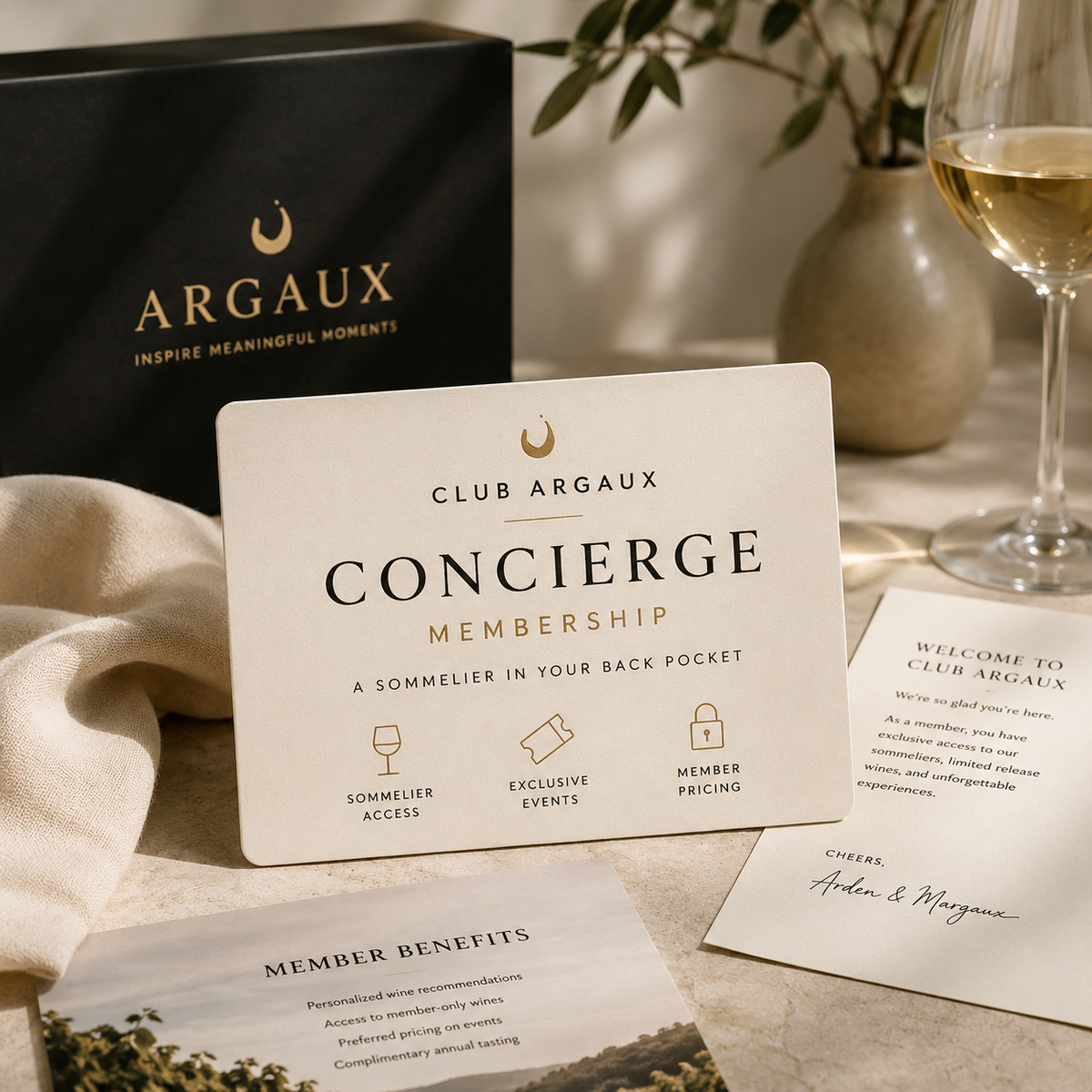
- Private Client — Monthly, $20/mo. Member wines, member events, concierge access, preferred event pricing. No auto-ship — you’re never surprised by a box. Cancel anytime.
- Private Client — Annual, $200/yr. Same access, billed once a year.
- 6-Bottle Quarterly, $294/qtr (our most popular). Four shipments a year, six bottles each, curated by us or self-selected by you. Free shipping and priority allocation on the wines we can’t get much of.
- Corporate — Annual, $950/yr. Built for teams: about 15% savings, up to four private tastings a year, and custom gift branding.
Everything is no-commitment, cancel-anytime. And because we’re a real place with a real team, “a person you could ask” isn’t a checkbox. It’s Arden or Margaux or one of the somms who picked the wine.
If your one requirement is strict natural, every bottle, every month, we’re honestly not it. If you want low-intervention wine chosen by people who taste for a living, room to pick your own, and a subscription that comes with actual humans, that’s us.
The gift angle, specifically
Most people reading this are buying for someone else. A few things we’ve learned from doing a lot of this:
- Give the quarterly if you want it to land big. Six bottles, four times a year, is a gift that keeps showing up. The monthly membership is better as a “welcome to the good stuff” for someone local who’ll use the events.
- Let them choose. The self-select option on the quarterly means your gift recipient isn’t stuck with a grape they don’t like. That’s the difference between a thoughtful gift and a nice idea.
- Say why. A note that says “I picked this because you’re the one who got me into orange wine” beats any packaging. We’ll help you write it if you want.
Start with the Club Argaux membership page to pick a tier. Or if you’re still deciding whether natural wine is even their thing, send them down the rabbit hole first with ’Gaux to the World of Natural Wine.
FAQ
What is a natural wine subscription?
A natural wine subscription delivers wine made with minimal intervention (typically organic or biodynamically farmed grapes, native-yeast fermentation, and little to no added sulfites) on a recurring schedule, either chosen for you or self-selected. Because “natural” isn’t legally defined, quality and transparency vary widely between clubs, so it’s worth checking who curates the wine and how much they’ll tell you about it.
Is a wine subscription worth it?
It’s worth it if the curation saves you time and introduces you to wines you wouldn’t have found alone. That’s the real value, more than any per-bottle discount. It’s not worth it if it’s an algorithm-matched box you could replicate at any shop, or if you can’t skip, pause, or cancel when life changes. Look for human curation, flexibility, and clear per-bottle pricing.
What’s the difference between natural, organic, and biodynamic wine?
Organic and biodynamic describe farming — organic is certified and avoids synthetic chemicals; biodynamic follows a stricter holistic system. Natural describes the whole process, from farming through bottling with minimal additives and little to no added sulfites, but it has no legal definition or certification. A wine can be organic without being natural, and vice versa. Our complete guide to organic, natural, and sulfites breaks it down.
Can you gift a wine subscription?
Yes — and it makes a strong gift when done right. Look for a subscription with a true gift option (no auto-renewal the recipient has to cancel), a personal note, flexible start dates, and the ability for them to swap or self-select bottles. Also confirm the club can legally ship to their state before you buy.
Does natural wine have sulfites?
Almost all wine contains some sulfites — they occur naturally during fermentation. Natural wine typically has little to no added sulfites, which is different from “no sulfites at all.” If someone is sensitive, look for low-sulfite or no-added-sulfite labeling specifically, not just the word “natural.”
Do wine subscriptions ship to every state?
No. U.S. wine shipping is regulated state by state, and many clubs can’t deliver everywhere. Always check the club’s list of served states, and confirm the recipient’s address is covered, before purchasing, especially for a gift.
How much does a natural wine subscription cost?
It ranges widely by curation and quality. Because natural wine involves smaller producers and more hand-work, expect to pay a little more per bottle than for conventional wine. For reference, Club Argaux ranges from a $20/month membership to a $294/quarter six-bottle shipment. The honest way to compare any club is total price divided by bottles, plus shipping.
Ready to pick a tier or send one as a gift? Start at the Club Argaux membership page. New to the category? Read our intro to natural wine first — no pressure, just good bottles.