



Article: Where to Buy Natural Wine Online: Why Curation Beats Selection

Where to Buy Natural Wine Online: Why Curation Beats Selection
Shopping for natural wine online sounds like it should be easy. You open a browser, type something in, and land on a page with 1,400 bottles and a filter sidebar. Natural. Organic. Biodynamic. Pét-nat. Low-sulfite. The categories keep multiplying, and none of them tell you whether the wine is any good.
That is the real problem. Natural wine has no legal definition, no governing body, no label that guarantees anything about what's inside. You can spend $38 on a bottle that tastes like someone left apple cider in a barn too long — and technically, that producer did nothing wrong. The internet hasn't made this easier; it's just made it louder.
The answer isn't a bigger wine shop. It's a better one — the place that already did the thinking for you, so you don't need to be an expert to drink like one.
What Makes a Wine “Natural”?
Natural wine isn't a certified category like USDA organic. It's a philosophy — a set of practices a grower and winemaker choose to follow, with no governing body enforcing the rules.
Most share a few things. The grapes are farmed organically or biodynamically — no synthetic pesticides or fertilizers in the vineyard. Fermentation runs on wild, native yeasts rather than commercial strains bred for predictability. Additions are minimal: no added sugars, no flavor adjustments, no animal-derived fining agents. Sulfites, the preservative in nearly every conventional wine, are used sparingly or not at all.
The result is wine that tastes more alive, more variable, more tied to the place and year it came from. The best organic wines make a good companion read — the organic and natural worlds overlap heavily, though they aren't identical.
Why Buying Natural Wine Online Is Different
In a good wine shop, you can describe what you want, get a recommendation, hear why, and often taste before you commit — which, for a category as variable as natural wine, matters a lot.
Online, you get a photo, a description, and hope.
“Natural” on a label can mean almost anything. A producer who farms organically but uses a heavy hand in the cellar might still market the wine as natural — and a product description written to sell a bottle won't tell you that.
This is why buying natural wine online without expert guidance is a gamble. The volume of options isn't the problem — it's the lack of accountability behind them. Anyone can list 500 natural wines; very few can tell you why each one deserves to be there.
What to Look for in an Online Natural Wine Shop
Before you hand over your credit card, here's what separates a good natural wine shop from a marketplace with a filter for “low intervention”:
Sommelier or expert curation. Someone with real wine knowledge should be making the buying decisions — not an algorithm. Look for shops that describe their selection in terms of producer relationships and vineyard visits, not inventory turns.
Producer transparency. You should be able to find out who made the wine, where, and roughly how. “A small family farm in France” isn't enough — the best shops link their wines back to real people and places.
Shipping that actually reaches you. US wine shipping laws vary by state — some retailers are licensed in all 50, others are regional. Check whether the shop ships to you before you fall for a bottle.
Education and context. A good shop helps you understand what you're drinking: tasting notes beyond generic adjectives, food pairings that fit the bottles they carry, and content that builds knowledge rather than overwhelming you.
A return or replace policy. Flawed bottles happen — more often with low-intervention wine. Find out what the shop does when one arrives corked or off.
Why Argaux Is Different
Most online natural wine retailers are built around selection — the biggest catalog wins. Argaux is built around curation. Those are very different things, and the difference is the whole point.
Every bottle in the Argaux shop has been tasted and approved by a sommelier before it's offered to you. That's not marketing language — it means someone with professional training made a judgment call: this wine is good, interesting, and belongs here. The ones that don't make the cut, and there are plenty, never show up on the site.
Argaux also works with small producers who lack the marketing budgets to show up in every top-10 listicle — growers making wine the way the category was built on: small batches, hands-on farming, minimal intervention. The bottles are often hard to find elsewhere, which is exactly the point.
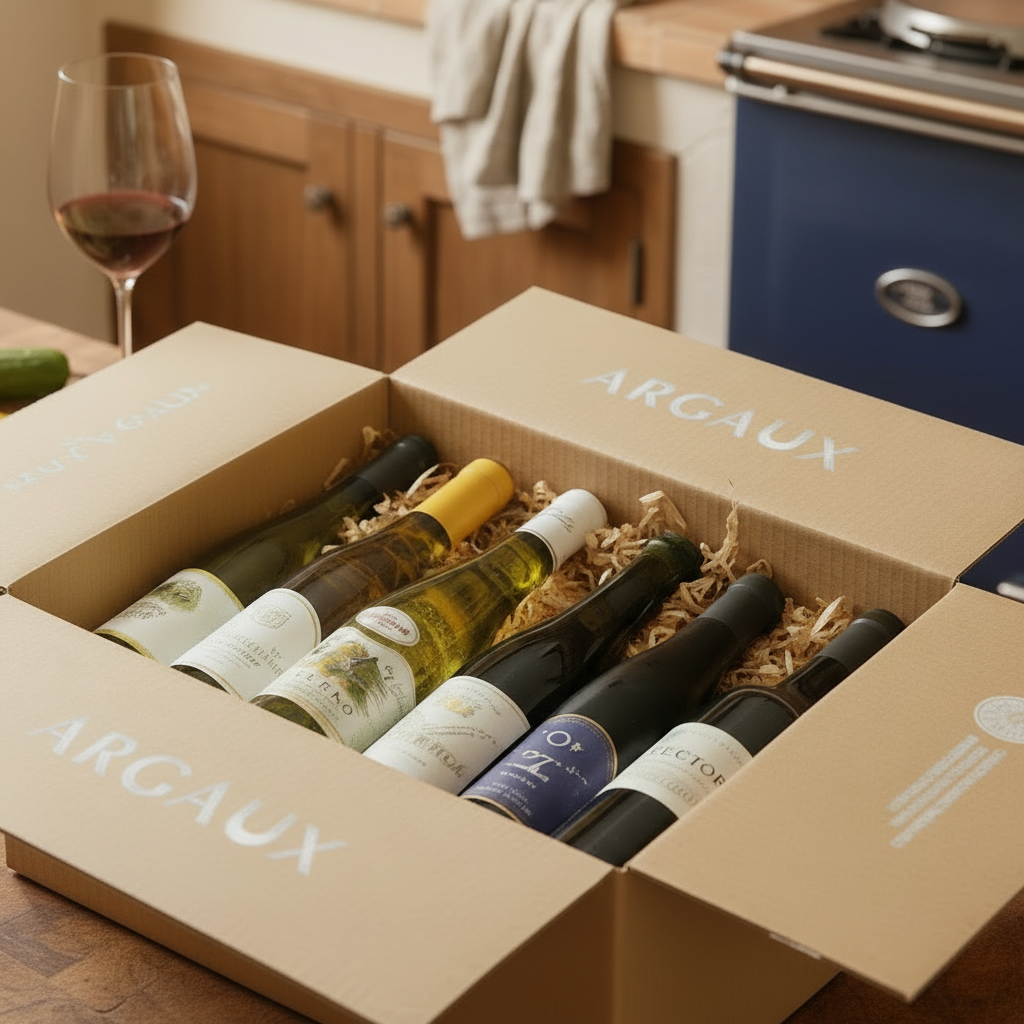
Beyond the shop, Argaux gives you ways to taste before you commit. In-person tasting events let you try wines before buying a case. The blind wine tasting kit sharpens your palate at home without the pressure of knowing what you're drinking. And Club Argaux delivers a sommelier-curated selection monthly — ideal if you want to explore natural wine without deciding bottle by bottle.
It's a different model than filling a cart and hoping for the best — closer to having a friend who happens to be a sommelier.
What Natural Wine Styles Should You Start With?
If you're new to natural wine, three styles are worth starting with — approachable, interesting, and forgiving while you figure out what you like.
Pétillant naturel (pét-nat). Lightly sparkling wines bottled before fermentation finishes, which traps the bubbles inside. They're usually lower in alcohol, high in fizz, and genuinely fun — something between sparkling water and Champagne, with more personality than either. Great for warm weather and snacks.
Orange wine. White wine made with extended skin contact, which gives it an amber color and a grippy, almost red-wine texture. The flavors run toward dried fruit, tea, and beeswax rather than the citrus and florals of a conventional white. If standard white wine has ever bored you, orange wine is worth knowing.
Chillable red. Light, fresh, low-tannin reds served slightly cold — Gamay, Trousseau, Poulsard, grapes from regions built on exactly this: juicy, easy-drinking wine that doesn't take itself too seriously. A good entry point if red wine has ever felt heavy or tannic to you.
FAQ
What is the best natural wine?
There's no single best natural wine — it depends on what you like and what you're drinking it with. A Loire pét-nat hits differently than an orange wine from Georgia or a natural Syrah from the Northern Rhône. The more useful question is what style you're in the mood for. From there, Argaux curates options in each direction, with enough context to actually choose.
Does Whole Foods carry natural wine?
Some Whole Foods locations carry wines labeled organic or biodynamic, but the selection is limited and largely uncurated — whatever made it onto a regional buyer's list, with no sommelier judgment behind it and no transparency about what “natural” means for each producer. A shop that specializes in natural wine will serve you better.
How do I find natural wine near me?
Natural-focused wine bars often sell bottles to go, and independent shops in most cities have expanded their natural selections. If you're outside a major city or want more range than your local shop carries, a curated online retailer that ships to your state is usually the most reliable path. Check shipping coverage before you order.
Ready to Try It?
Natural wine is worth finding well. The good ones are genuinely alive in a way most wine isn't — specific to a place and a season, made by people who take their work seriously. The bad ones are a reminder of why curation matters.
Start with the Argaux selection of wine gifts if you're looking for a bottle to share — or join Club Argaux for monthly sommelier-curated natural wine delivered to your door. Either way, you won't be guessing.