


 (949) 438-7228


 Call Us
Meet the Maker: Grant Coulter of Flâneur Wines
“Every barrel in the cellar is like a spool of thread and at the end of the day you have to weave a beautiful rug out of it. Now, if they are all the same color that may be bland but they will see the craftsmanship of how beautiful you wove it. But if you could also create a myriad of different colors within your cellar and then move that in through your beautiful rug, then you have color and craftsmanship. And then comes the artistry.”
The Willamette Valley is a vast wine region blanketed in gorgeous rolling green hills. Oregon has a variable climate; some years can be wet and cold, others can be dry and warm. Flâneur wants their grapes to speak for themselves and reflect Oregon’s extraordinary terroir. Flâneur practices organic and sustainable farming to grow delicious grapes that celebrate the environment. Their vineyards are dry-farmed, meaning no irrigation, so the grapes have to work extra hard “building character and strength” in the vines for a more intense flavor and aroma profile.
Their vineyard management team, led by Jaime Cantu, spends the extra hours every day out on the grounds to ensure proper tending to each vine. For harvest, they pick each grape cluster by hand and ensure each grape bunch is carefully assessed during the sorting and fermentation process. The final product, for any Flâneur wine type, is a collection of vintages that will tell a story and give consumers a unique experience with sip.
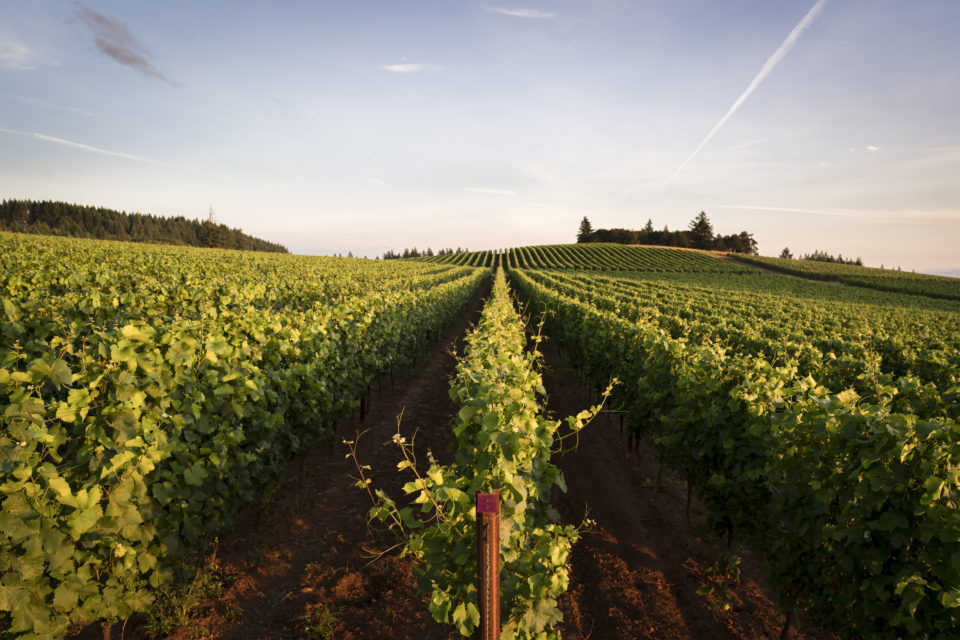
Winemaker, Grant Coulter, was previously with Beaux Frères winery for 8 years, collecting many achievements under his belt. He fell in love with Flâneur as he saw an opportunity to express his artistic vision and take risks with wine without the utilization of chemicals or manipulation.
“I want to make wine that transcends generations. Wines that I want to drink and that come from my own mind and heart.”
Fun Facts:
- The term flâneur originated in Paris in the 19th century and is defined as a wanderer, world explorer, and connoisseur of life. A flâneur reflects the idea that the mind functions best at a slow pace, yet continuously moving forward, and that much like a good wine, life should be enjoyed. The team at Flâneur Wines considers themselves to be flâneurs at their core and “passionate artisans joined together by the desire to slow down, observe the world, and create delicious wine.” – Flâneur Wines.
- Organic farming – “Farming organically is what makes me feel right about what I’m doing.”
- Marty’s wife is a cartoonist in DC, and draws all the Flâneur wine labels
- Grant is a master of wine analogies (see quote above)!
Lightening Round:
- What is your greatest extravagance? Wine.
- What is the quality you like most in a partner? Honesty.
- What word or phrase do you overuse? Transcendent.
- When and where are you happiest? Home with my family.
- If you could have one superpower, what would it be? The ability to move things with my mind.
- What life achievement are you the most proud of? Not fucking my children up too bad. They are good humans.
- What winemakers do you most admire? Sean Thackrey and Josh Bergström.
- Which historical figure would you want to share a bottle with? Carl Sagan.
- What motto do you live by? Trying to be your best self and constantly trying to improve who you are.
- Best wine you’ve ever tasted? 1989 Chateau Rayas.
- What is your spirit animal? Octopus.
- How do you relax/decompress? Building things; cooking over fire.
- What do you drink when you’re not drinking wine? Whiskey—Scotch, I like Islay Island Whiskey.
- Soundtrack to your life: Summertime by DJ Jazzy Jeff & The Fresh Prince.
- Favorite wine you shop for on Argaux: I love the PYCM wines Argaux carries!
An overview of the Flâneur lineup Argaux represents…
“The best things in life aren’t created in an instant—they take time. That’s how we built our winery, and how we make our wines.”
- Flâneur Willamette Valley Chardonnay: This wine opens up with beautiful aromas of peach, apple and white florals. It is medium-bodied and displays rich flavors of lemon, honey, marcona almond and baking spice. It has a wonderful depth of texture, balanced acidity and a lingering finish.
- Flâneur Willamette Valley Pinot Noir: Light, fresh, and boasting a balance of tart red fruit and earthy characteristics, this Pinot Noir is an ideal match for many meals…or simply enjoyable on its own. Earthy red in color, with cranberry, cherry, and ripe red apple aromas. On the palate you get a touch of vanilla, baking spice, and moist earthy soil. This Pinot has a clean, long and dry finish.
- Flâneur La Belle Promenade Pinot Meunier: This light-bodied wine has a stunning nose characterized by warm baking spices (i.e. cinnamon and nutmeg), crushed raspberry, blueberry and lavender. The palate is just as delicious as it sounds with bright, fresh and perfumed fruit and fine, delicate tannins.
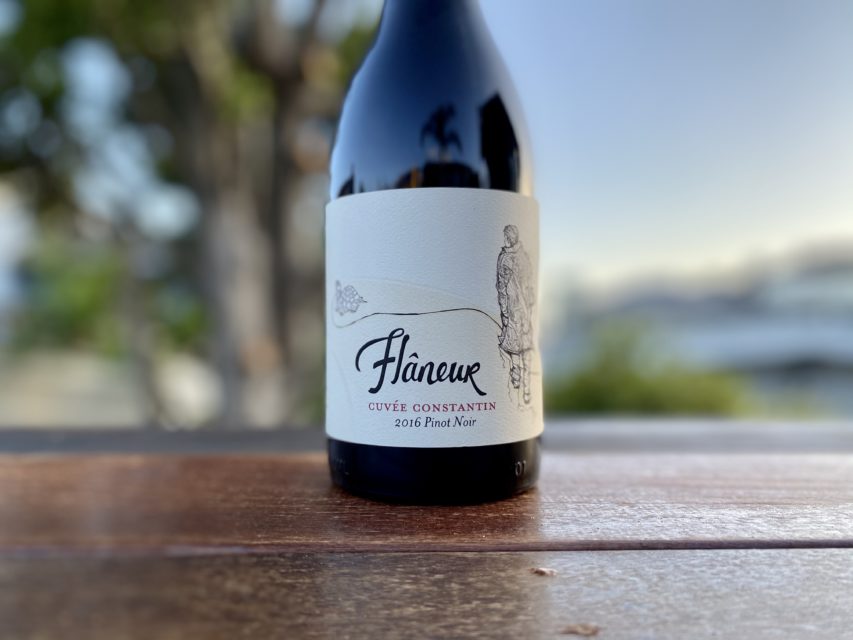
- Flâneur Cuvee Constantin Pinot Noir: Both fruit forward and savory, this concentrated wine has elegant tannins, firm acidity, and a supple texture that frames the dark berry, plum, earth, and spice character. Pair with Balsamic Reduction Brussel Sprouts, Salmon with Pickled Ginger, Blackberry Galette.
If you like the Flâneur wines, you should also try red burgundy. Domaine Rougeot Les Vaux is a great entry level yet serious red burgundy wine that is very similar in style to Pinot Noir from the Willamette Valley. My favorite time of year to drink these wines is around Thanksgiving. They compliment fall fare foods so nicely, and especially that butterball.
Flâneur is really making waves in the Carlton area in Oregon. Winery owner, Marty Doersclag, took apart a deserted old grain elevator and rebuilt it including many original parts and made it into a tasting room.
“The grain elevator has been an integral part of the Carlton and Willamette Valley community for more than 80-125 years. For a decade, the space sat unused in the center of town. Recognizing its potential Flâneur Wines purchased the building in 2013 to be a new wine-centric hospitality center that retains the beauty of the past. The project, done by hand, represents all that Flâneur Wines tries to create: an unforgettable experience that slowly unfolds like every great bottle of wine.”
The building itself is breathtaking, truly a piece of art and stands directly in the center of town. They have started a supper club, and also offer food pairings at the Grain Elevator further enhancing the guest’s tasting experience. Want to learn more? See Flâneur’s Site to find out more about their local projects and what events they have coming up.
How I Argaux: Wedding Planning with Co-Founder Margaux
We interviewed co-founder Margaux, who recently got married, about the wedding planning process and what wines she chose to pour during cocktail hour and throughout dinner. Read the full interview here below…
Can you tell us a bit about the wedding weekend? Where did it take place? Our wedding took place in Ojai, California. Ojai is an old, historic ranch town 80 north of LA. and it’s a place David and I often escape to.
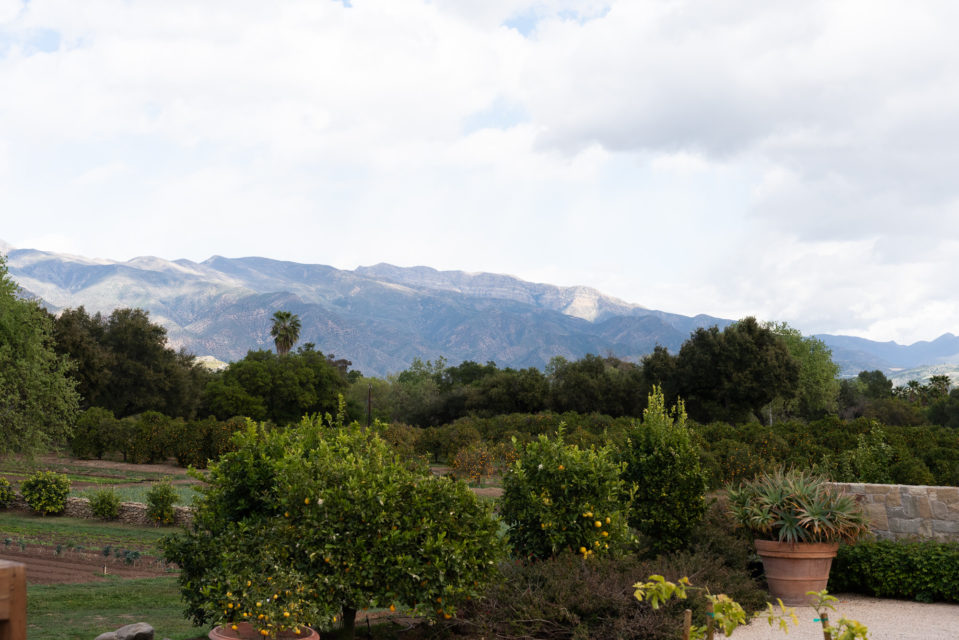
Why did you choose that location? What does it mean to you? Ojai is our special place. My husband went to high school in Ojai and lived there for a few years after college. It is one of his favorite places in the world and when we started dating it became our weekend getaway spot. It’s beautiful, the pace of life is slow, and there is this artsy/creative subculture that has emerged from this old ag town that makes it charming and interesting. When we decided we wanted to get married in Ojai there were two main things that were important to us. We wanted it to feel authentically Ojai and we needed to be able to bring in our own wine of course. Lucky for us, we have some very generous friends who offered up their beautiful home. Their house sits up on a little hill surrounded by a vineyard, orange orchard and vegetable/flower farm. It is a magical place and felt like the perfect setting for our intimate evenings.
When was your first visit there with David? The first time David took me to Ojai was for my birthday in 2019. We spent two nights there and then headed to Santa Barbara for Arden and Tommy’s engagement! David was the stealthy photographer and I was the sobbing best friend in the corner. It all came full circle having Arden as our officiant (she KILLED it by the way).
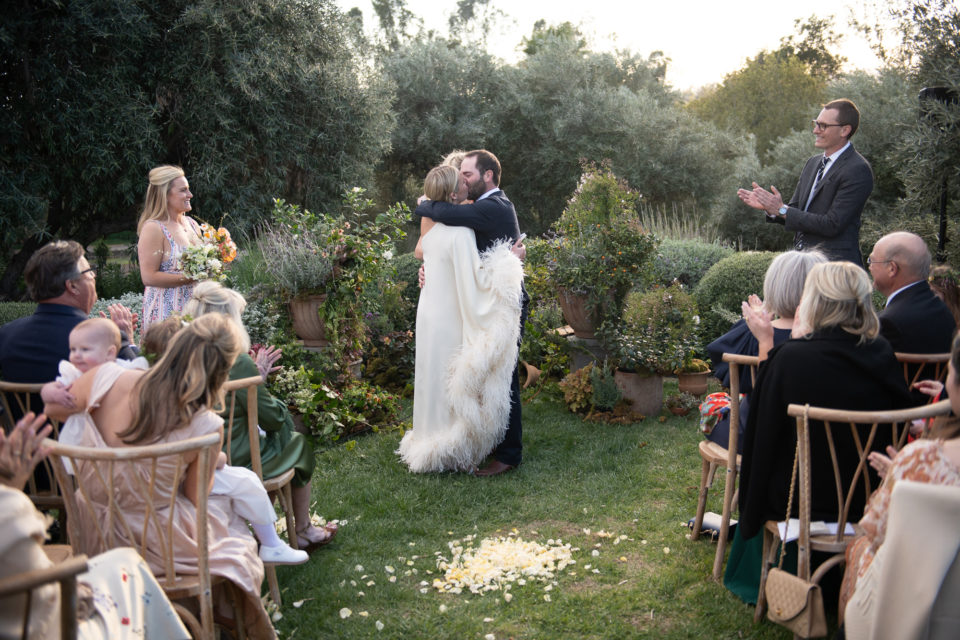
Is there a favorite restaurant in town? Were you able to incorporate this into your wedding weekend? The Ojai food scene has had a major facelift. Ojai Rotie, The Dutchess and Rory’s Place are all new spots that have really raised the bar. However, one of our favorite takeout spots is La Fuente. It’s this little Mexican spot in town and we love their burritos. For our wedding we had them drop off 100 bean and cheese burritos at 10pm. The perfect late-night snack!
How did you go about choosing wines for the rehearsal dinner versus the wedding day? Our rehearsal dinner was at our favorite Italian restaurant in town, Nocciolo. David and I love Italian wines so it was easy for us to select some of our favorites for the evening. Our menu had a few different options for guests to choose from so I paired one white with the seafood and veggie options and two reds as the meal moved from truffle and duck to wild boar and NY steak.
2018 Fiano di Avellino Rocca del Principe
2018 Ottomani Chianti Classico DOCG
2016 Eraldo Borgogno Barolo
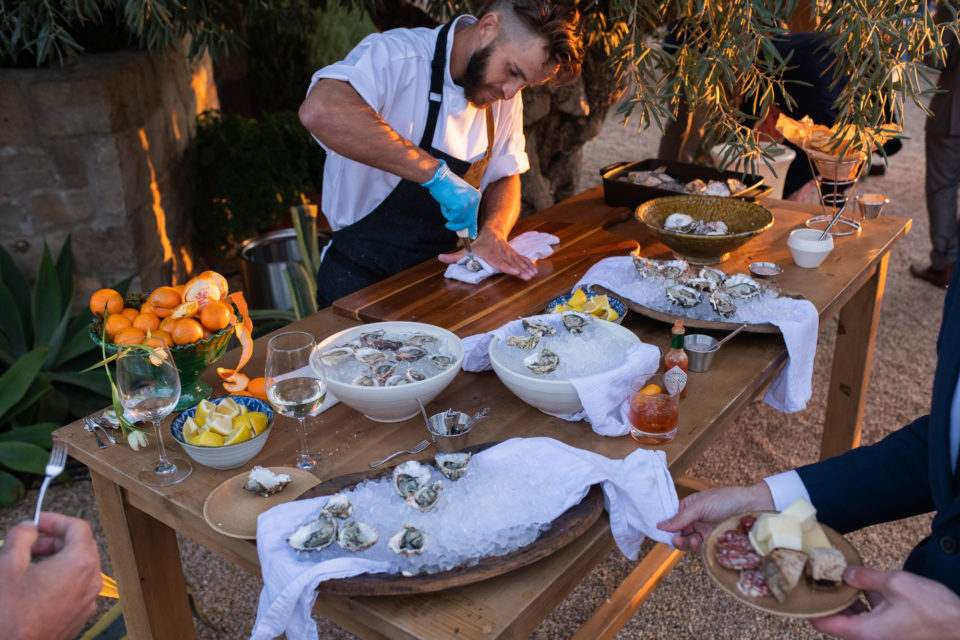
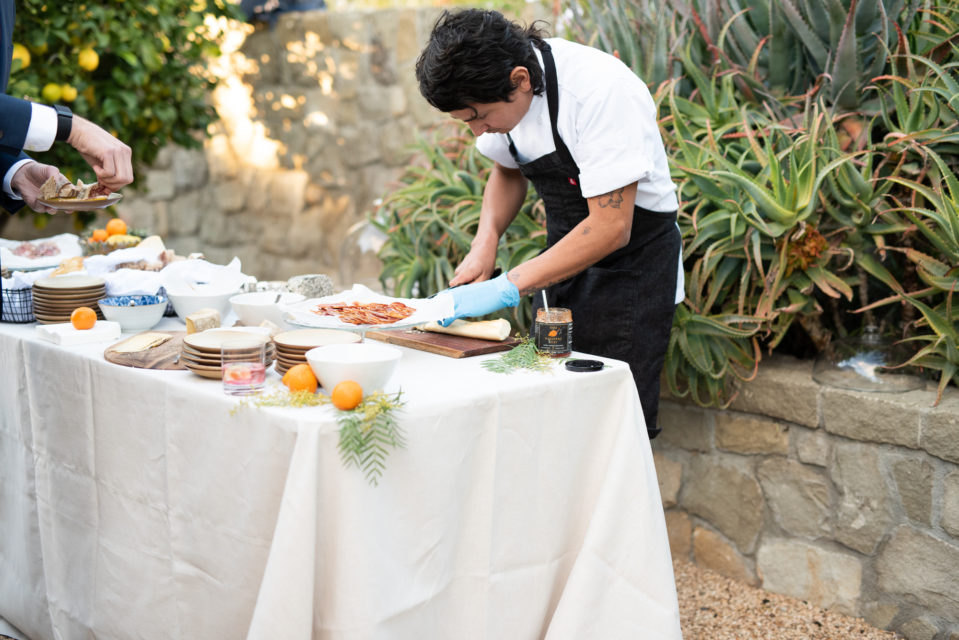
Let’s talk about the wedding menu – What was the highlight? How did you decide what you wanted the guests to eat? How did you choose what wines you wanted to pour? What did you end up choosing? What was the wedding wine line-up? I had a lot of fun when it came to creating the wedding menu and choosing the wines. David really wanted to serve burgers (which I loved) so I had fun working with chef Jimmy trying to make the menu of burgers and fries feel elevated and sophisticated. We did that by starting the evening with oysters and 2019 Domaine De Oliveira Lecestre Petit Chablis and magnums of Piro Pinot Noir. For dinner I decided to highlight the simplicity of the menu and give everything a “moment” if you will… including the french fries.
Course 1
OJAI CITRUS SALAD ojai pixie tangerines, wild arugula, shaved fennel, mint, parsley pickled fresno chili & ojai olive oil
Wine Pairing: 2020 Edaphos Alder Springs Petite Arvine
Course 2
FRENCH FRIES classic & sweet potato fries with ketchup & chipotle aioli
Wine Pairing: 2019 Domaine Rougeot ‘Clos des 6 Ouvrées’ Bourgogne Blanc
Course 3
DOUBLE SMASHBURGERS ground sirloin burgers with 18 mo. fiscalini raw white cheddar iceberg lettuce & secret sauce on toasted brioche buns
FAMILY STYLE CONDIMENTS sweet & spicy pickles, warm caramelized sweet onion & bacon jam sport peppers & pickled red onions
Wine Pairing: 2017 Storm Slide Hill Syrah
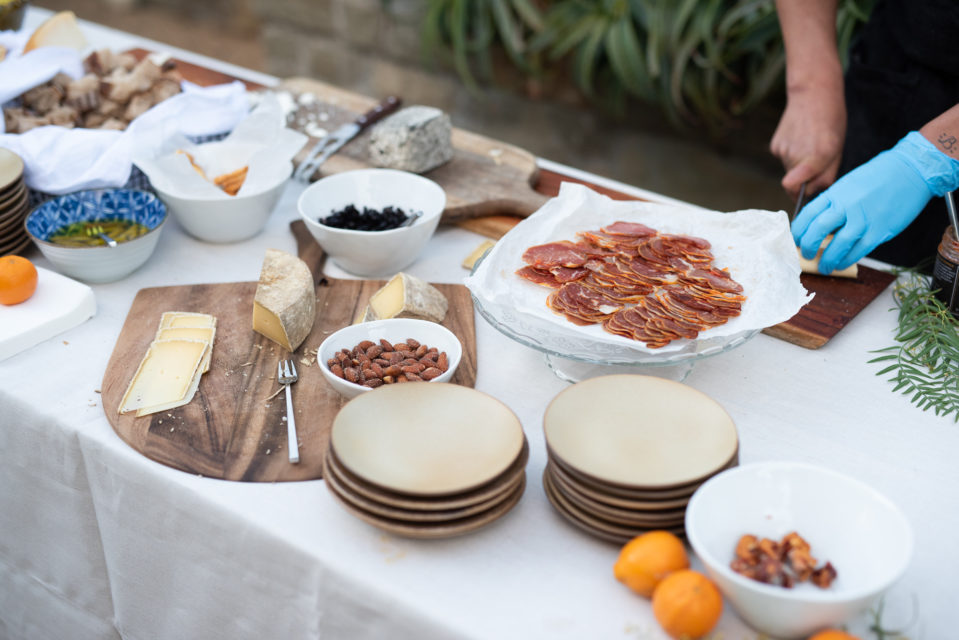
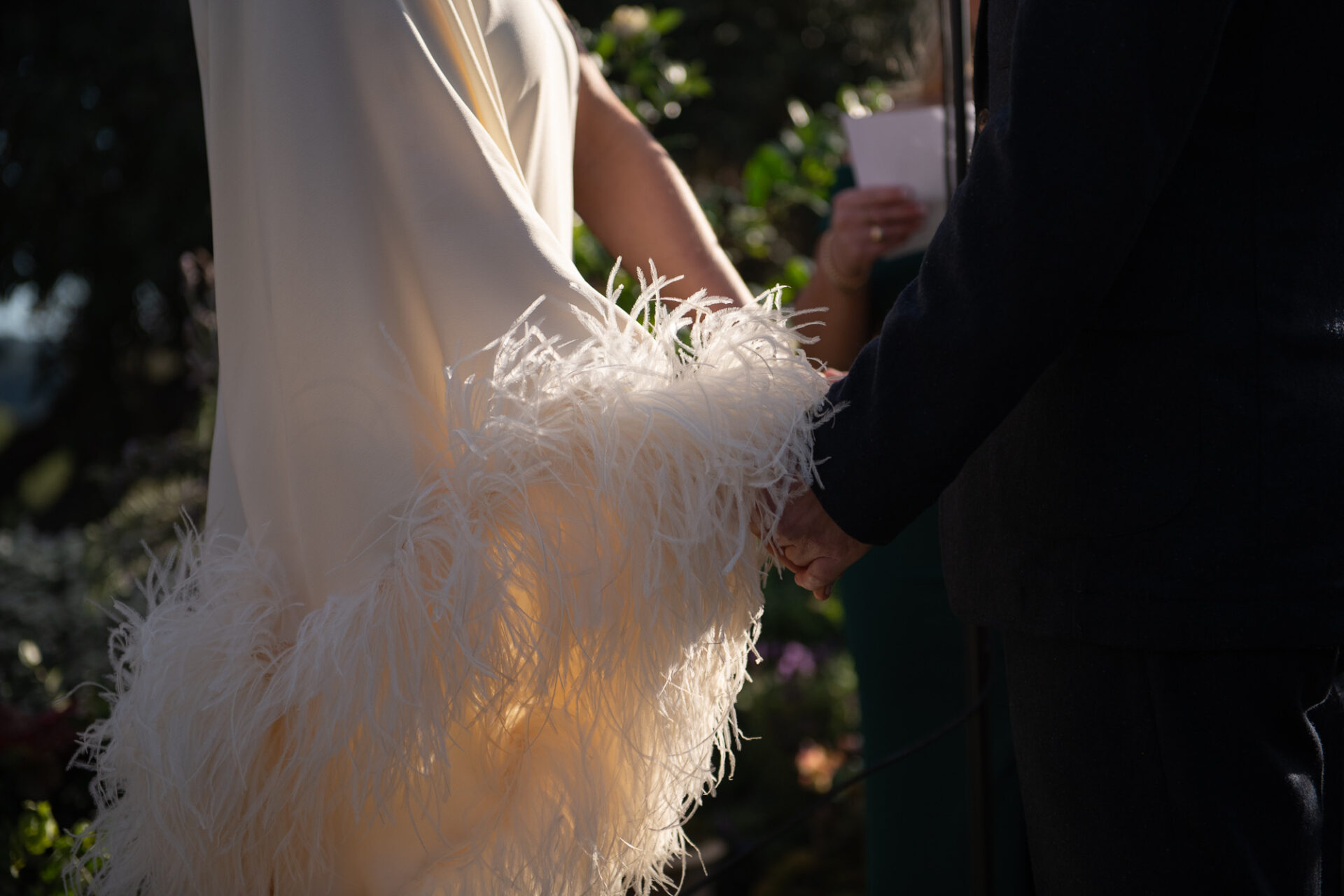
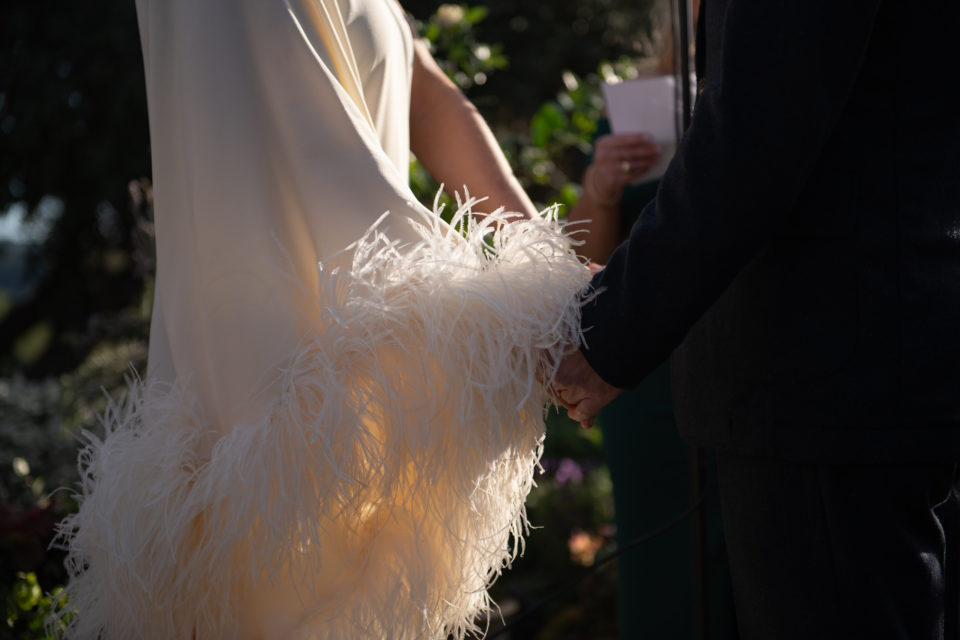
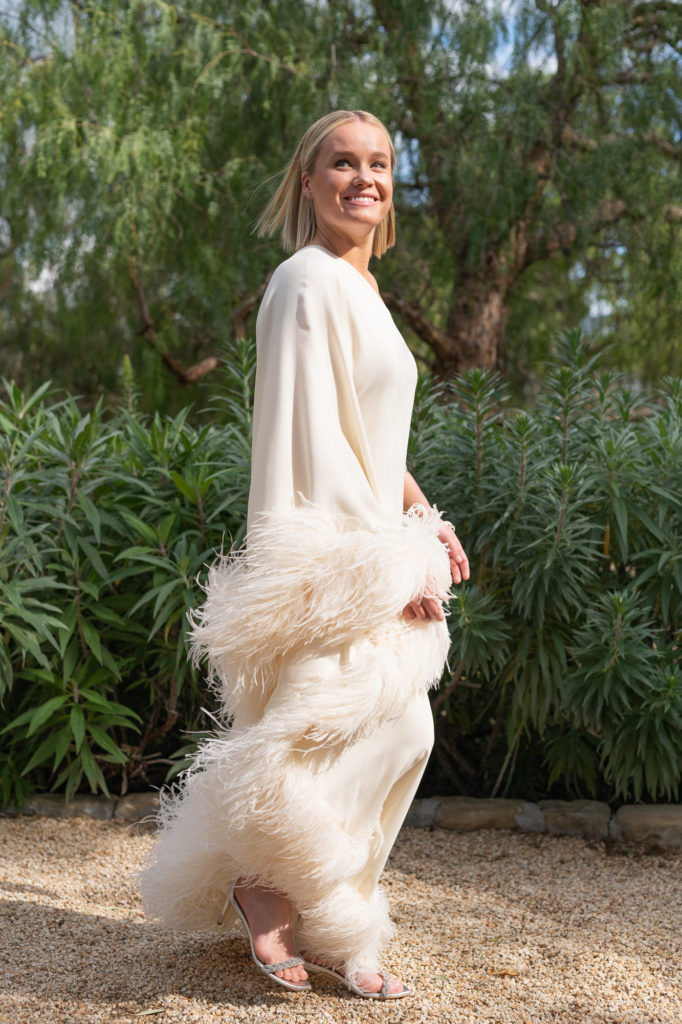
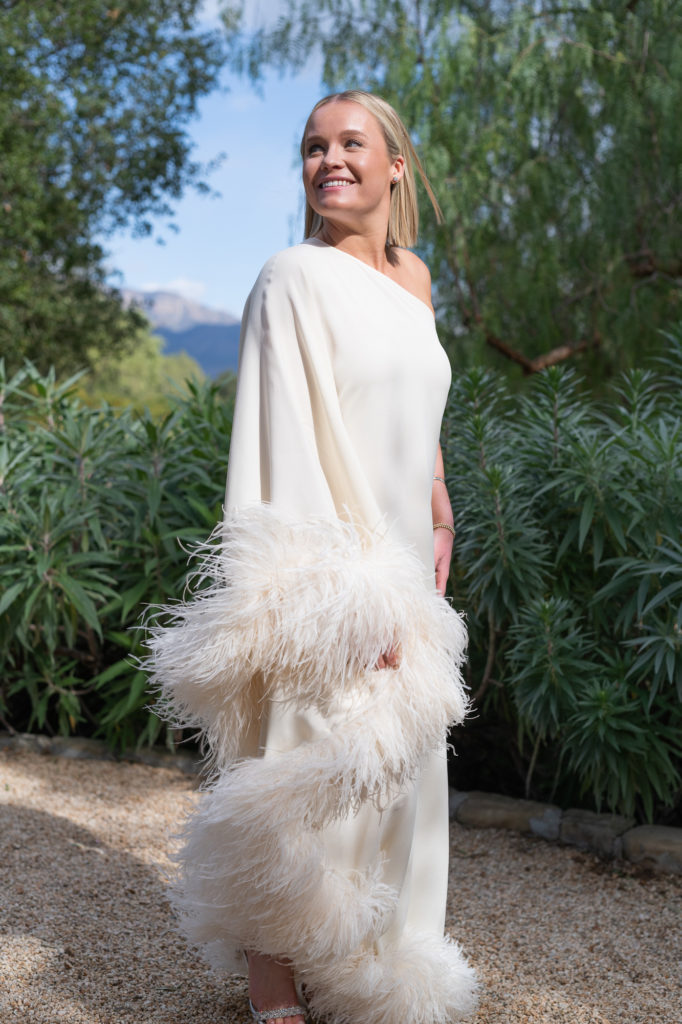
Let’s talk about wedding outfits! Was everything vintage? Almost! My rehearsal dinner look and my outfit change for the wedding were both vintage pieces. My wedding dress had a vintage glam look to it but was a new, fun evening piece by Taller Marmo.
What were you most excited about waking up on your wedding day? To get married to the love of my life of course!!
Did you sip on anything specific while you were getting ready? 2018 Domaine Rougeot Meursault-Charmes Premier Cru! The wine we were drinking when David proposed.
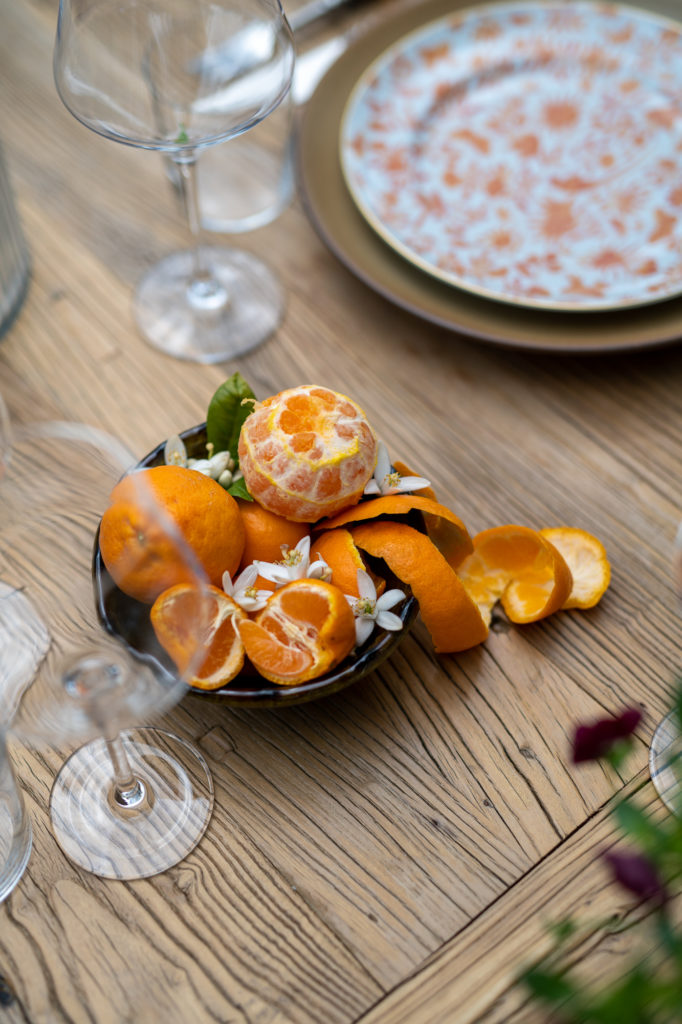
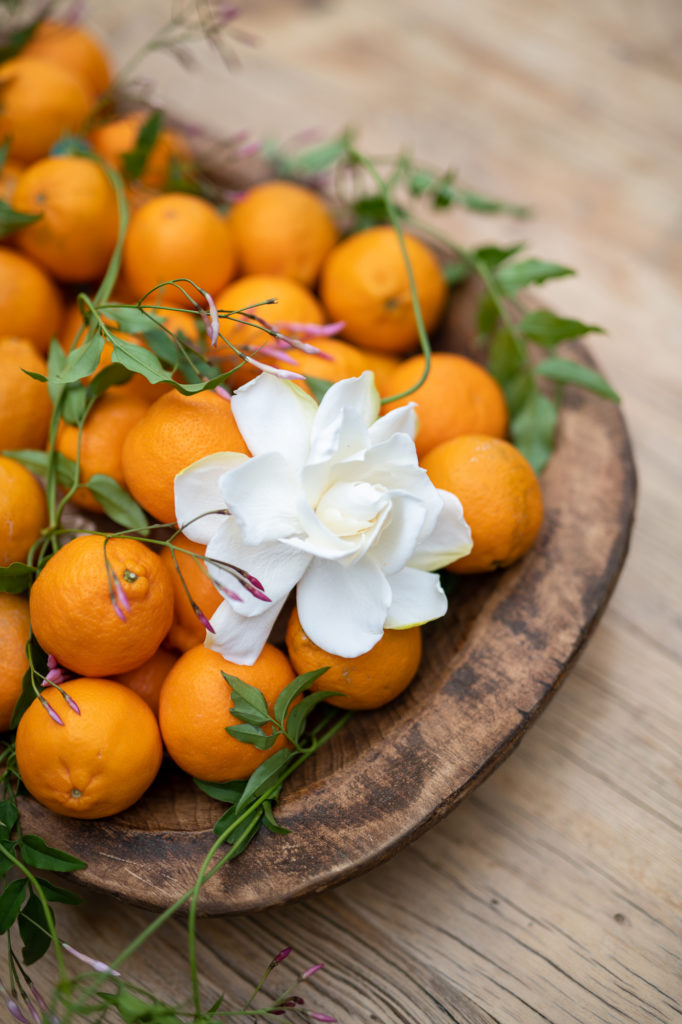
Tablescape. Tell us about your vision for the tables. From the flowers to the orange peels and the place settings… Like I mentioned above, we really wanted the evening to feel authentic to Ojai. I didn’t want things to feel out of place so I was really inspired by the property itself and wanted to bring those elements to the tables. That meant pixie oranges, fresh herbs and wildflowers. My florist, Nicole Chapman did an incredible job. She took my vision of Ralph Lauren meets Ojai to the next level.
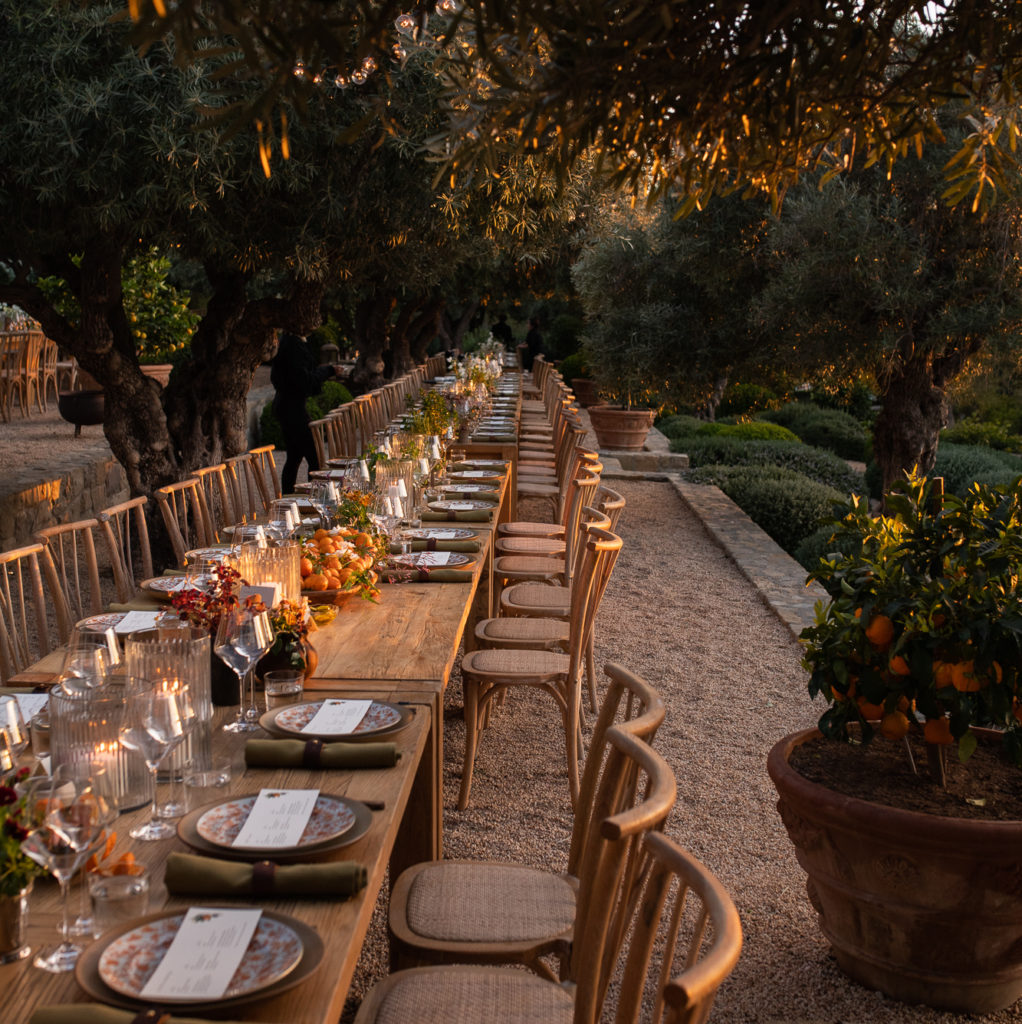
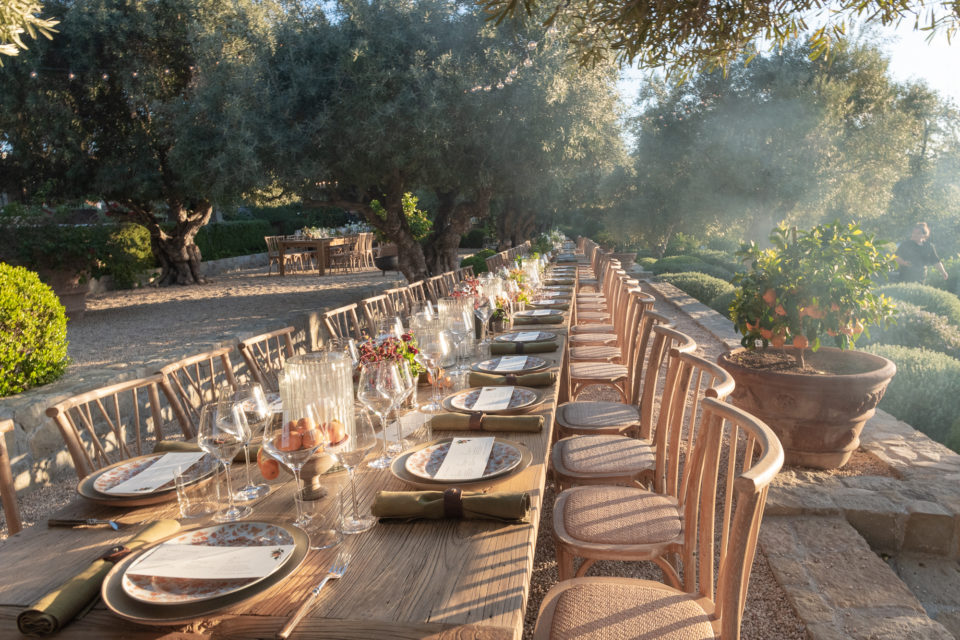
How do you decide how much wine you need for a wedding? I went with almost a bottle a person. I knew that was overkill but I couldn’t risk us running out! I usually recommend estimating two glasses per (drinking) person.
Did you have his/her cocktails? We had one specialty cocktail. It’s called the Orange Grove! It’s our favorite gin cocktail from the Raymond Restaurant in Pasadena.
How has it been post wedding day? How is married life? It is amazing! I love being done with the stress of planning and we got gifted a “year of firsts” which reminds you to continue celebrating all the little milestones of your first year of marriage. It has been super fun, a sweet little surprise to continue celebrating your love.
-

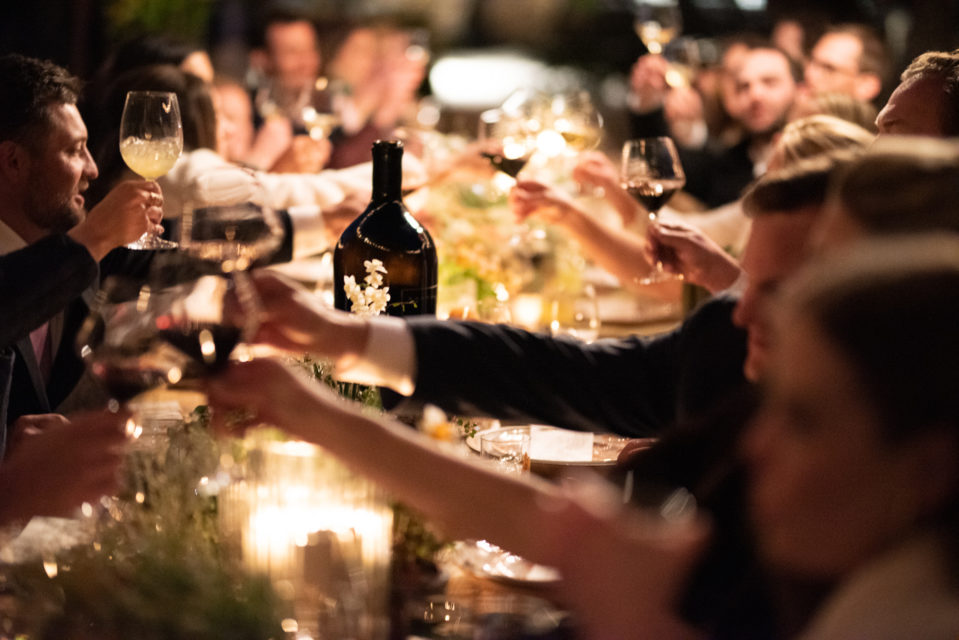
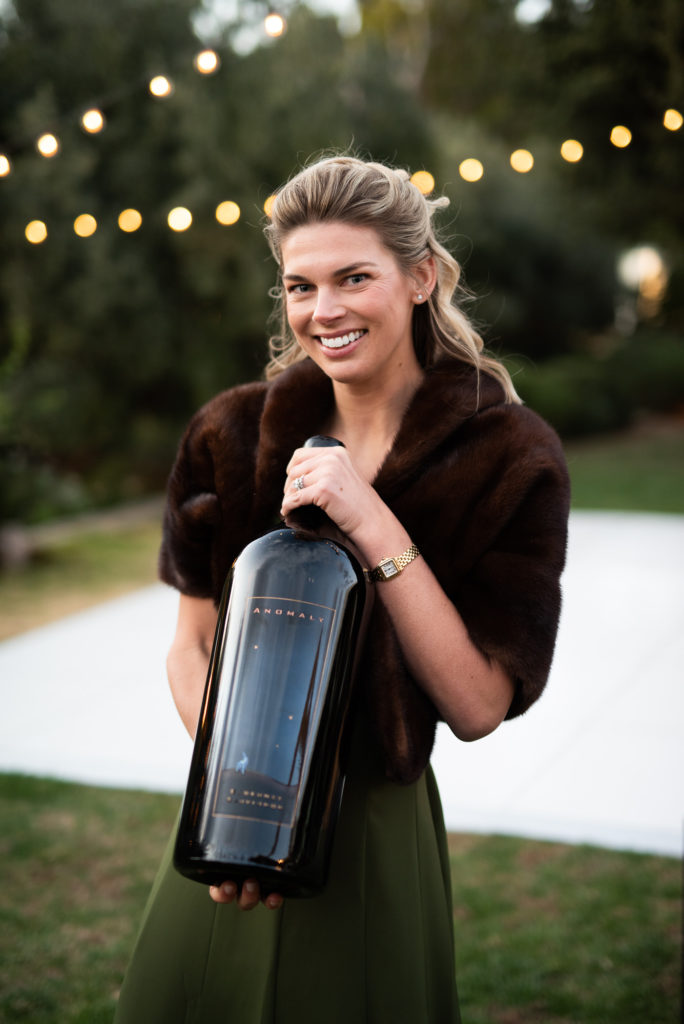
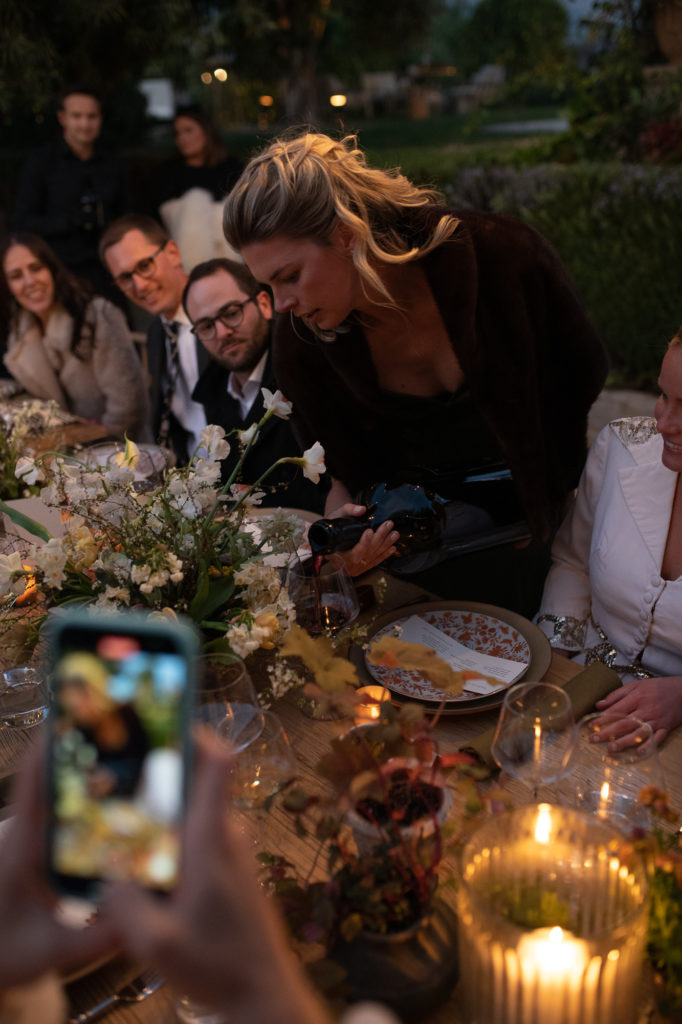
- Co-founder Arden surprising Margaux + David with a 6L of 2012 Anomaly Vineyards Cabernet.

Lastly, any wedding planning advice for those getting engaged? Decide what your priorities are before you start planning, be partners in stress, and enjoy the bliss of being engaged! It’s such a fun time.
Having been engaged, and now being married – What have been some favorite gifts you’ve received? Our Year of Firsts: Engagement Edition Gift Set and our Chez Panisse water glasses 🙂 David and I went there on one of our first dates and he bought two of the glasses on the way out. Now we have a full set!
Vendor List
Planning & Design: Nina Moore
Photography: Tyler William Parker
Florals: Nicole Chapman Design
Chef: Stafford Prime
Wine: Argaux 🙂
Stationary: Fancy Cat Studio
Rentals: Theoni Collection, Bella Vista Designs, Found Rental Co.
Club Argaux Cancellation Policy
CANCELLATION POLICY Tier 1: I understand that I may cancel my membership at any time. Tier 2: I understand that if I cancel my membership it has to be cancelled prior to the next billing cycle. There are no substitutions allowed for automatic wine shipment selections. Wine club benefits are not transferable. Tier 1 will …
Club Argaux FAQ’s
1. Are club shipments customizable? There are no substitutions allowed for automatic wine shipments. However, as your friends in wine we’ve got your back. Our team of sommeliers are selecting our top wines every season to offer to our members only. If you would like to add additional wines to your next shipment, please reach …
Hosting the Ultimate Master’s Golf Party: Ideas and Tips for a Hole-in-One Celebration
There’s something about watching golf. For me, it’s reminiscent of Sundays with my Dad. I’ve played golf ever since I was little girl, but it wasn’t until I started playing socially with friends and family that I was able to appreciate the sport for what it is. It’s a walk in the park – Time spent in beautiful places practicing your follow through or keeping your head down. The analogies connecting the game of golf with life are endless. We need a bottle of Par Fore The Course to dissect them all! That’s for another time. For now, we’ll talk about #HowIArgaux during golf season and the Master’s Golf Tournament. Host a party, of course. A Master’s Par-Tee.
Introduction: The Master’s Tournament is an iconic event in the world of golf, captivating audiences with its rich history, legendary players, and breathtaking moments. For avid golf enthusiasts, hosting a Master’s Golf Party can be the perfect way to celebrate this prestigious event with friends and fellow fans. Whether you’re a seasoned golfer or just love the atmosphere of the tournament, throwing a Master’s Golf Party can be an exciting and memorable experience. In this post, we’ll explore some creative ideas and essential tips to ensure your Master’s Golf Party is a resounding success.
- Invitations: Start by sending out invitations that capture the essence of the Master’s Tournament. Consider designing invitations resembling golf scorecards or green jackets, complete with event details and RSVP information. You can also add a touch of excitement by encouraging guests to dress in their favorite golf attire or as their favorite golfing legend. Paperless Post has some fun designs and makes it super easy to manage RSVP’s and communication with guests.
- Decorations: Set the stage for your Master’s Golf Party with themed decorations that transport your guests to Augusta National Golf Club. Deck out your space with green and yellow accents reminiscent of the tournament’s iconic colors. Incorporate golf-themed decorations such as flags, golf balls, and clubs to create an authentic golfing atmosphere. Don’t forget to display memorabilia from past tournaments or create a mini replica of Amen Corner for added ambiance. Your outfit can be part of the decor as well! Check out this Etsy page offering custom caddy outfits and swag! Fairway Jockey and Caddie Uniform are a couple other resources for a custom caddy fit.
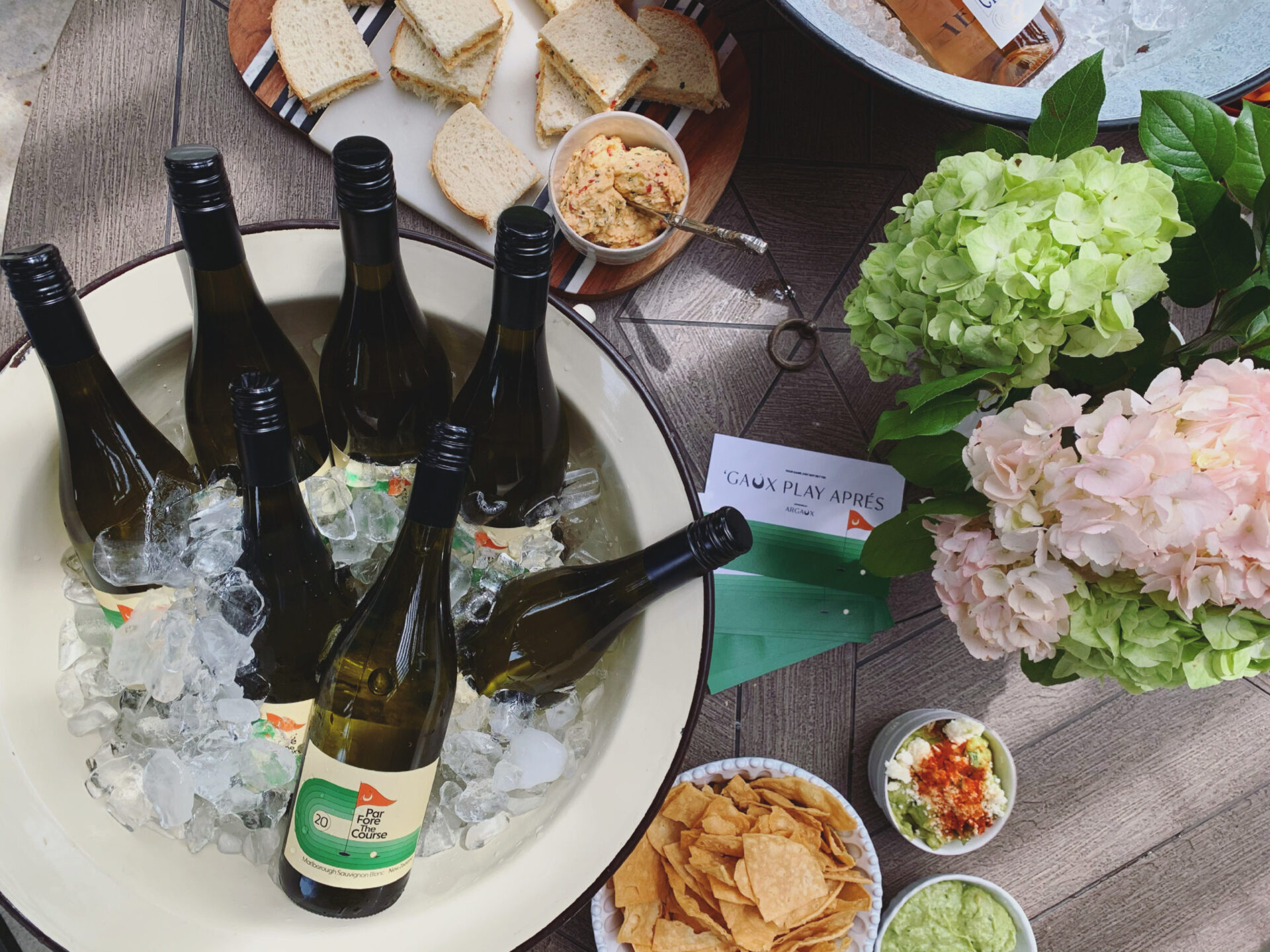
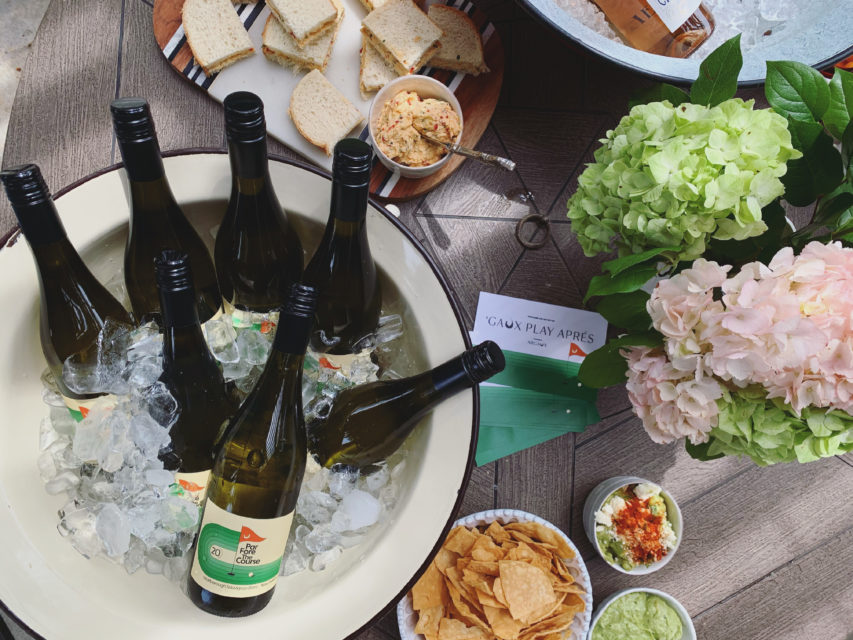
- Food and Drinks: Elevate your Master’s Golf Party experience with a menu inspired by Augusta’s culinary traditions. Serve up classic Southern fare like pimento cheese sandwiches, Augusta peach tea, and Georgia pecan pie. Set up a themed cocktail bar featuring refreshing beverages like the “Masters Mint Julep” or the “Green Jacket Martini” for a touch of sophistication. Have our golf-themed Sauvignon Blanc on ice too! It serves as a delicious beverage offering, while doubling as the perfect decoration on your bar. Additionally, offer golf-themed snacks such as golf ball cake pops or hole-in-one appetizers to delight your guests’ taste buds. You can actually order concession items straight from Augusta National here.
- Entertainment: Keep your guests entertained throughout the party with engaging activities and games. Set up a putting green or mini-golf course in your backyard for friendly competitions. Create a Master’s trivia game to test your guests’ knowledge of the tournament’s history and iconic moments. Consider streaming live coverage of the tournament for guests to watch and cheer on their favorite players together. You can also organize a closest-to-the-pin contest or golf-themed photo booth for added fun and excitement.
- Prizes and Favors: Reward your guests for their participation and enthusiasm with prizes and party favors. Offer prizes for winners of golfing competitions or trivia contests, such as gift cards to golf stores or themed merchandise. Send guests home with personalized golf balls, tees, a bottle of Par Fore the Course Sauvignon Blanc, or branded merchandise as a token of appreciation for attending your Master’s Golf Party.
Conclusion: Hosting a Master’s Golf Party is a fantastic way to celebrate the spirit of the tournament and create lasting memories with friends and fellow golf enthusiasts. By incorporating these ideas and tips into your party planning, you can ensure an unforgettable experience that captures the excitement and tradition of the Master’s Tournament. So gather your friends, tee up some fun, and get ready to enjoy a hole-in-one celebration worthy of the green jacket!
There are three things you’ll need when hosting a Master’s Par-Tee:
- A Par Fore The Course Wine Bar
- Azalea Cocktails
- Pimento Cheese (Sandwiches)
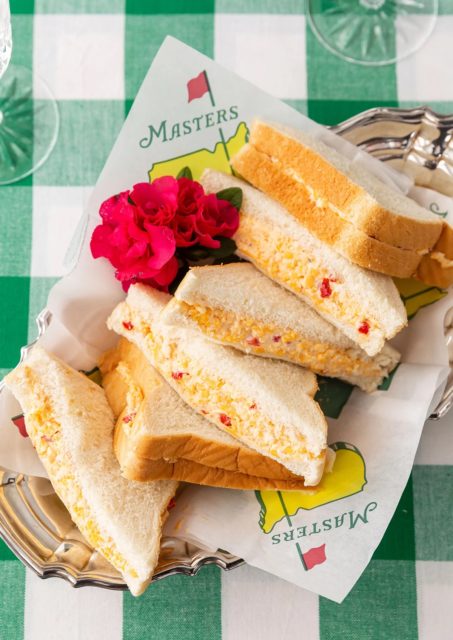
So, what’s an Azalea cocktail? Augusta National Golf Club has over 30 varieties of Azalea flowers and they happen to bloom throughout the tournament each year. The cocktail is both beautiful in color and refreshing in flavor. Here’s a spin on the recipe:
Ingredients for your Azalea Cocktail:
- 2 oz. lemon juice
- 4 oz. vodka
- ¼ ounce grenadine
- Lemon wedge
*traditionally, this cocktail is made with 2 oz. pineapple, this is a modified version!In a cocktail shaker, combine the vodka, lemon juice, and grenadine with ice. Strain into an ice-filled glass. Garnish with a lemon wedge and serve.
Arguably more important than the booze at your Master’s Par-Tee is this Pimento Cheese recipe.
Ingredients for your Pimento Cheese:
- 3 cups grated extra-sharp cheddar cheese
- 2 tbsp. mayonnaise
- 2 tbsp. yellow onion
- 2 tbsp. pimentos
- 1 jalapeño, chopped
Combine everything in a mixing bowl or food processor. This can be enjoyed as a dip, or better yet used to create the closest thing to the famous Pimento Cheese sandwiches served at the Master’s Golf Tournament in Augusta!
All the above is sure to result in a hole-in-one Master’s Par-Tee!
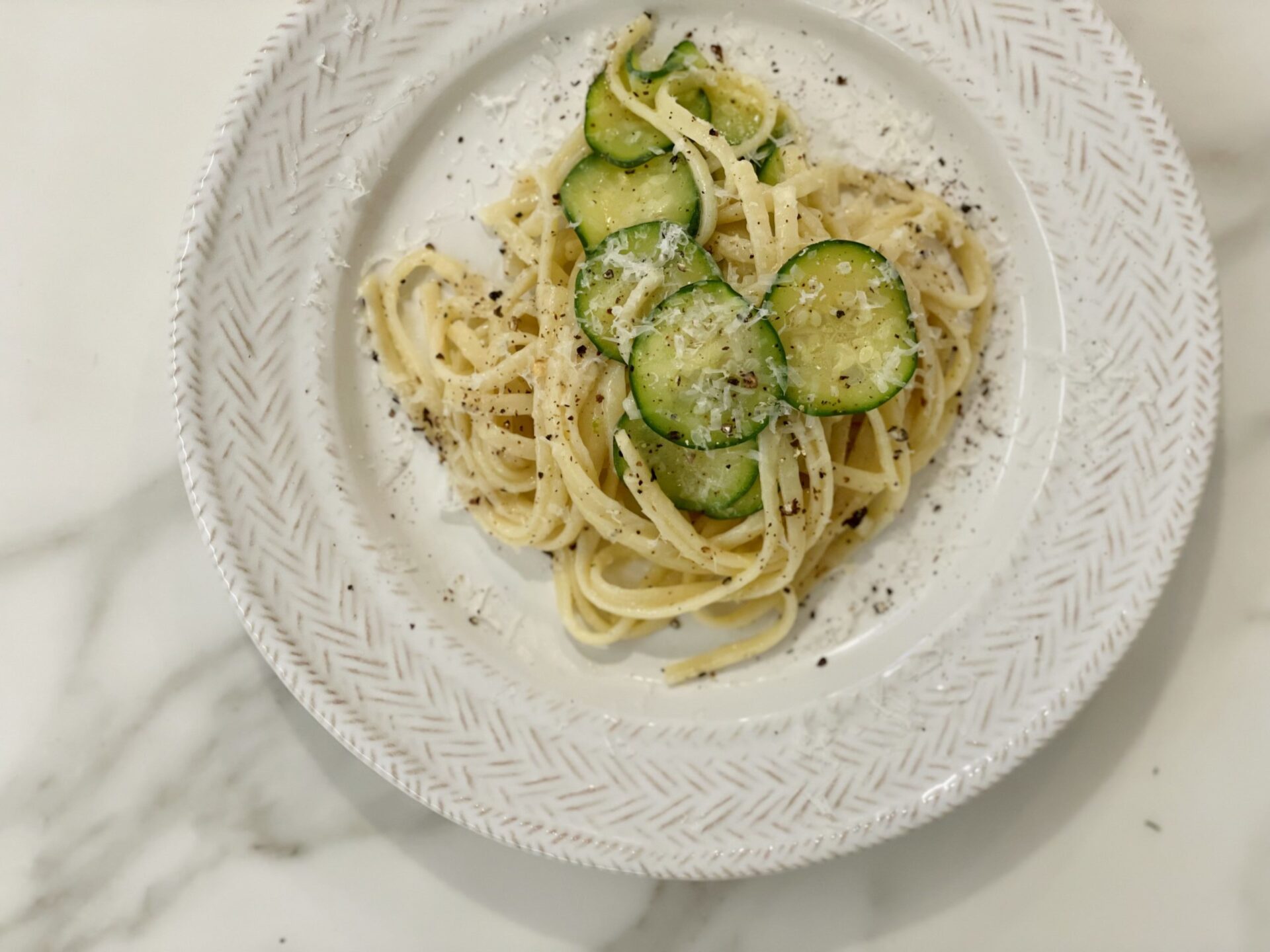
Summer Squash Linguine
I traveled to Italy for the first time with my family when I was about 16 and it changed my whole life. Seriously. I remember each plate of pasta and the list of ingredients. It’s easy to remember because the ingredients are simple in Italy. It’s about the quality of the ingredients and the quality is what creates flavor. The plate of pasta I’ve fallen in love with over and over again, since I’ve been back to Positano, is from a restaurant called La Cambusa. What I do not remember is what it was called on their menu, but in my kitchen I call it La Cambusa Pasta. It’s linguine with zucchini and that’s pretty much it. I’ve spent years trying to recreate it and although it will never be the same as it is in Positano, it brings me back bite by bite.
Pair this wine with a crisp Italian white wine, which we often feature in our Seasonal Wine shipments.
Ingredients:
- Zucchini
- Zucchini Blossoms (if available)
- Butter
- Olive Oil
- Parmesan
- Pecorino Romano
- Lemon juice +zest (1-2 lemons depending on how juicy your lemons are)
- Sea salt
- 2 garlic cloves
- Cracked black pepper
- Red pepper flakes
- Linguine
Every time I make this, it’s a little different! I have found success with a couple different approaches and leave it to you to find the best one for your kitchen.
Recipe #1
Boil water and prep a bowl of ice cold water. Use a mandolin to slice the zucchini into thin rounds, practically paper thin! Blanch the zucchini rounds until bright green – About 30 seconds or so. Transfer immediately to the ice cold water. Strain the zucchini from the water and set aside onto a paper towel or cloth to help absorb excess water. Pat dry.
You can use the boiling water from the blanching for the pasta. The pasta will take about 6-7 minutes to become al dente and you will finish it off in a pan with the sauce. Throw the pasta into the boiling water with some sea salt.
While the pasta is cooking, heat a sauté pan big enough for the pasta with a 1/2 cup of olive oil, red pepper flakes, and slivers of garlic.
When the pasta is al dente, add directly from the boiling water to the sauté pan with the olive oil. You can do this by taking tongs to grab some of the pasta and transfer it or if you were cooking the pasta in a strainer within the pot, you can transfer it directly from the strainer into the sauté pan. Once the pasta is in the pan with olive oil, vigorously mix everything together to coat the pasta with the oil. Add a couple scoops of pasta water with a ladle to the pasta and mix together. Again, making sure the pasta is coated. The sauté pan should be on medium-low. The pasta water when mixed should begin to absorb and also start to create the sauce once you add in the cheeses and lemon zest. Throw in the cheeses, lemon zest and crack some black pepper over surface of the pasta. Mix everything together. Add more pasta water to continue creating a light sauce when mixed with the cheeses and oil. Add in some lemon juice and mix some more! You could keep adding lemon juice (forever 😉 Taste the pasta frequently while adding in the lemon juice until just right. You can also continue adding in pasta water until the sauce reaches your desired thickness. Before serving, throw in the zucchini rounds and mix gently.
Spoon the linguine into a shallow bowl and garnish with cheeses, cracked black pepper, some leftover zucchini rounds if you have them, and lemon zest to taste.
Recipe #2
Prepare the Squash – Thinly slice the zucchini using a mandolin or sharp knife. Roughly chop the zucchini blossoms and set aside. Cook the Zucchini – In a large skillet over low heat, warm the olive oil and butter until melted. Add the zucchini slices and crushed garlic cloves, season generously with cracked black pepper and a sprinkle of salt. Caramelize Low & Slow – Let the zucchini cook down slowly, stirring occasionally. The goal is for it to caramelize and soften, almost melting into itself. This takes about 20 minutes.
Optional: Add a pinch of saffron at this point for a subtle floral note and golden hue.
Add Zucchini Blossoms & More Butter – Stir in the zucchini blossoms and a bit more butter if the pan looks dry. Fold gently to combine. The zucchini should start to resemble a rustic, jammy sauce. Cook the Pasta – Meanwhile, bring a pot of salted water to a boil. Cook the linguine until al dente, then reserve about ½ cup of the pasta water before draining. Combine – Add the cooked pasta to the skillet with the zucchini. Pour in a splash of the reserved pasta water and fold everything together over low heat. Finish with Cheese & Lemon – Add a generous handful of grated cheese, stirring until it melts into the sauce. Squeeze in the juice of ½ a lemon and season to taste with more salt and pepper.
To Serve: Plate immediately with an extra drizzle of olive oil, a touch more cheese, and a few torn basil leaves if you have them on hand.
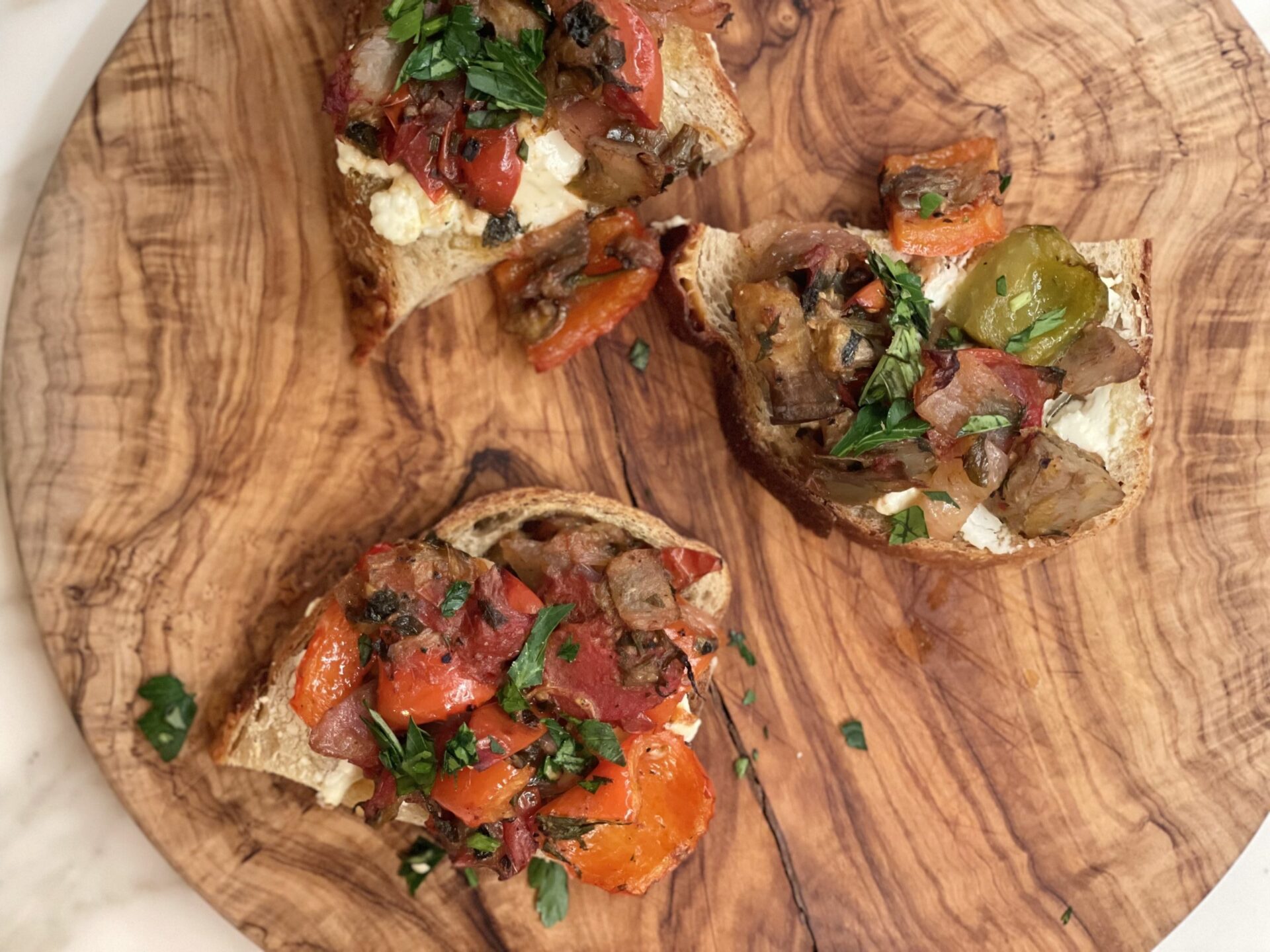
Peperonata on Country Bread
This is a fun and playful recipe that is versatile and great for leftovers for that very reason! I’ve played around with various ingredients. They all work well and bring something to the table. I encourage you to play around with this recipe and see what works for you. You could add some green bell pepper or even make this with or without the artichoke hearts. It can be dependent on what you’re using the Peperonata for i.e. on crusty bread like we do here, or perhaps you want to spoon it over grilled swordfish…Have fun with Peperonata year round!
If it’s warm out, you’re serving these as an app over crusty bread and you want to start with something fresh, I’d go with the 2020 Domaine de Marquiliani ‘Vin Gris’ Rosé from Corsica. It will keep the dish bright and enhance the sweet bell pepper flavor. In turn, the Peperonata will bring out a little salty flare to the wine immediately transporting you to the Corsican coastline.
If you are serving this as a side dish at dinner, I would go for the 2018 Girolamo Russo ‘A Rina’ Etna Rosso. Serve it with a slight chill and enjoy how it adds a touch of smokiness to the dish and brings out the savory elements without overpowering it. Yum! I’m buying a bottle as I write this.
Ingredients:
- 1-2 red bell peppers
- 1/2 of an Eggplant
- 2 garlic cloves
- 1 cup cherry tomatoes
- 1 cup artichoke hearts
- 1/2 cup parsley leaves
- 1/2 cup basil ribbons
- 1/4 cup lemon zest
- 1 red onion
- 1/2 cup red wine vinegar
- Sea salt
- Black pepper
- Olive oil
Slice the tomatoes in half, slice the garlic and red onion into slivers. Throw everything into a bowl. In a skillet, heat olive oil and then add the tomato mixture. Bring to high heat and mix everything together in the skillet. Bring the heat back down to simmer and let the tomato mixture cook through to the point where the tomatoes start to release their juices. Crack some black pepper into the mixture and continue to stir. Do not season will salt just yet.
While the tomato mixture continues to cook, prepare the vegetables by cutting the peppers and eggplant into 1-inch pieces or however big/small you’d like them to be (this is more about preference). Chop the artichoke hearts and set everything aside in a bowl.
Prepare the basil ribbons and pluck the parsley leaves, zest the lemon, and set aside in a bowl.
Add the red wine vinegar to the tomato mixture in the skillet and bring the heat up to medium-high. Add in the peppers/eggplant and mix everything together. Add more olive oil as needed to ensure everything is coated. Crack more black pepper into the mixture and mix some more. Add a handful of the herbs and lemon zest while leaving enough set aside for garnishing.
Bring to a simmer and continue to cook for another 10 minutes or so until the peppers are soft.
At this point, the Peperonata is ready to be served! Whether you are serving it over swordfish, pasta, or crusty bread – It’s a crowd-pleaser! I like to make enough for leftovers. Since it’s so versatile, it’s nice to have in the fridge to be warmed up and repurposed.
If you’re spooning over crusty bread, we suggest toasting the bread in the oven first with some olive oil and then spreading any sort of sheep/goats milk soft cheese onto the bread followed by the a spoonful of the Perperonata. Garnish with sea salt and the remainder of the lemon zest/herb mixture. You can drizzle some olive oil on top as well!
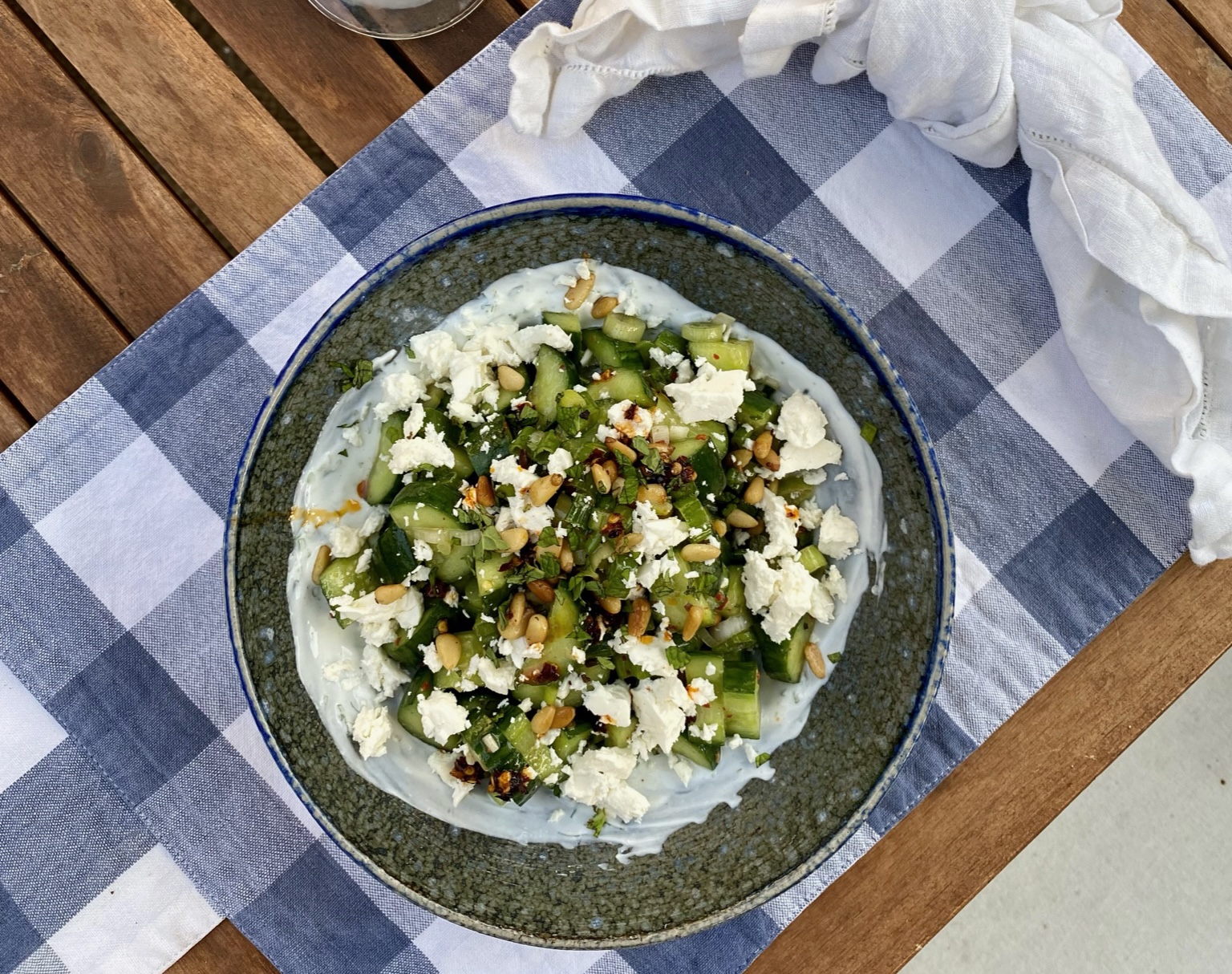
Spiced Cucumber, Feta + Fresh Herb Salad
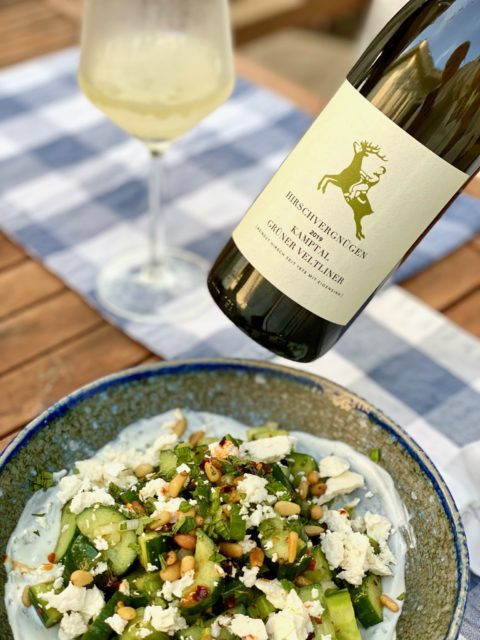
I love this salad because it is an easy, refreshing and satisfying dish as is, but it also makes for a great base recipe that responds well to little tweaks or last minute additions like white beans or arugula.
Here I’ve opted for yogurt, swapped the lemon for lime and added sliced serrano chilis and chunks of avocado. It was delish!
Pair this dish with a Team Argaux favorite: 2020 Hirsch ‘Hirschvergnugen’ Gruner Veltliner. This aromatic and deliciously thirst-quenching wine quite literally smells like a spring day. Light and smooth on the palate, the wine finishes with a long and refreshing finish. This is Margaux’s (co-founder) go-to with sushi. It also pairs well with Thai food and anything with a little spice.
Ingredients:
- 6 Persian cucumbers sliced horizontally into 1 inch chunks
- 1 teaspoon kosher salt
- 4 tablespoons Ottomani EVOO
- 1 TSP ground coriander
- ½ TSP cumin
- 1 TSP red pepper flakes
- 3 scallions, trimmed and thinly sliced
- 1 tablespoon apple cider vinegar
- ¼ cup chopped mint, parsley, and dill
- ¾ cup full-fat greek yogurt
- 1 lemon
- ¼ cup pine nuts
- Feta Cheese
-
Toss the cucumber pieces with 1 teaspoon salt and set in a colander in the sink to drain.
-
In a small pot, heat 3 tablespoons of the oil over medium heat. Add the coriander and cumin, and toast until fragrant, stirring to avoid scorching, about 1 minute. Remove oil from heat, add red-pepper flakes and allow to cool.
-
In a medium bowl, toss the salted cucumber pieces with the scallions, apple cider vinegar and 1 tablespoon of the herbs and spiced oil. Allow to marinate in the refrigerator for 15 to 30 minutes while you prepare the yogurt.
-
In a small bowl, combine the yogurt, 1 tablespoon of olive oil, the rest of the herbs (leave a little for garnish), lemon zest and juice. Stir to incorporate, and season to taste with salt and pepper.
-
Spread the yogurt mixture on a plate or the bottom of a shallow bowl. Using a slotted spoon to drain the cucumbers and scallions of excess liquid, evenly place the cucumbers and scallions on top of the yogurt.
-
Top with the feta cheese, remaining chopped herbs, pine nuts and drizzle with a little more EVOO. Sprinkle with some flaky sea salt and fresh ground pepper for good measure. Serve and enjoy!
Spring Minestrone with Pistachio Pesto
I have been making this minestrone inspired by Jamie Oliver’s Spring + Summer Minestrone for years. It’s a staple throughout the year. In the spring I might not use any pancetta and opt for a more veggie centric spin, whereas in the winter I add pancetta or bacon to give it more body. I love how bacon adds a smokiness that can completely change the feel of the dish. It all depends on what you like, and of course what time of year it is! The crème fraîche topped with the pistachio pesto is a game changer!
Pair this minestrone and pistachio pesto in the spring with 2020 Par Fore the Course New Zealand Sauvignon Blanc.
This wine will bring out the green in the dish this spring! It will enhance the fresh herbs in the pesto and all the parsley in the base, and simultaneously complement the natural sweetness of the pistachios. The acidity will also cut through the oil leaving your palate feeling fresh and clean!
Ingredients: Serves 4
- 5 cups chicken broth
- 1 bunch parsley
- 1 cup chopped carrots (or chopped broccoli)
- 1 cup chopped celery
- 2 zucchini, quartered
- 3 bacon slices or pancetta cut into 1-inch pieces *you can leave the bacon/pancetta out in the spring for more of a fresh take
- 1 cup orzo
- 1 white onion, chopped
- Olive Oil
- 2 cups roughly chopped tomatoes (try and use a cutting board that can catch the tomato juice liquid while chopping, you want to add everything to the pot and it can get a bit messy roughly chopping the tomatoes)
- Black pepper
- Sea salt
- Garlic powder
- See Pistachio Pesto (below)
Add about 2 tablespoons of olive oil to a pot on simmer. Allow the pot and oil to heat up and then add the onion, celery, carrots (if broccoli then wait), cracked black pepper, and garlic powder. Mix everything together and allow the onions to become translucent. Add the chopped bacon to the mixture and allow the bacon to start to crisp just slightly. Add the chopped parsley (stems and everything, while leaving some aside for plating). Stir together. Add the tomatoes and stir. Add the broth and then add the orzo. The orzo will start to soak up some of the liquid as it cooks so add broth as needed based on your preference. The orzo will only take about 20 minutes or so. While the orzo is cooking, make the pesto (see below).
About 5-10 minutes before serving, add the chopped broccoli (if using) and the zucchini. Serve in a bowl topped with pesto and parmesan cheese.
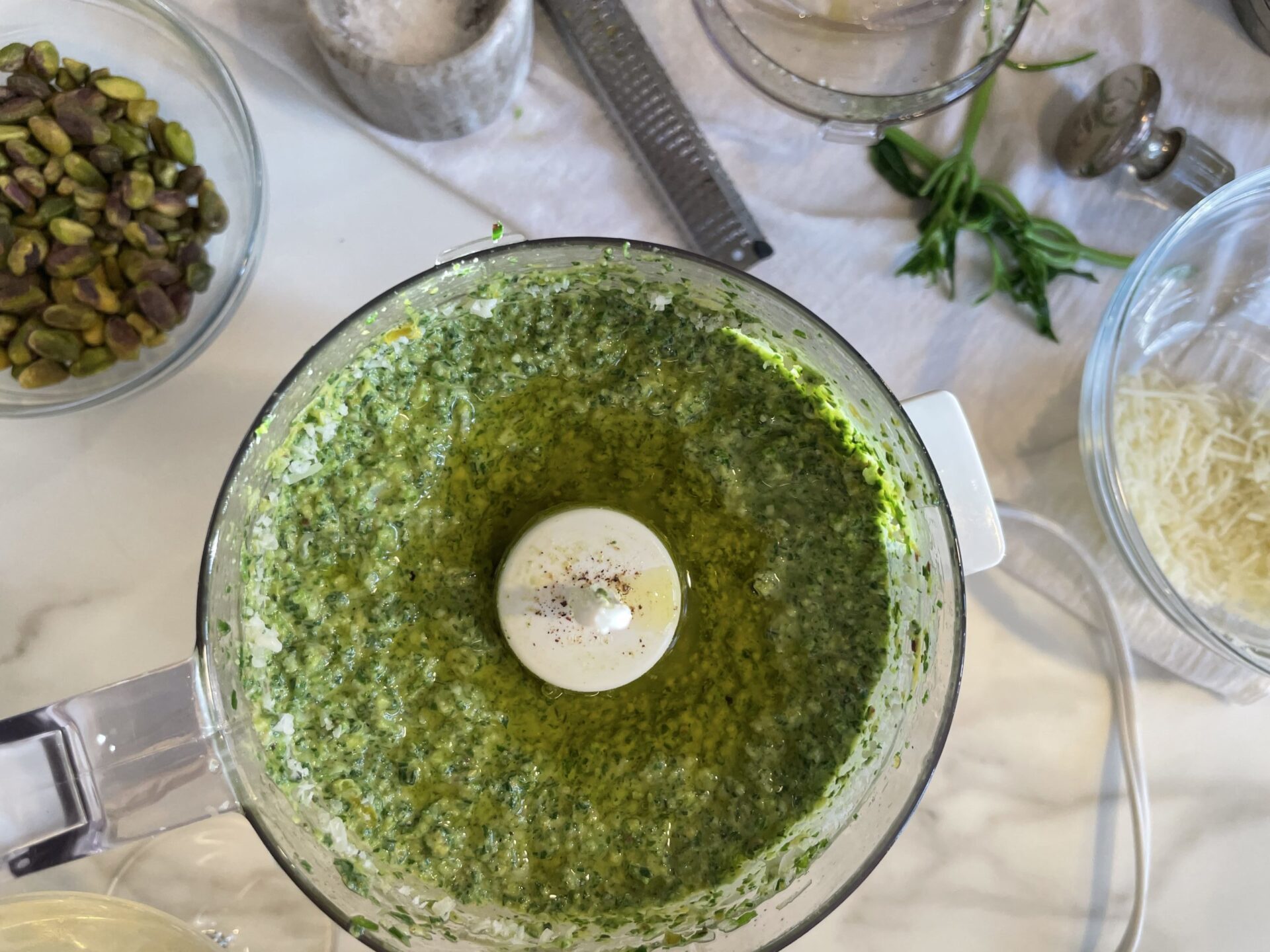
Pistachio Pesto: My husband has a pine nut allergy and I LOVE pesto so naturally, when we first started dating I experimented with several different pine nut alternatives. It would have been a make or break it type of situation if nothing sufficed…but, I fell in love with this Pistachio Pesto and so did he!
Ingredients:
- Pistachios
- Lemon and lemon zest
- Salt
- Pepper
- Olive Oil
- Basil
- Parsley
- Garlic
- Pecorino Romano
Blend the garlic and olive together in a food processor. Add the basil, parsley, and olive oil. Blend some more. Keep adding olive oil depending on the texture you like. Add pistachios and Pecorino and continue pulsing. Personally, I like when the pesto still has a bit of texture where the pistachios are not ground down entirely. Add lemon juice to taste. I also like to add a bit of lemon zest for added vibrancy!
Sesame Seed Fried Feta
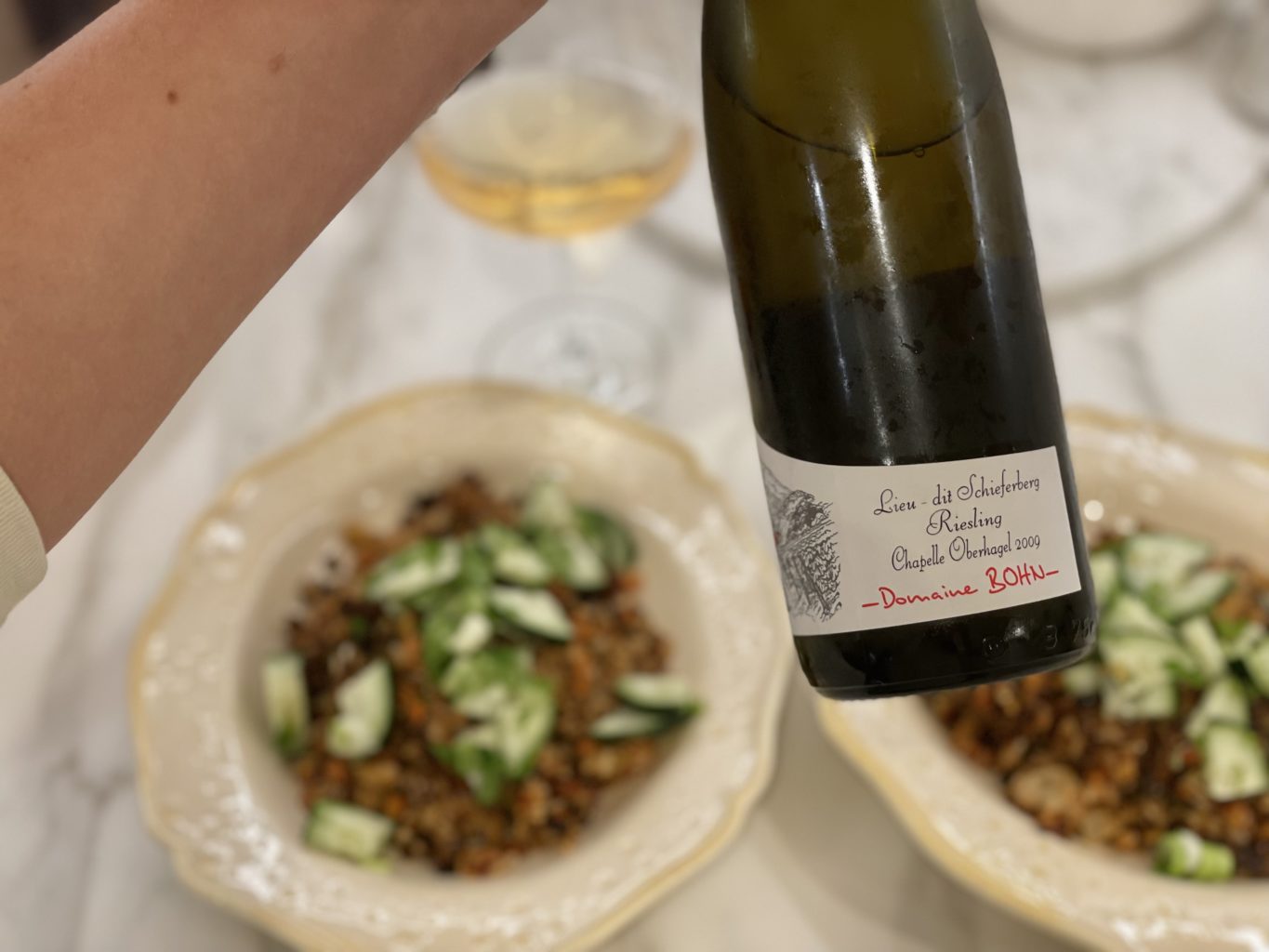
Pair this Sesame Seed Fried Feta with 2009 Domaine Bohn AOC Alsace Lieu-Dit Schieferberg Chapelle Oberhagel Riesling.
Forget what you thought you knew about Riesling. This natural, skin-contact expression from Domaine Bohn shows a whole ‘nother side of what the variety can do – and now with over ten years of age on it, a brand new layer of complexity is settling in.
Orange wine lovers, this is a one-of-a-kind tasting experience. Due to its age and natural vinification, we recommend decanting before enjoying.
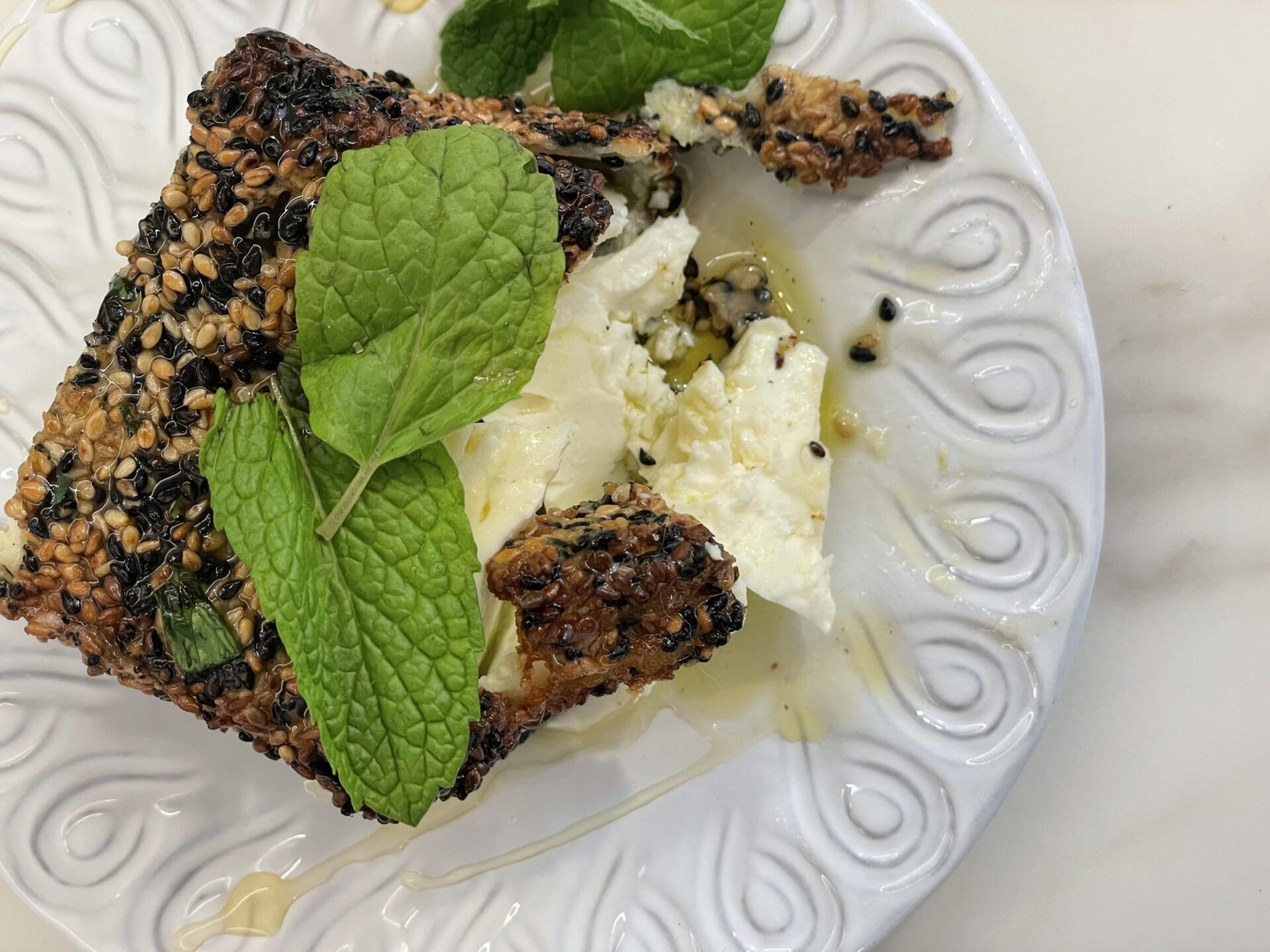
There’s nothing better to have in your back pocket than a recipe you can plop on any cheeseboard for easy-entertaining that is sure to impress and spark conversation. This Sesame Seed Fried Feta is just that. Although it take a small amount of preparation, it can be done ahead of time and warmed up in the oven just before serving. Be sure to find a softer or creamier feta like a French feta as it is less briny and softer than others.
Ingredients:
- One block of French feta
- 1/2 cup white or golden sesame seeds
- 1/2 cup black sesame seeds
- 2 Eggs
- 1/2 cup flour
- Hanadful of fresh mint leaves
- 1 tblsp. Honey
- Olive Oil
- 1/4 cup Sunflower Oil
Whisk the eggs in one bowl, place the flour in another, and combine the sesame seeds in an even layer on a baking sheet. Place the block of feta in the bowl with the flour and cover all sides. You don’t need to worry about it being totally covered. It’s better to have a thin, sheer layer of flour than a thick one. From there, dip the block of feta into the egg mixture on all sides and then let any excess drip off back into the bowl. Transfer the block of feta to the baking sheet with the sesame seeds and pat the feta against the seeds to cover all sides with an even layer of both black and golden/white sesame seeds. If you need to add or sprinkle some more seeds to completely cover the block of feta that’s fine too!
Heat the sunflower oil in a skillet. Once the oil is heated, add the block of feta and brown on all sides. This will take about 1-2 minutes a side and may vary based on your skillet. You essentially want those white sesame seeds to turn golden or that layer of egg/flour/seed to brown and start to harden while the feta begins to soften. Remove the feta from the skillet when ready and place onto clean baking sheet if you know you will need to warm it up later, or place directly onto you cheeseboard or plate for serving. Before serving, drizzle with honey, olive oil and garnish with fresh mint leaves!
Enjoy by cutting into the feta with a cheese knife and spreading the fried feta on a cracker or enjoy on it’s own! This fried feta would also be fun added to a salad or placed on the center of a table as a side!
Best Wines for Spring
The days in the northern hemisphere are starting to lengthen. The Spring equinox is right around the corner, and many of us are getting a head start on the more tedious March/April/May activities – taxes, spring cleaning, closet purges, and so on.
But with the post-hibernative responsibilities rung in by warmer weather, there is an equal number of fun things that make their debut alongside the new growth and blooming flowers: cute outfits unobstructed by bulky winter wear, sunset picnics on the lawn, and best of all, a delicious selection of light-bodied wines that are just perfect for spring.
We have a little while longer to wait before we release our springtime picks for 2022. But in the meantime, here are 6 divine wines from the Argaux collection that will last you all springtime long: from Easter Sunday to your final exams.
Best wines for spring
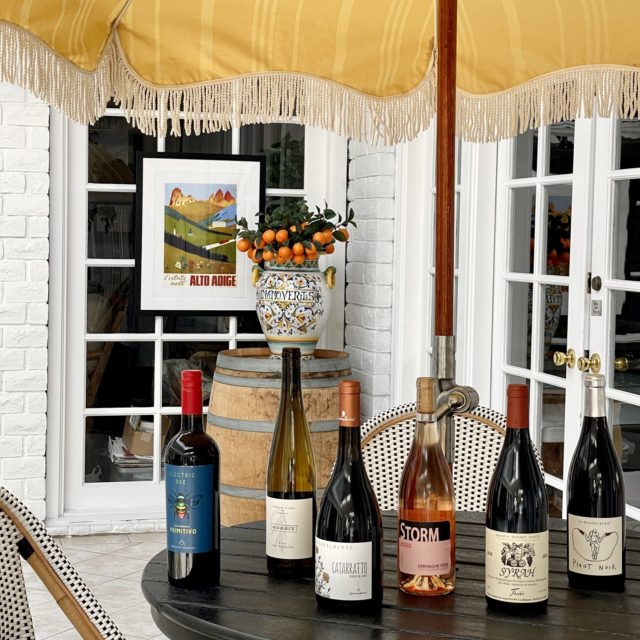
- We’ve put together our list of ‘gaux-to wines to help you enjoy these sunny days and breezy nights, and we curated a six pack with one of each to help make stocking up for Spring as easy as can be…Our Seasonal Six packs have been named Best Seasonal-Wine Subscription by New York Magazine’s The Strategist
‘Their seasonal packages come out once a quarter and deliver six selections curated specifically for the scenarios you’re likely to find yourself in during those months.” – Dominique Pariso and Emma Wartzman, The Strategist
Seasonal Six: Spring Edition includes a wine for all your Spring activities…
For Sunday Brunch: 2020 Storm Santa Barbara County Rosé
For Taco Night: 2020 Norris Ribbon Ridge Dry Riesling
For your Alfresco Dinner Party: 2020 Caruso y Minini Catarrato Sicilia Naturalmente Bianco
For Opening Day: 2020 Athletes du Vin Pinot Noir
For Your Memorial Day BBQ: 2020 Domaine Lionel Collines Rhodaniennes Syrah
For Your Weekend Roadtrip: 2020 Produttori Di Manduria Electric Bee Primitivo
Here are some other fun wines for spring worth checking out…
- 2020 Cargaux Pinot Noir – $45
We love a glass or two of Pinot in the early months of spring. Offering a lighter bodied red, this grape varietal won’t bog you down while you’re shaking off the wintertime drowsies, but maintains many of the Christmas-adjacent flavors and textures we grew to love over the previous season.
Our very own Cargaux Pinot Noir blends the best of both worlds in its flavor profile: the aromatics fuse autumnal pomegranate with summery rose petals, while on the tongue you will experience a multi-seasonal spread of orange peel, fruitcake fruit, and fresh plums.
Once the snow melts, take this wine onto the deck with you and enjoy alongside some grilled brats or cheeseburgers.
- 2019 Cherrier Frères Sancerre Rouge Pinot Noir – $28
Pinot Noir numéro deux on our list will find a permanent place on your table after you take your first sip. It’s that good, and it’s super accessible for those who are still new to the world of wines.
Florals and red fruits in the nose and a smooth tannic experience on the tongue flanked by flavors of black cherry and baking spice presents the perfect way to welcome warmer weather into your home. We want to see all of our patrons taking this bottle with them on at least one springtime charcuterie picnic.
- 2019 Edaphos Elder Springs Petite Arvine – $46
Speaking of picnics, we’re confident that this is the bottle featured in Manet’s infamous Le Déjeuner sur l’Herbe. If oenophiles can bring themselves to disrupt the perfect scene that is this voluptuous green bottle and gorgeous label design, they will find themselves handsomely rewarded with a glass of liquid gold.
The nose is herbaceous and fruity, and the palate is as silky as you could ever want, offering more flavors of fruit and flowers on the tongue.
Pair with all your cheesy, salty springtime indulgences, or make an elegant entrance back into the world with a seafood side.
- 2020 Field Recordings ‘SKINS’ Orange Wine – $22
Sun’s out, buns out, as the saying goes, and as we strip down for some much needed sun-on-skin contact, it’s time for this beautiful bottle to grace our tables, lawn chairs, picnic blankets, and deck railings.
This skin-contact (orange!) wine pushes stone fruit and citrus flavors, reminiscent of a fuzzy navel cocktail in viticultural form. Field Recordings is meant to be sipped outside, and pairs perfectly with fresh cheeses, green-heavy salads, and a day at the river.
- 2019 Vignerons Ardéchois ‘Les Classiques’ Chardonnay – $20
Light, sporty, and best served chilled, this defiant Chardonnay resists the stereotypes of the genre with an incredible freshness and crispness that nonetheless fronts fruity flavors that classic Chards are known for.
This wine is definitely for sharing, so bring a couple bottles to your inaugural springtime barbecue. Pair with fresh fruits, charcuterie boards (duh), and a chilled pasta salad.
- 2020 Par Fore the Course New Zealand Sauvignon Blanc – $17
A testament to New Zealand’s wine expertise, this grassy wine is ideal for celebrating the Equinox, bringing all the smells and flavors we love into one bottle. Extraordinarily fresh with an acidic finish, enjoy a sampling of mowed lawns, pineapple, guava, citrus, and a smattering of florals while you down this bev all the way to the 18th hole.
If your putting green has a food truck pod nearby, this is the wine to take with you. Pairs with spicy tacos, sushi burritos, and fried chicken.
Argaux can help
If you’re looking for a curated viticultural springtime experience, Argaux has a number of hand-selected wine boxes that will match exquisitely with the warming (and cooling, and warming again) weather.
California and the Mediterranean Coast are both famous for their long months of sunshine that helps their grapes to incorporate flavors unique to both regions. Among our travel sets are the ‘Gaux to California and ‘Gaux to the Italy kits that offer a selection of fair-weather wines to transport you to the blossoming California hills, and the blue waters of the Med.
Or if your favorite part of springtime is intense study and final exams, you may prefer our Blind Wine Tasting Kit, which lets you have fun, sip wine, and learn all about the art of tasting, all at once.

Meet the Maker: Jean René de Fleurieu of Château de Montfrin
“From the peaks of Pic st Loup to the summits of Mont Ventoux, I have always loved this country, my land of freedom, the great house and my village.” Jean René de Fleurieu
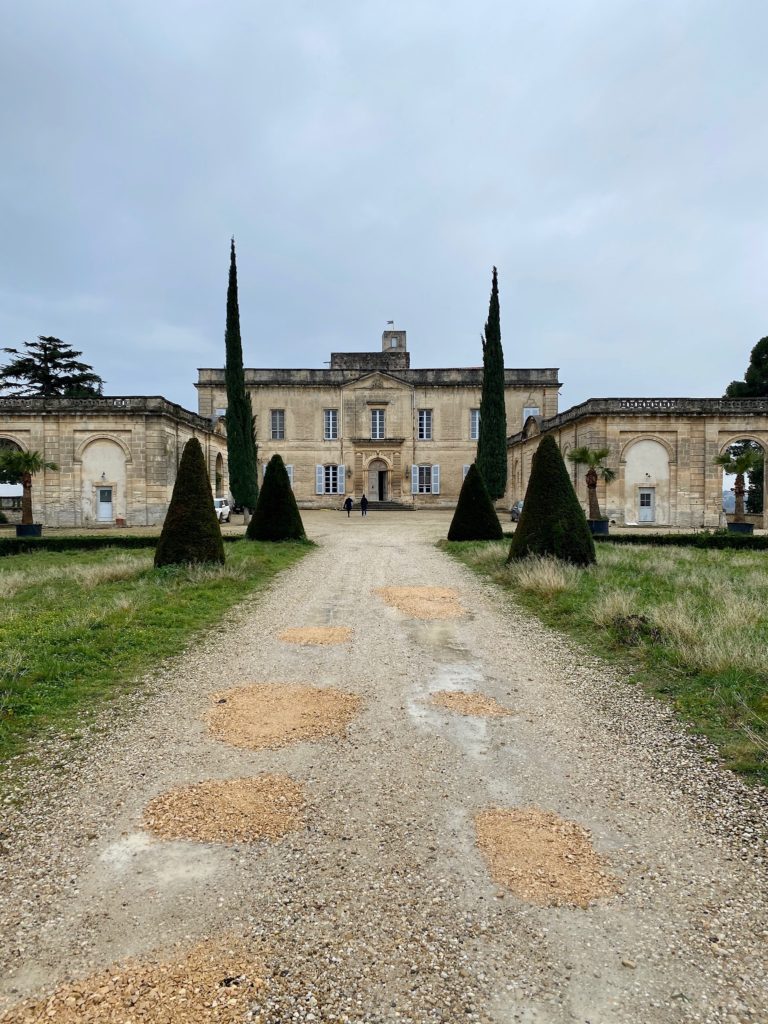



The Château de Montfrin has been an important site for centuries, and always played host to travelers and statesmen including Saint Francis of Assisi, Saint-Louis, Louis XIII, and Molière. It has been in winemaker and owner Jean René de Fleurieu’s family since the mid-1800’s, and he still resides there to this day. Today the château is surrounded by 200 hectares of vineyards and olive orchards which are all farmed organically, an ode to good health that Jean René is so passionate about. His passion for good ingredients shows in the finished product; delicious Rhone blends for any occasion.
The vines grow in a hallowed farmland made up of contrasting terrain. From the vast silty soils of the plains along the majestic Rhone to the sunny hillsides of its banks and the stony plateaus of its now abandoned river beds. Most of the plots are irrigated to allow the vine to resist the increasing draughts in the area. Some of the wine is hand harvested allowing for carbonic maceration bestowing a distinctive characteristic to some of our wines. The style of the estate is defined by wines which are lively and elegant, the use of little or no wood, with emphasis on the fruit and the terroir.
Here’s a look back at a trip to the property back in 2020, written by Margaux…
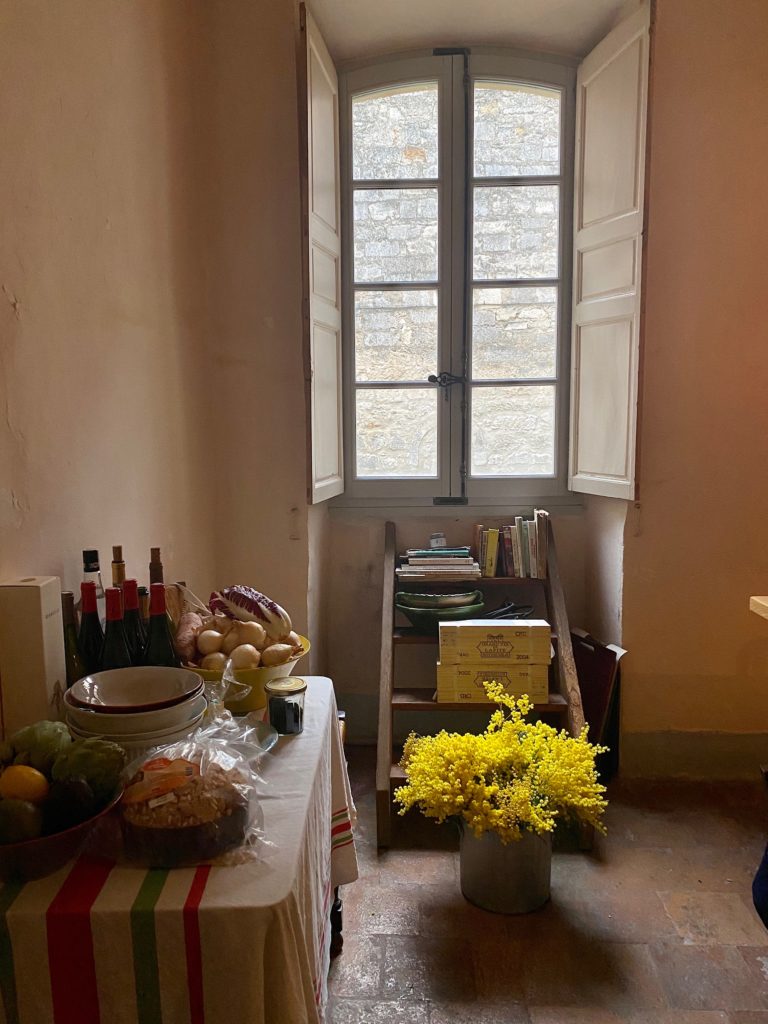
As I sat in Jene Renes kitchen watching shavings of fresh truffle he had picked up in town top my plate, I tried desperately to relax my wide-eyed grin and mimic his effortlessly cool demeanor. The plate of truffle pasta was mixed with his own estate-grown olive oil, pecorino cheese and finished off with some fresh-ground pepper. When he finished plating the pasta, he opened up a bottle of his estate-grown wine for us to enjoy with lunch. At that moment, as we clinked our bistro glasses together and Jene Rene murmured “bon appetit,” I couldn’t help but find irony in the name of his wine, “A la Reverie” or “In a Dream State.” His cool demeanor now seemed ethereal as he stroked his gray beard.
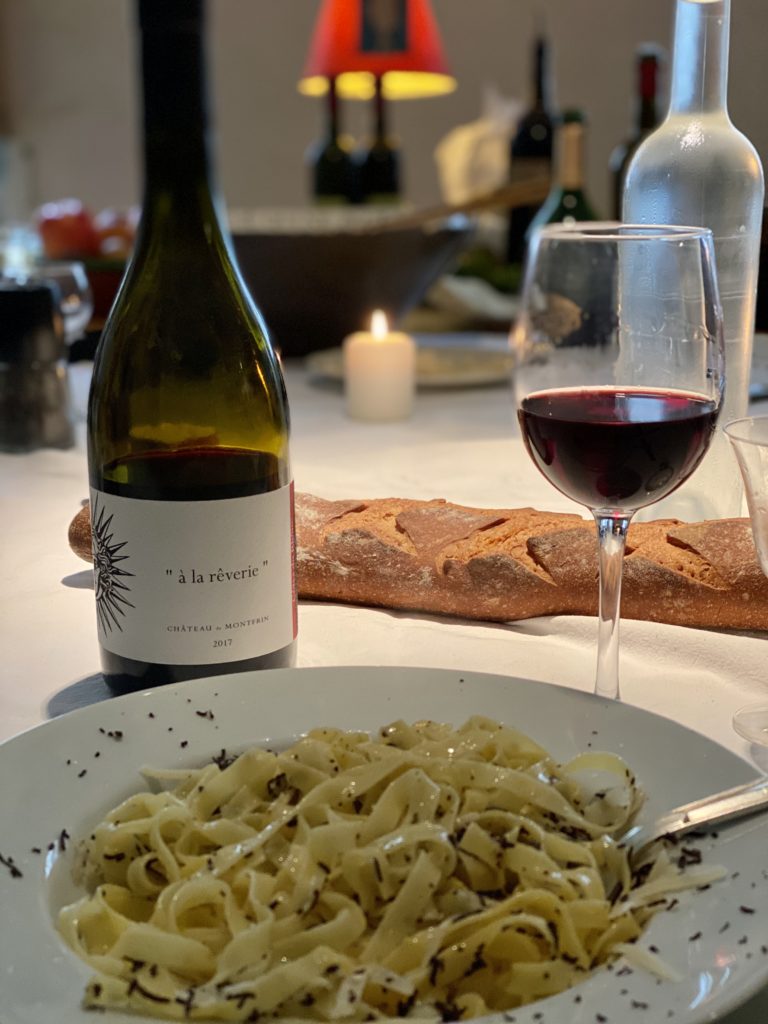

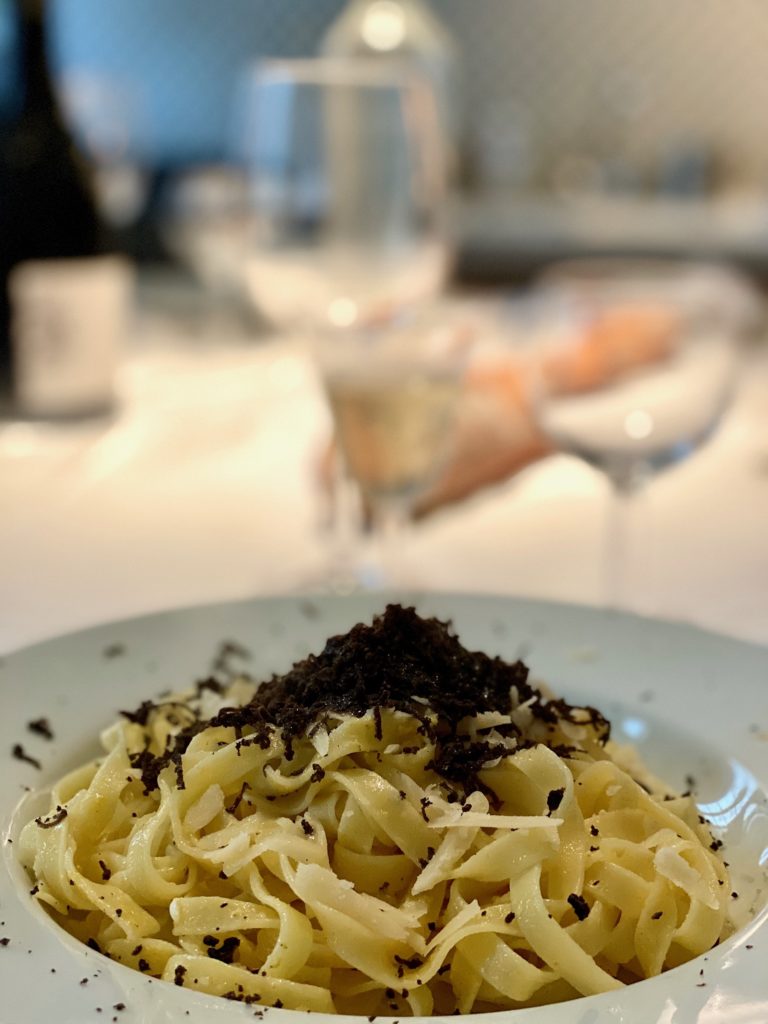
In January of 2020, Lexi and I had the opportunity to travel to Burgundy and attend a trade tasting with one of our partners, Paris Wine Company. Following a few days in Burgundy, we headed down to the Southern Rhone Valley to visit a new producer we were considering working with. Following a tour of the Domaine des Captives (vineyards and winery) and Moulin des Ombres (olive orchard and mill), we arrived at Château de Montfrin. The Château has been an important site for centuries, and played host to travelers and statesmen including Saint Francis of Assisi, Saint-Louis, Louis XIII, and Molière. It was built in the mid-1800’s and was acquired by Jene Renes’ grandfather in 1925 in an effort to swoon his later wife. During WWII the family Chateau was occupied by the Third Reich while Jene René’s father was fighting Nazi’s in Northern Africa and his mother fled to Marseille where she helped Allied planes get in and out of France. She was eventually caught and thrown into a concentration camp in Germany. In 1944, just before the end of the war, the allies bombed the Chateau, rubble you can still see today as you pull on to the property.
After the war, Jene Renés parents reunited and he was born shortly after. He lived most of his life back and forth between Montfrin and Paris. Jean Rene started his career in fashion and married fashion designer, Agnes B, whom he shares two daughters with. About 25 years ago, after a few years of owning an art gallery in Paris and producing some films, he moved back to Montfrin. Up until that time, since the property was primarily a second home, the grapes and olives produced were being tended to and sold to co-ops. However, when Jean Rene moved there full-time, the serial entrepreneur and renaissance man couldn’t help but start his own project. Today the château is surrounded by almost 500 acres of vineyards and olive orchards which are all farmed organically, an ode to good health that Jean René is so passionate about. His passion for good ingredients is evident in everything he does, from homemade pasta to mouth-watering Rhone blends.

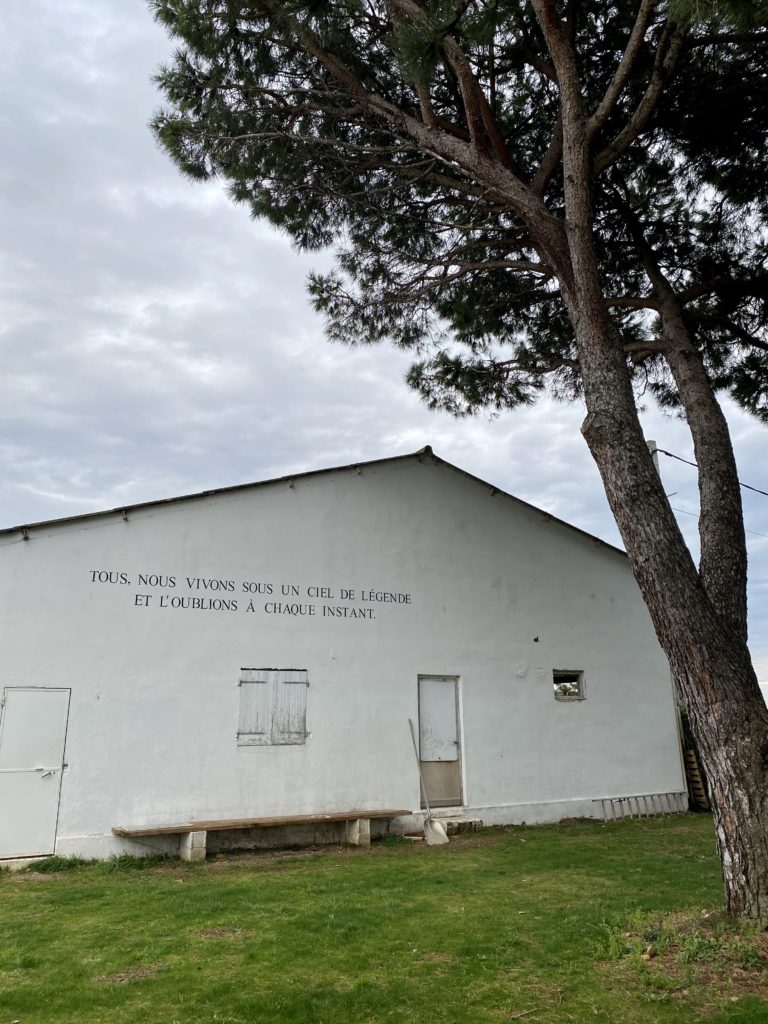
Jene-Rene produces wine he likes to drink. He farms organically and makes his wine ethically because “he doesn’t want to poison his family and friends with wine like that.” He thinks everyone in the Southern Rhone should be farming organically. Due to the topography, climate and soil, it is easy to do there. The estates’ nearly 250 acres of vineyards produce wines from different appellations, Côtes du Rhône and Côtes du Rhône villages, Les Costières de Nîmes and Les Coteaux du Pont du Gard. The vines are grown in silty soils of the plains along the majestic Rhone to the sunny hillsides of its banks and the stony plateaus of its now abandoned river beds. The style of the estate is defined by wines that are lively and elegant, the use of little or no wood, with emphasis on the fruit and the terroir.
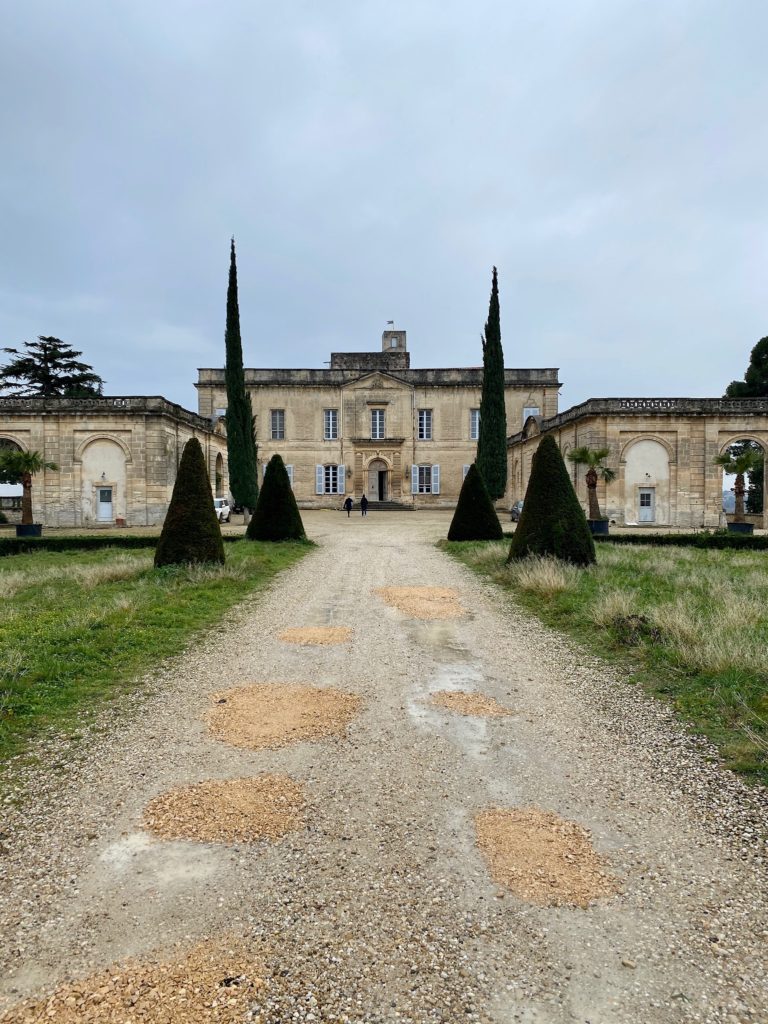
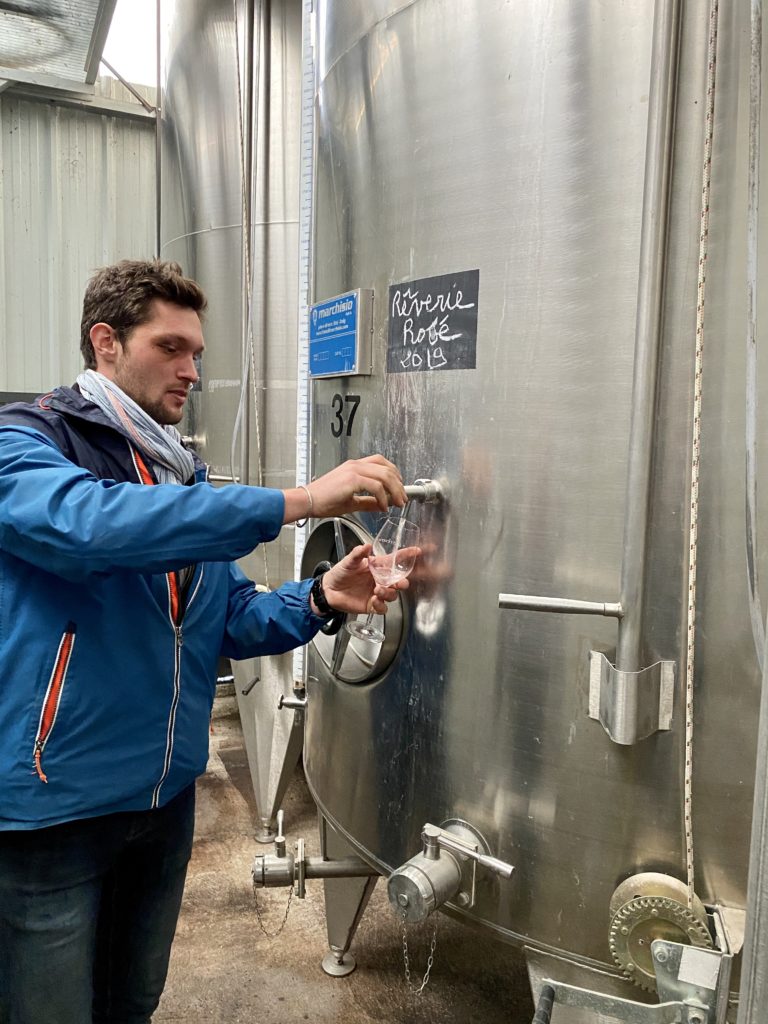
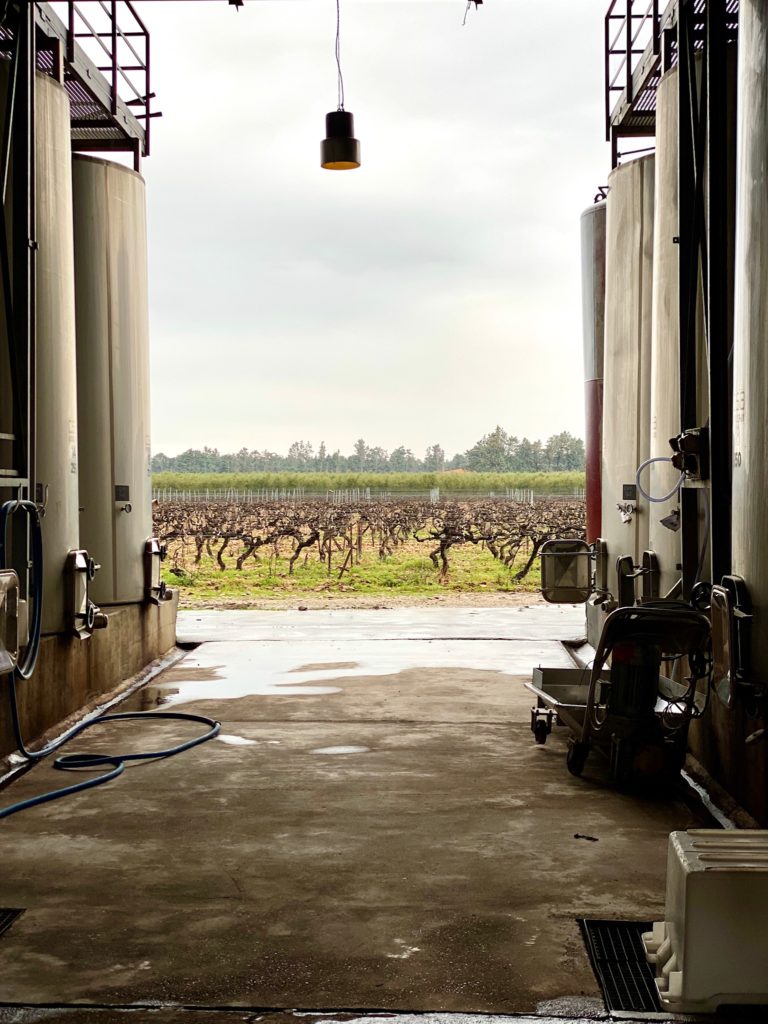
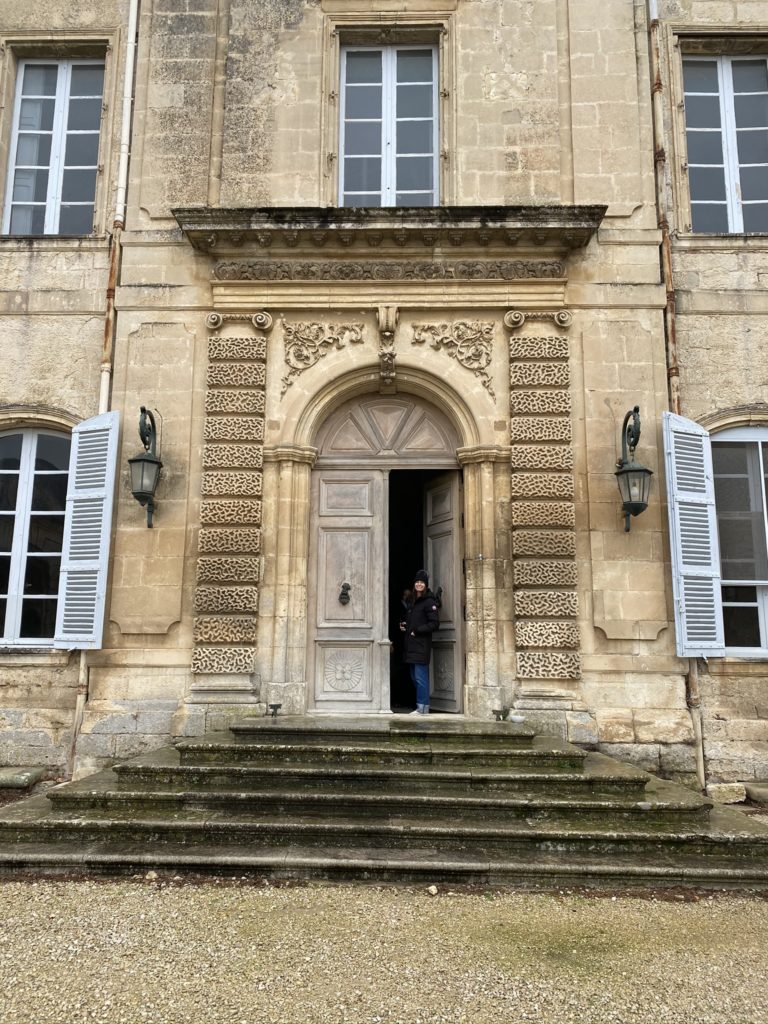
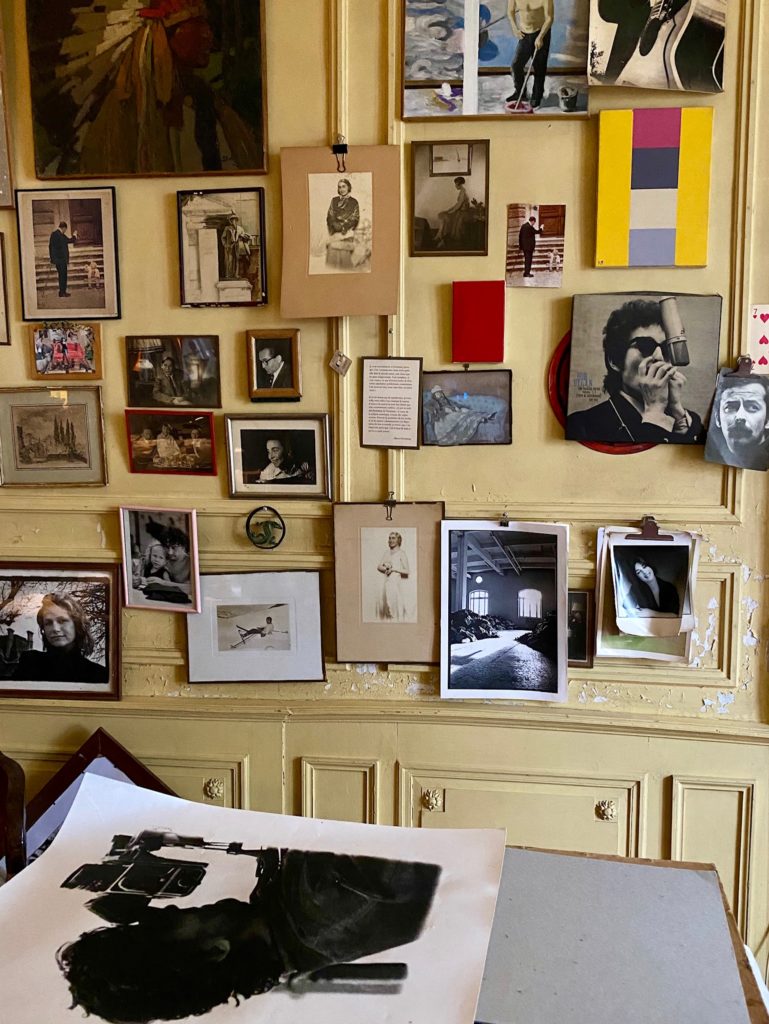
Following our lunch, we returned to Jene-Rene’s library and office to sit by the fire and finish off the Ruinart Champagne. We chatted about wine, life and art as he explained the photographs, paintings and poems that lined the walls of the room. Every piece had meaning. And as I took a step back and reevaluated the charmfully cluttered room, I saw the invisible thread that thoughtfully connected every piece as an homage to his life and the way he chooses to live. On the side of his winery reads, “Tous nos vivons sous un ciel de légende et l’oublions a chaque instant” or “we all live under a legendary sky and forget it every moment.” It serves as a gentle reminder to slow down and appreciate all that is wonderful in life. Friends, family, love, art, and of course, wine.
Paumiste is part of a project that we started at Argaux called ‘Gaux Play Après’. In the world of food & wine, it can be daunting to dive in. It’s an industry that can often be intimidating and elitist. It can also be an industry that can facilitate an unhealthy lifestyle if you dive too deep.. We wanted a collection of approachable wines in both profile and cost for the consumer, that encouraged people to get outside to promote balance and a healthy, well rounded lifestyle. Cue our partnership with Château de Montfrin on this rose. We had toured these vineyard sites, toured the winery, and were already buying incredible wines from them. Given that they are farming organically, and we already knew the quality that was going into every bottle, it was a no brainer to team up for this project.
Paumiste Rose: This rosé is 60% Syrah and 40% Carignan. It has a beautiful watermelon hue and displays aromas of freshly cut strawberries, white peach, grapefruit and lavender. It’s light and dry on the palate with tart citrus notes, pomegranate, and dried herbs taking hold of the finish. Enjoy this with fresh salads, chips and guacamole or lobster rolls.
If you like Paumiste Rose, you should also try our Storm Grenache Rose – it’s slightly heartier but made in a similar style with a Rhone grape variety.
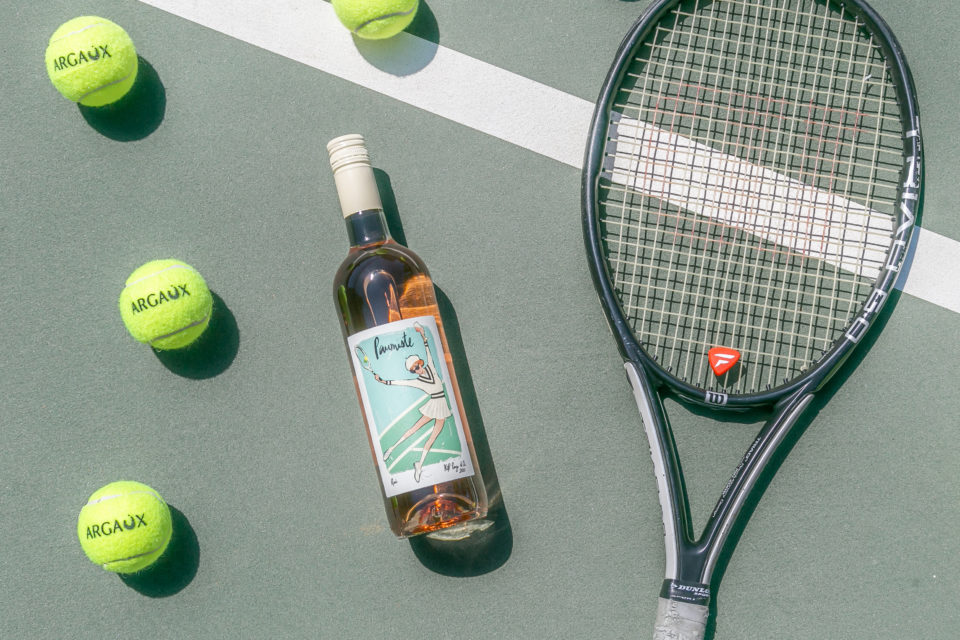
After we had collectively decided that we wanted this wine to be tennis focused, Arden knew right away who to call about designing this label. Leslie Randall, founder of The Luxury Shrink, and Arden grew up together in Milwaukee, Wisconsin. Leslie is a designer who spent almost a decade in New York designing embellishments, patterns & graphics for Oscar de la Renta and Kate Spade New York. In 2019 Leslie relocated to Saint Paul, MN & established The Luxury Shrink, a one stop shop for Leslie’s curated services in artwork, branding, & styling. We not only love her designs, but also love that we were able to work with a fellow female owned business on this. We worked with her to create the effortless, chic label that we have on the wine bottle today.
Here are some additional fun facts about the winery:
- Benjamin Béguin has been by Jean-René’s side making wine and olive oil for the estate for over twenty years. He has since become a managing partner in the winery, and today he oversees all winemaking and olive oil production.
- Located in-between the provinces of Languedoc and Provence as well as the rivers Rhône and Gard, Montfrin, from the latin Mons Fremens, translates as « mountain of wild animals », an escape for the animals fleeing the rising ragins floods from the rivers below.
- Jean-René is also an acclaimed clothing designer, filmmaker, and art gallery owner
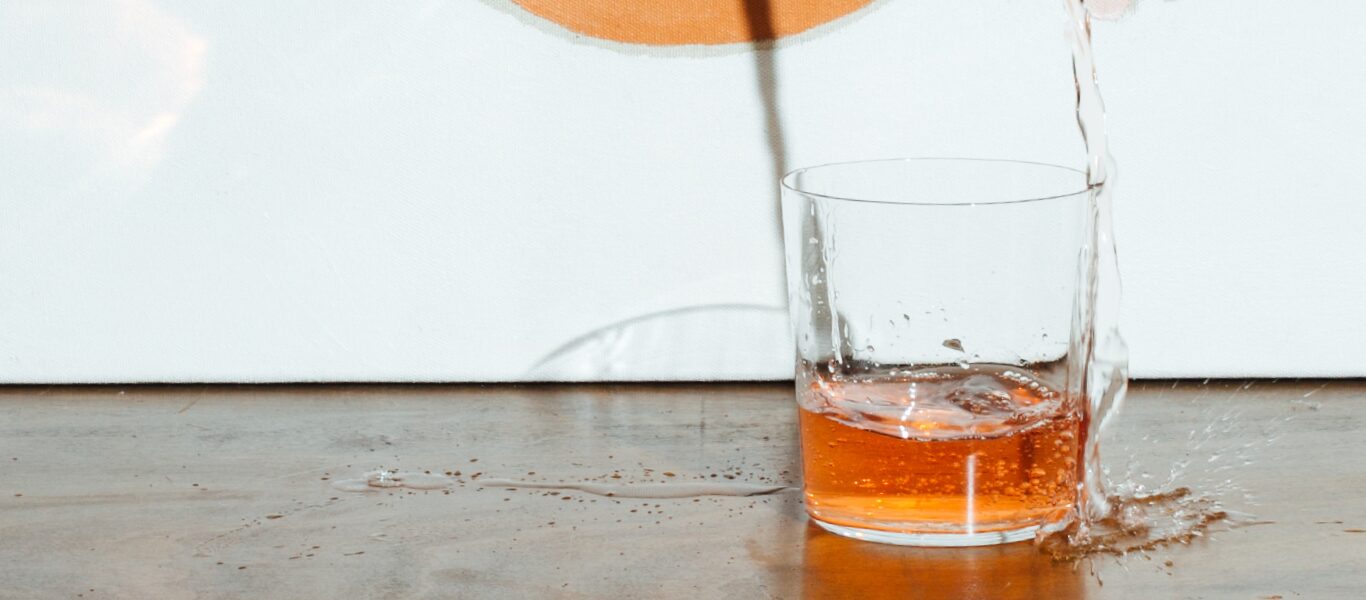
A Comprehensive Guide to Rosé Wine
Pink Wine is a State of Mind
So, what is Rosé anyway?
Well, Rosé wine happens when the skins of red grapes touch wine for a short period of time. The winemaker has complete control over how long or how little the grapes are in contact with the skins as it will ultimately determine the final color of the wine.
Rosé wines can be made in an array of styles ranging from a more pale color and subtle characteristics to something more deeper colored with obvious characters.
Any red grapes can technically be used to make rosé – although, there are a few key varieties that we generally see like Grenache, Pinot Noir, Sangiovese, Syrah, Tempranillo, or Rhone red grapes like Carignan, Cinsault and Mourvedre – side notes, these are also the traditionally dry styles of rosé as well.
Any Rosé wine can be produced in a sweet style by simply not fermenting all the sugar into alcohol, which can be common for bulk production. For sweet’ rosé’ think White Zinfandel, Pink Moscato, White Merlot.
The cool thing about rosé is a winemaker has a few different options here to produce the style they are seeking. The common ways we see Rosé made are from Direct Press Method, Short maceration / Saignee and Blending.
Direct pressing makes some of the lightest colored rosé. Reason being because we are directly pressing the juice from the skins, there is very little maceration time to pull color. You may often hear this referred to as ‘Vin Gris.’ And is popular using lighter-red wine varieties such as Pinot Noir in the United States or Gamay and Cinsault in France. The most common region you may have seen would be Provence in the south of France.
2022 Chateau Barbebelle Coteaux d’Aix en Provence ‘Fleurie’ Rosé – $23
2022 Chateau Barbebelle Aix-en-Provence ‘Cuvée Madeleine’ Rosé – $25
Saignee method, meaning bleeding, is a form of short maceration wine making where we allow the grapes to stay in contact with the skins for a couple hours to a few days, this usually lasts through the fermentation process. It will then likely be separated from the skins before it gets too dark and we bleed off a certain portion of our red wine juice. Depending on how light or dark the berry is will help determine how long we put the skins in contact – again allowing control over the color and profile here.
*** This style is also good for holding on to! The little effects of red grape skin contact allows for these wines to hold for a bit longer than other rosé styles.
Blending, as you would suspect, is adding in a small portion of red wine to a large portion of white wine. However, this style isn’t allowed in all regions, so it is not used as often.
As we already mentioned, rosé can be made in a wide array of styles, likely to all be distinct not only in color, but their structures and flavor profiles as well.
However, some common notes for rosé that you can look for, are red fruits like tart cherry, strawberry, raspberry and citrus like blood orange and grapefruit, flowers, melon, sometimes a pleasant crunchy green flavor on the finish similar to celery or mint. Depending on the type of grape the rosé wine is made with, and where it comes from, will greatly vary the flavor.

We want to thank those who submitted questions on rosé that I am going to answer for you right now…
- Can I cellar it? Most rosé’s are made for early consumption with the exception of a few rare examples such as Rosé from Bandol, France and the styles with longer maceration periods (i.e. darker colored roses). Otherwise, drink now and enjoy!
- What should I enjoy with Rosé? The world is your oyster my friends. And the more skin contact with added structure will only build the food portfolio options – In general, think light cheeses, fresh fruits, seafood dishes like our Halibut Ceviche, grilled peach or watermelon chaat, melon & prosciutto, or grilled veggies!
- For more food and wine pairing ideas, be sure to check out our latest blog post 7 Sommelier-Approved Rosé Wine Pairings
- When would I drink Rosé? We like to adopt the European ideal for drinking wine meaning any time, any occasion, but specifically I am all about rosé for dreamy picnics in the park, sunbathing by the beach, and of course – half-day Fridays from work.
Looking to explore a variety of rosé wines from around the world? Be sure to sign up for our Shades of Rosé 2024 Collection – It’s a mini rosé subscription April-September where you’ll receive 4 rosé wines per month.
Looking to learn more about rosé? Check out the book Rosé All Day, which would also make a great wine gift with a bottle of rosé!
What glassware should you use when drinking rosé? At Argaux, there are no rules! But, there are glasses made specifically for rosé if you’re a serious rosé enthusiast. Check out Riedel Sommeliers Rosé wine glasses.
If you want to learn more about rosé, blind tasting, wine in general – we’ve got your back.
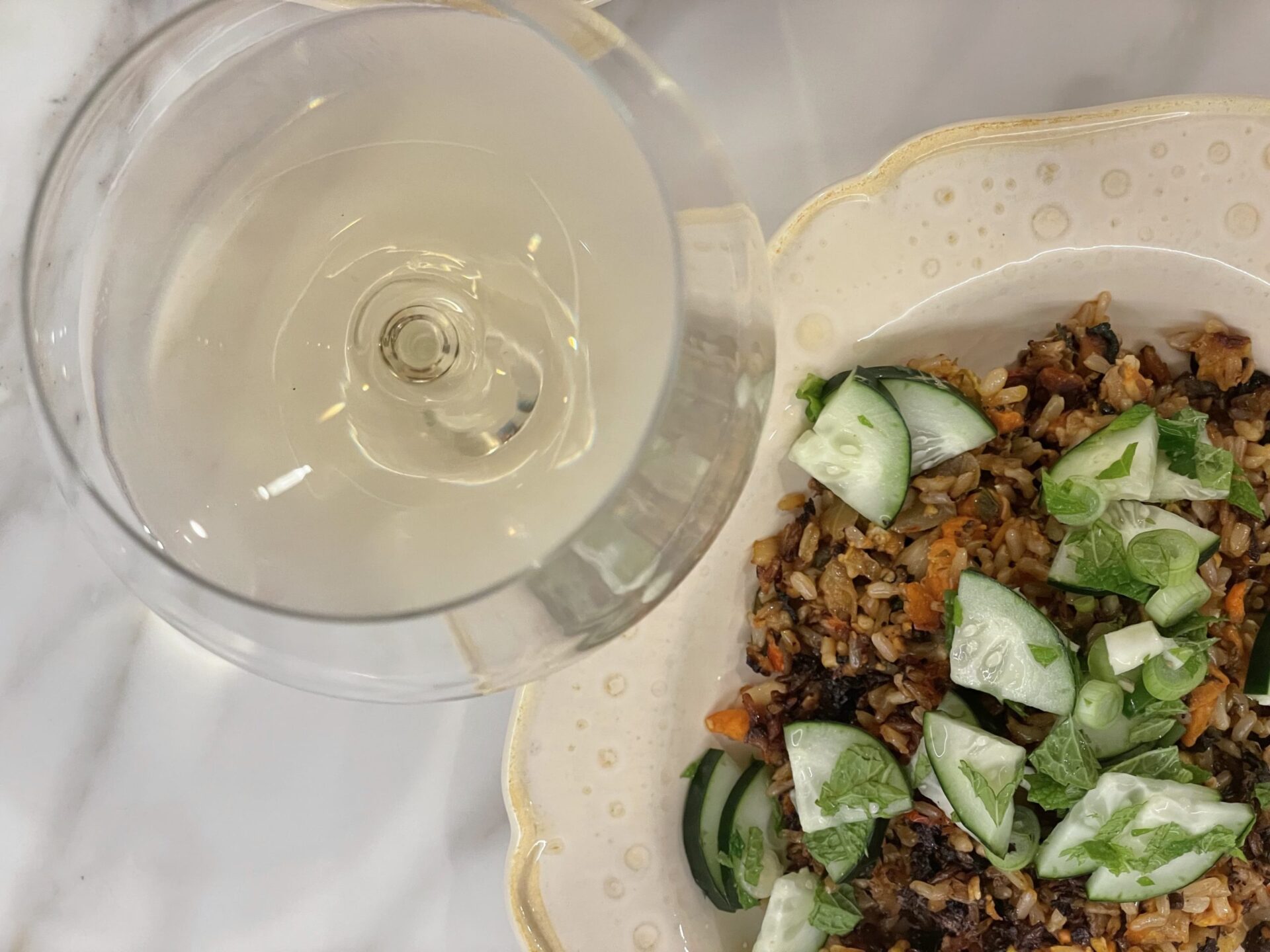
Thai Fried Rice
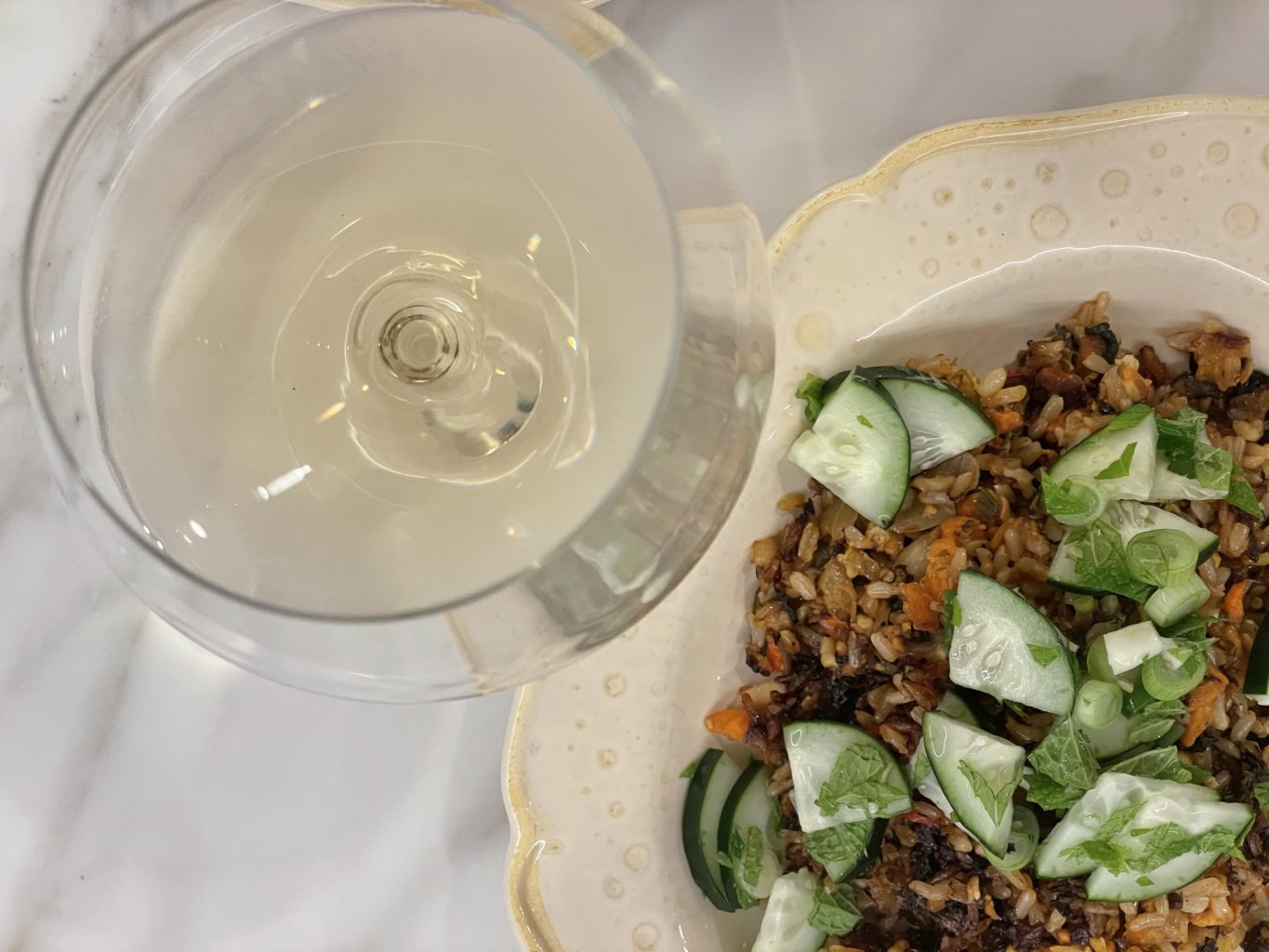
Thai Fried Rice
Serves 2
What I love about fried rice is that it’s easy and versatile! You can basically throw in whatever vegetables you have in the fridge, making it a great ‘Tuesday night’ recipe. When I tasted this with the 2009 Domaine Bohn Riesling I new it was a match made in heaven. This is a great example of how food can elevate a wine and vice versa!
Ingredients:
2 cups jasmine rice
1 sweet potato
1 serrano chile
1 red jalapeño
1 cup cremini mushrooms
1 cup white cabbage
1 roughly chopped tomato
1 cup rapini
3 garlic cloves
Cracked black pepper
1 tablespoon chili sauce
1 tablespoon minced ginger
1 tablespoon Thai fish sauce
Chicken stock
SunCoco oil or canola oil
4 eggs, beaten
Handful chopped mint
1/2 a cucumber sliced into rounds and then quartered
1 lemon
1 lime
2 scallions
- Combine the rice and 3 cups chicken stock to a pot. Bring to a soft boil and then reduce to simmer, cover, and cook for 20 minutes or so. Note: keep adding chicken stock, the rice will absorb the stock and keep it light and fluffy.
- Chop the peppers, sweet potato, and tomato. Heat a skillet with enough oil to cover the bottom and sauté the peppers, sweet potato, and tomato over medium to medium-high heat.
- Slice and quarter the cucumber and slice the scallion. Set aside.
- Mix in the beaten egg.
- Chop the garlic, mushrooms, and cabbage. Roughly chop the rapini. Add everything it the skillet once the sweet potatoes start to soften. Note: You could wait to add the rapini until 3-5 minutes before serving.
- Add cracked black pepper to taste.
- Add and mix in the chili sauce, ginger, and fish sauce.
- Once the rice is cooked through, add to the skillet and mix everything together thoroughly.
- Scoop the rice up and press it down into the pan. Allow it to cook and start to crisp and brown underneath. Once golden, scoop the rice up again and press it down. Do this until you’ve reached your desired crispiness.
- While the rice is browning, mix the quartered cucumbers in small bowl with chopped mint, lemon + lime juice, and the sliced scallion.
- Serve the rice into shallow bowls and garnish with cucumber mixture.

Meet the Maker: Piro Wine Company
Just two hours north of Los Angeles, Santa Barbara County is home to one of the most southerly “cool climate” wine regions in the Northern Hemisphere. One of our favorite places to source wine from. The transverse mountain ranges act as a funnel to usher in cold air, marine layer fog, and wind; all desirable …
Meet the Maker: No Name Wines
Just two hours north of Los Angeles, Santa Barbara County is home to one of the most southerly “cool climate” wine regions in the Northern Hemisphere. One of our favorite places to source wine from. The transverse mountain ranges act as a funnel to usher in cold air, marine layer fog, and wind; all desirable climate traits for making phenomenal Pinot Noir and Chardonnay. Days here are filled with sunny skies and fluffy clouds, and the nights are cold with incoming fog. Vines are planted on ancient marine soils from the pacific that give the wines a very distinct flavor profile and minerality.
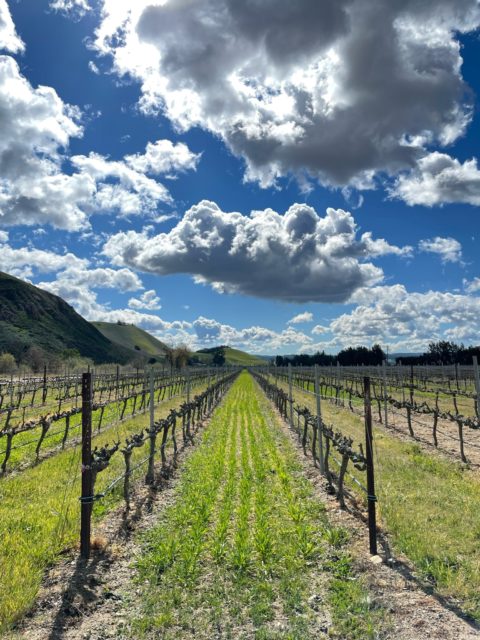
I came to Marc with this project a few years ago, wanting to bring a very specific product to our consumers. I wanted Marc to be behind the brand because not only do I have confidence in his winemaking style, but I also love the vineyards he is sourcing from. Marc has walked us through the vineyard sites for each of these wines, really giving us an intimate experience on where these grapes are coming from.
The story behind the No Name project came from a desire to source something that we couldn’t find elsewhere, and Marc really brought it home for us with this Chardonnay and Pinot Noir. The label design was an inspiration from our four faces behind Argaux, and the “No Name” name being a representation of the teamwork behind our brand as a whole.
Once things were in motion, Marc invited us up to the winery to be a part of the blending for the Pinot Noir. We tasted barrel samples from several different vineyard sites, and created the final blend based on the different qualities that each site had that ultimately complimented each other. This experience really made us feel like we are a part of every bottle made.
Marc Piro knew he wanted to be a winemaker when he was nine years old. He sat in the crowded backseat of his family’s beige Mercedes diesel station wagon as they drove through the vineyards of Sonoma’s Dry Creek Valley. Inspired, he announced, “Mom, I want a vineyard.” Her response was curt: “Well, then, get a good job.”
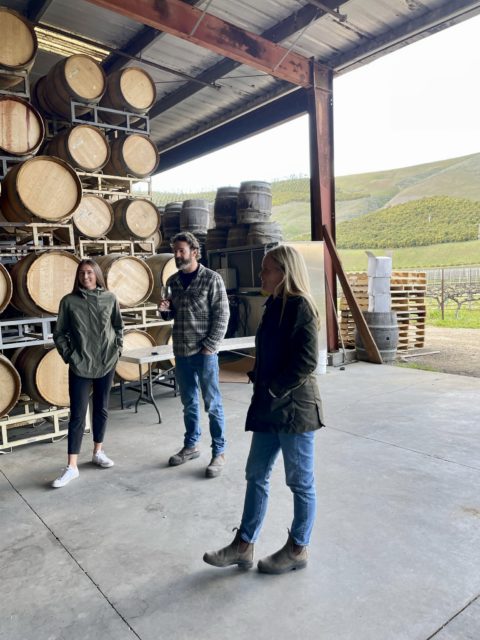
Marc grew up in Marin County and visited Santa Barbara for the first time when he was fifteen. From that moment on he knew he wanted to end up there. True to his boyhood promise, Marc fulfilled his dream by launching Piro Wine Company, a boutique label focused on his favorite varietal, Pinot Noir. As he puts it, “I strive to make old world style wines from the new world: extremely delicious wines of balance, elegance, and structure.”
Some Fun Facts About Marc:
- Marc is an avid surfer
- Marc has two young kiddos, a two year old named Layla and a 6 month old named Charles. Layla is already hitting the waves with dad
- Played bass in a reggae band
- Has visited the two longest piers in the Southern Hemisphere
- Practices Sustainable Farming
- Marc is an avid collector of birth year wines, and loves to share them
From Marc:
“I make wine because wine inspires cheer. It makes me happy to make others happy (and drunk).”
“The quality of Pinot Noir and Chardonnay from the area is some of the best in the world. We sit down for lunch every day at the winery and open up Pinot from all over the world and taste it next to our own. The Santa Barbara Pinot is a top contender every time.”
“With acidity comes balance.”
Lightening Round Q&A:
- What is your greatest extravagance? Guitars.
- What is the quality you like most in a partner? Fun.
- What word or phrase do you overuse? Idk.
- When and where are you happiest? The beach, outside where it’s sunny…or my couch.
- If you could have one superpower, what would it be? Being able to jump really high, like 60 or 100 feet.
- What life achievement are you the most proud of? Making wine for Kelly Slater’s Surf Ranch.
- What winemakers do you most admire? Jim Clendenen and Bob Lindquist, Ernst Storm, Jim Adelman.
- Which historical figure would you want to share a bottle with? Jesus.
- What motto do you live by? Treat yourself, don’t beat yourself.
- Best wine you’ve ever tasted? 1982 Pichon Lalande.
- What is your spirit animal? Dolphin.
- How do you relax/decompress? I have a beer in the sun.
- What do you drink when you’re not drinking wine? Cold beer!
- Soundtrack to your life: Never Give Up.

About the Wines:
Chardonnay: On the nose, it’s vibrant with aromas of yellow apple, wet stone, backing spices and lemon zest. It’s zippy yet round & silky on the palate. Lightly buttered with hints of coconut and vanilla, finishing with flavors of ripe pear. Note: If you like Rombauer Chardonnay, you will like the No Name Chardonnay. It’s rich and flavorful without being overpowering, and introduces that slightly higher acid level from the cooler climate in Santa Barbara.
Pinot Noir: This Pinot is perfectly balanced, it’s Volnay-like, full of ripe cranberry and cherry flavors met with black tea and cacao. Blueberry and cola complement each other nicely as it finishes with slate-like minerality and soft, smooth tannins. Note: If you like Bourgogne Rouge, you will like the No Name Pinot Noir. It’s vibrant, fruit forward, complex, with a great mouth feel.
Some of Marc’s favorite wines from the shop (other than No Name) are:
Domaine de Semelles Châteauneuf du Pape
Domaine Rougeot Clos des 6 Ouvrées
Suggested Pairings:
- The Chardonnay pairs great with winter squash soup, white chicken chili, and Mexican dishes.
- The Pinot Noir pairs great with rotisserie chicken, vegetables on the grill, and mushroom risotto.
Speaking of food…
At Au Bon Climat, Jim Clendenon held a tradition of making a huge lunch for the winemakers and staff every single day. After his sad passing just under a year ago, Marc and his team still uphold this tradition and sit down for lunch daily. They open up great wines that spark great conversation, while enjoying each others’ company.
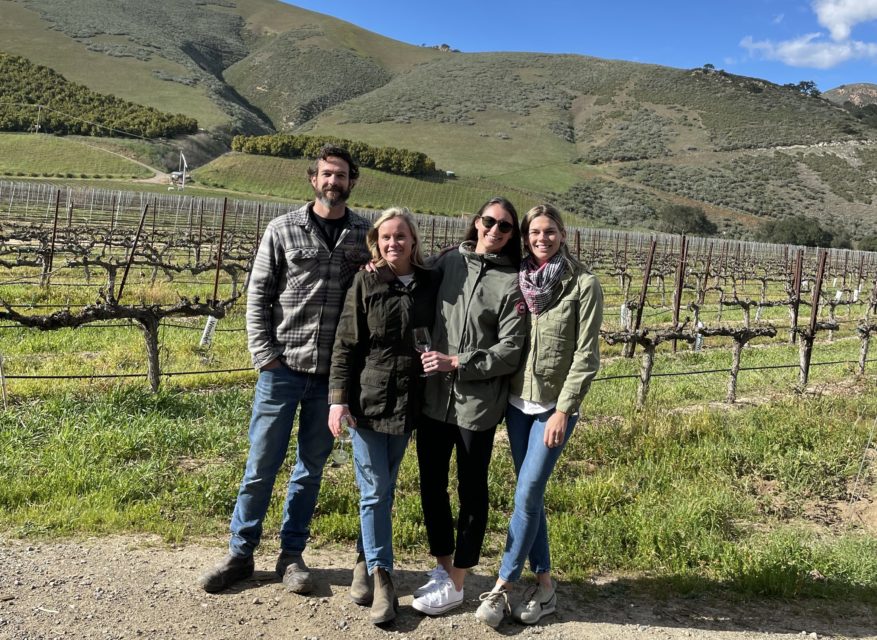
There is something special about this; I think I can speak for many working professionals who barely take time for lunch during the work day including myself. The act of sitting down and enjoying the food and wine in front of you in such a ceremonias way is pretty beautiful. It goes back to the center of our ethos here at Argaux, wine is a catalyst that brings you to the table and forces you to sit down, take a breath, and soak up the present moment.
Best Wine for a Summer Party
Best Wine for a Summer Party
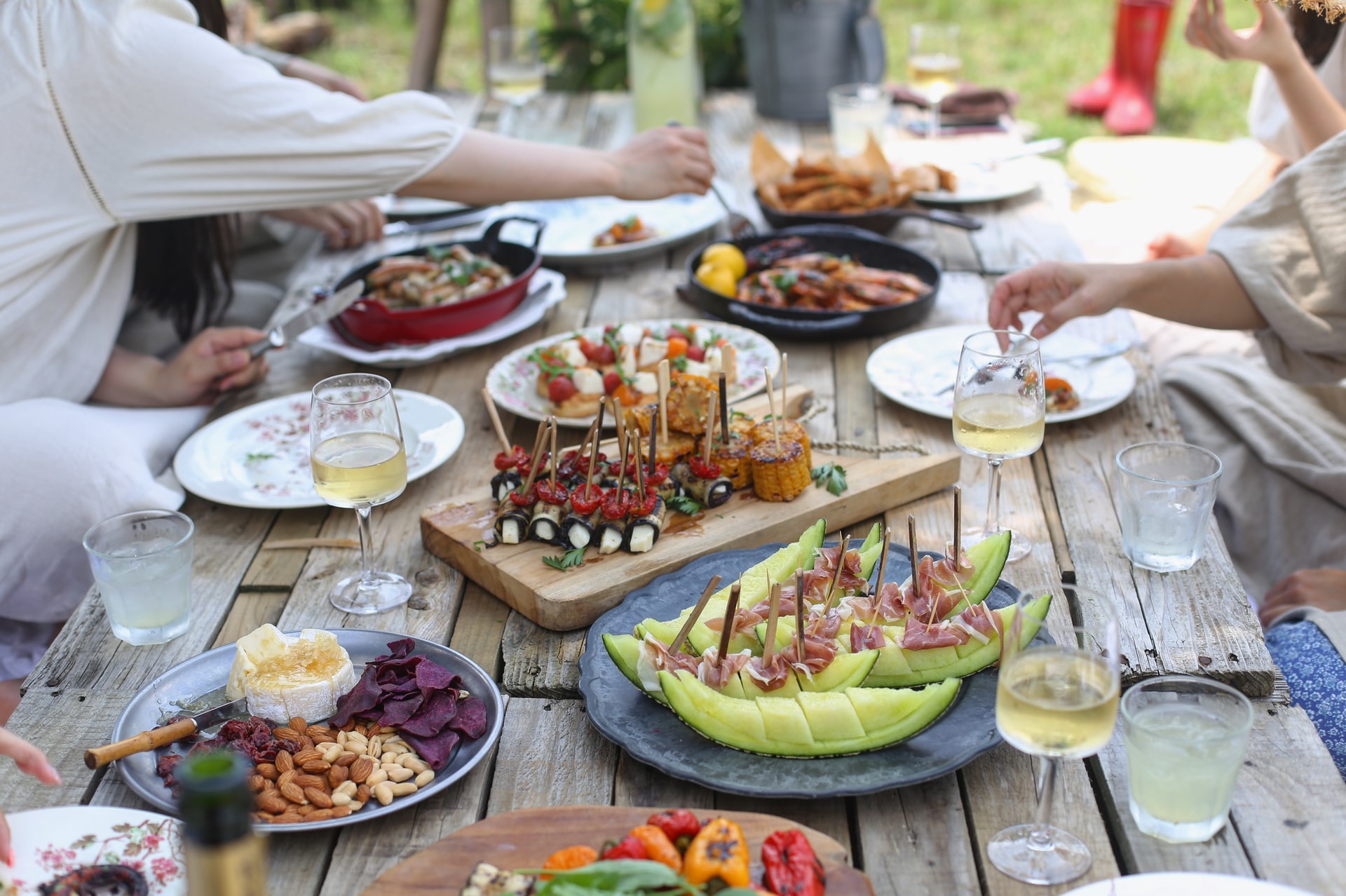
The clouds are clearing, the sun is beginning to shine, and the Solstice is right around the corner. It’s time to bring our lawn chairs, blankets, and blindingly-white tablecloths out of hiding and set up for 2024’s array of inaugural Summer soirees – surely the first of many after a long and rainy winter.
You’ve spent all spring planning your charcuterie, your dessert selection, flower arrangements, treats for the dogs – every detail is planned and in its place. And now it’s finally time to make that last and all-important choice: what are you going to drink?
Allow us to make some suggestions.
What to look for in a summer wine
Generally, when the weather gets a bit steamy or errs on the arid side, you want a beverage that’s going to refresh, replenish, and cool you off. Lighter rosés, whites, and chillable reds, will all be your best friends during the hotter season. We can’t forget to add a little bubbles to get the party started!
Summer is the perfect time to explore and enjoy wines from regions known for producing refreshing, vibrant, and seasonal-friendly options. Think rosés from Provence, whites from California, Pacific North West, New Zealand, and France, and chillable reds from Argentina make the perfect lineup for your summer party!
Best wines for a summer party
- 2022 Chateau Barbebelle Coteaux d’Aix en Provence ‘Fleurie’ Rosé – $23
This is the quintessential Provence rosé. It’s perfect for sipping on any time of the day, with or without food, and embodies the endless summer we all are looking for in a glass of rosé. - 2022 Chateau Barbebelle Aix-en-Provence ‘Cuvée Madeleine’ Rosé – $25
With slightly richer flavors than the Fleurie Cuvée, this is the perfect wine to kick off your dinner party. This rosé is the perfect transition to take you from l’apéro on the patio to apéro dînatoire.
Argaux Test Kitchen Favorites and Wine Pairings:Grilled Summer Vegetables: Grilled vegetables, with their charred edges and rich, earthy flavors, pair beautifully with a rosé wine. The wine’s crisp acidity and fruity notes, ranging from berry to citrus, provide a refreshing contrast that complements the smokiness of the vegetables - 2021 Herd & Hart Western Cape Sauvignon Blanc – $20
This Sauvy B is incredibly refreshing. It has bright citrus fruit and florals, but finishes off with a touch of salty ocean sea breeze that reminds you it’s from the Western Cape. - 2022 Par Fore The Course Sauvignon Blanc – $20
This wine is all about bright flavors, approachability, and thirst-quenching freshness. The flavor lingers, but the wine goes down fast. It is Marlborough, New Zealand to a Sauvy B TEE! - 2020 Evening Land Salem Wine Company Chardonnay – $30
Evening Land Vineyards is the Oregon-based brainchild of Sashi Moorman and Raj Parr, two of California’s most revered winemakers. Chardonnays from this specific area of Oregon are frequently compared to those of Burgundy, and this slightly reductive, incredibly complex bottling is no exception! - 2022 Cantine Carlo Mazzella Ischia Biancolella – $26
Sancerre, Gruner Veltliner, Vermentino lovers – This one’s for you.Grown on the volcanic island of Ischia, this wine quite literally tastes like the azure waters of the Tyrrhenian SeaArgaux Test Kitchen Favorites and Wine Pairings:Margaux’s Halibut Ceviche: The mild, delicate flavors of Halibut cured in citrus juices, vegetables and heat from jalapeno pair perfectly with the chilled white wines acidity.Ojai Citrus Salad: The fresh citrus, herbs like mint and crisp arugula elevates a chilled glass of white wine. The wine’s acidity balances the tanginess of the citrus, creating a harmonious blend.
- 2020 Gouchas Luján de Cuyo Carbonic Malbec – $22
This Beaujolais-inspired Malbec is exciting and oh so fresh. Fair warning, this could be your new favorite chillable red – seriously, we would drink a lot more Malbec if they all tasted like this. Bring this chillable red to a sophisticated soiree in a summer garden, or to an western themed party…Yellowstone anyone? - 2021 Piro Points West Santa Maria Valley Pinot Noir – $34
This is our staple Pinot Noir. It’s a wonderful example of cool climate Pinot Noir from the central coast. It’s light and bright with a purity of fruit that makes it go down way too easy. Pair this with white meat, grilled fish, pizza, and so on. The balanced profile of this wine makes it extremely versatile. - 2019 Contratto Metodo Classico Pas Dose Millesimato – $34
You are drinking history when you pop this cork. This 19th century estate is the birthplace of Metodo Classico and these wines have graced the tables of not only the Vatican, but also the House of Savoy (the Italian Royal Family), as well as the British monarchy throughout history. This is dry, refreshing and incredibly food friendly.
Argaux Test Kitchen Favorites and Wine Pairings:
Smoky Sweet Carnitas: The bold smoky sweet carnitas with fresh lime and heat from the crisp jalapenos pair perfectly with a chilled red.
Summer BBQ Series: Smash Burgers w/ Grilled Veggies: Juicy and cheesy smash burgers are a must have for the summer party!
THE SUMMER SPRITZ KIT – $98
When the summer heat calls for a refreshing and vibrant drink, our Summer Spritz Kit is your go-to. This kit is perfect for those balmy afternoons and evenings, offering a versatile and bubbly companion to a variety of dishes. The Argaux Summer Spritz is the perfect match for moments firing up the grill, enjoying a cheese & charcuterie board before dinner, or when you’re looking for something refreshing to cool down with.
Argaux can help
Whatever the size of your soiree, Argaux has a vast selection of delicious small-batch wines that are sure to suit an array of tastes. Our team of sommelier’s are ready to help make your party one for the books! Be sure to email info@argaux.com or call (949) 438-7228 for more wine pairing assistance!
Looking to learn more about wine? Check out our latest Wine 101 resources.
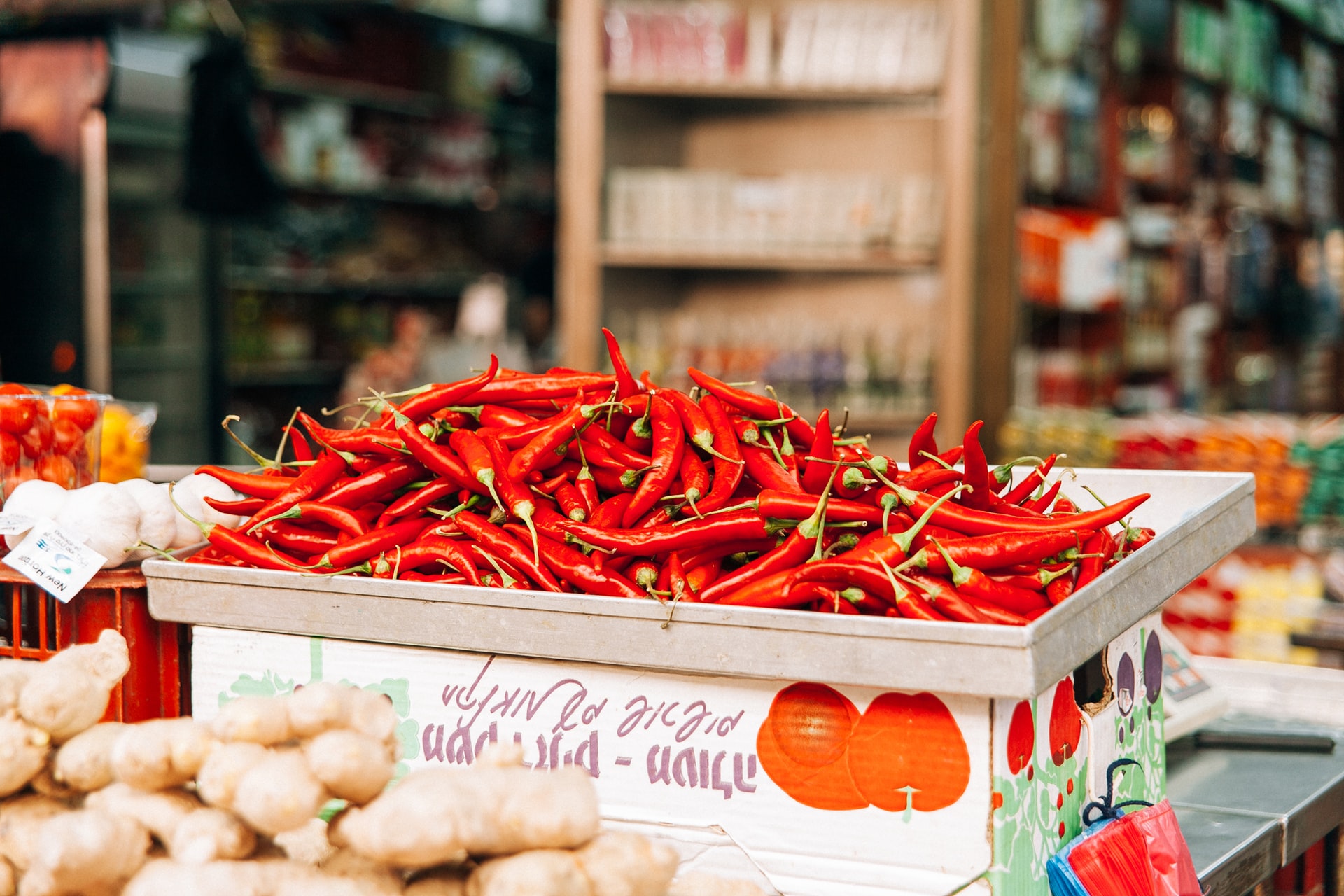
Best Wine for Spicy Food
Alcohol is not the most intuitive beverage of choice when it comes to picking the right pair for a super-spicy meal. Capsaicin, the chemical that makes hot peppers hot, has an inflammatory effect on our taste buds, which can make an otherwise soothing sip of wine feel like downing straight lava. Ironically, alcohol is the most efficient method of clearing a suffering tongue of a spicy coating, however a sugary soda will be a far more pleasant way to do so.
But we’re all adults here, right? Our palates can take a little punishment from time to time, especially if our beverage in hand is a magic match for the meal in front of us.
So let’s talk about how to find the right wines that go with some of the spicier dishes in the world.
What to look for in capsaicin-compatible wines
If you want to drink wine alongside your peppery app, but prefer to leave the experience with your tongue intact, the best way to do so is to pour yourself a glass of chilled, sweet, and low-alcohol white wine.
Less alcohol means less of a burn for those poor taste buds. More sugar means quicker relief from the capsaicin, and refrigeration offers an extra soothing touch to the sip. All of this combined allows you to better experience the flavors of your dish, as well as your wine, as neither will be doomed to obscurity thanks to the overwhelm of the guilty pepper.
If you prefer reds, look for similar qualities – sweeter profiles and lighter bodies will offer a similar benefit as their paler cousins. Whatever you do, avoid wines with heavy tannins, unless you enjoy a side helping of pain with your meal.
Best wine for spicy food
Here are some special bottles from the Argaux collection guaranteed to soothe after a bite of something spicy.
- 2020 Von Winning Paradiesgarten Riesling Trocken – $39
Germany may not be known for its super-spicy cuisine, but Stephan Attman, winemaker extraordinaire, sure knows how to cool it down.
A Riesling is the first bottle you should reach for after you’ve been a little too generous with the cayenne. And this is the first Riesling you should reach for. Quintessential aromas of green fruits, citrus, apricot, and white peach finish on a smooth and citrusy palate that’s perfect next to tacos, or your favorite maki roll smeared with plenty of wasabi paste.
- 2020 Hirsch ‘Hirschvergnugen’ Gruner Veltliner – $23
We’re on a very niche roll so far with another Germanic western European lime-and-green-apple driven wine. Except this one’s a white rosé!!
Springtime in a bottle, we urge you to take the time to savor every single drop that comes out of this exquisitely floral bottle. But rest assured, we understand if you need to swig a little after a mouthful of extra spicy vegetarian Thai green curry.
- 2020 Domaine Rougeot Bourgogne Passetoutgrain ‘Sans Sulfite’ – $38
Taking a break from our alpine wines, we head over to another region not exactly known for its chili-forward foods. Somehow, wines that go well with the creamy, fatty foods of French cuisine also manage to pair with hotter fare.
This beautiful Gamay/Pinot Noir blend soothes the palate with red fruits, stony minterality, and a grounding earthiness that will tie you to the planet even while you float above it after panting your way through a bite of Gan Guo Mushrooms.
- 2020 Weingut Griesbauerhof Alto Adige Pinot Grigio – $28
A zesty and complex Pinot Grigio that does its best to distance itself to the blase day-to-day of the rest of its kind. This palate has it all: stone, flowers, fruit, zest, cheese, even a few nuts here and there. It is rich, interesting, and utterly drinkable – especially when your face is on fire.
- Topa Topa ‘Dos Topas’ Lager 6-Pack – $12
Surprise – it’s beer! Really, really good beer. A beer that makes you believe the brewers at Topa Topa learned to coax the flavors of a lazy day at the beach into a barrel and were generous enough to share a can of this magical concoction with you.
The flavor profile of this lovely lager is professed as “cracker, maize, and crisp,” which we think just begs to be paired with street tacos topped with pickled haban֮ero peppers.
- NV Sorelle Bronca Extra Dry Prosecco – $22
For an extraordinary sensory experience, we urge you to follow up your spicy foods with a sip of this delectable ‘secco.
Sweet, fruity, refreshing, and with a saline finish, this Prosecco is an extraordinary pair with hard cheeses and cured meats. We’re thinking pepperoni pizza with a spicy red sauce.
Argaux can help
Maybe you’re the adrenaline junkie type who likes to take every sensory experience to the extreme. We’re seeing tears streaming down your cheeks as you gleefully take your second bite of chocolate bhutlah pepper. If this is the case, a sweet and soothing wine may not be for you. So why not check out the rest of our collection and see what wines will match your unique gastronomic needs?
Our pocket somm application connects you to our panel of expert sommeliers who are only too happy to help you find an Argaux wine that does what you need it to do – from food pairing to flavor profile.
Or, if you prefer to figure it out for yourself, pick up any of our wine tasting kits which will help you learn about the world of wines while you sip – alone, or with friends.
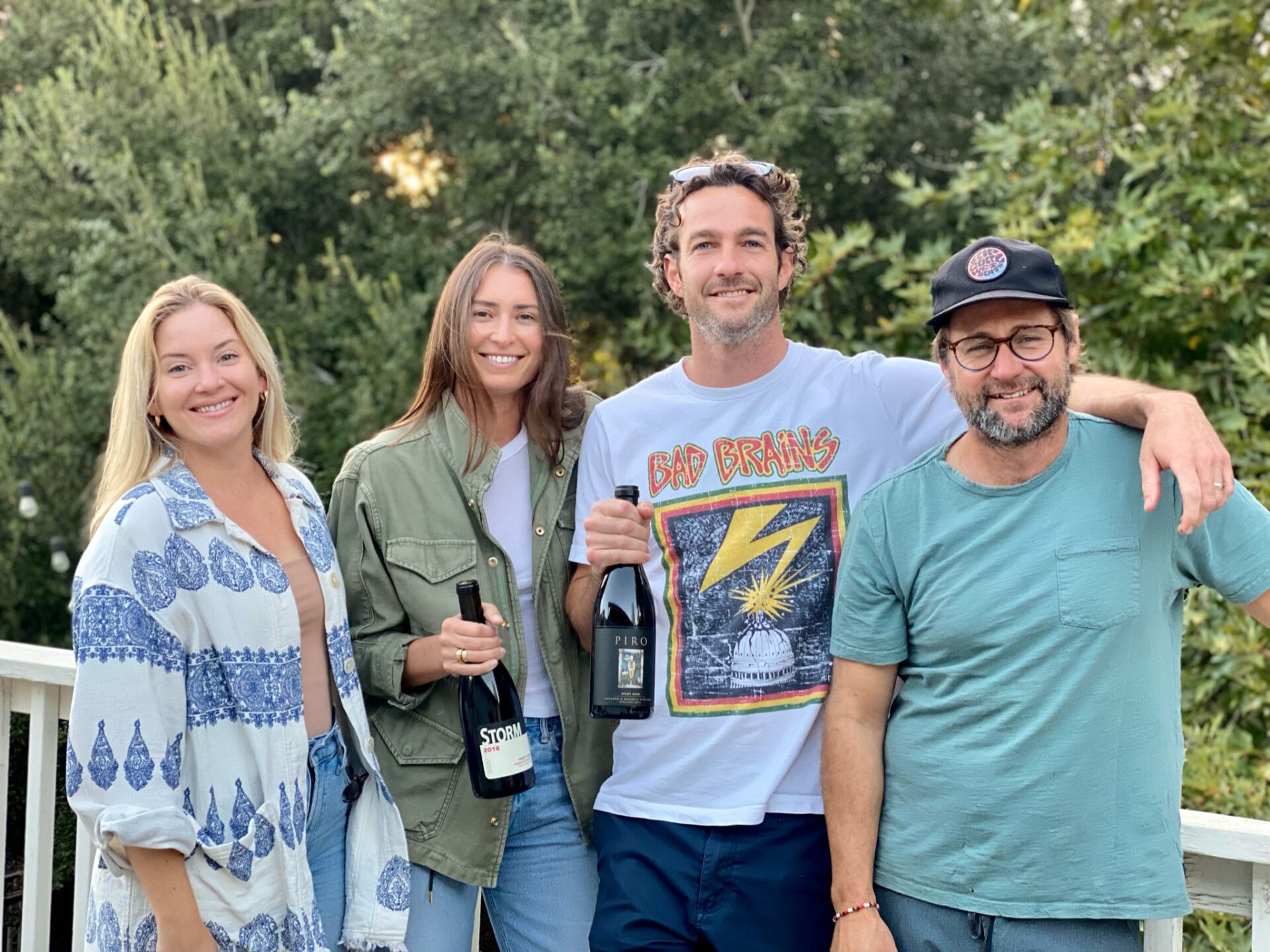
A Weekend in the Santa Ynez Valley
Craving a California wine trip, but don’t know where to start? Recently named 2021 Wine Region of the Year by Wine Enthusiast, Santa Barbara County is your ultimate getaway; Trust us!
Located on the central coast of California just two hours north of Los Angeles and about four hours south of the San Francisco area, Santa Barbara County is home to many ‘hidden gem’ wineries. Sitting right in the heart of Santa Barbara county is our personal favorite destination, the Santa Ynez Valley.
It’s hard to properly put into words how special this valley truly is. This under-the-radar region gives off just the right vibe and will provide you with the perfect combination of fun, adventure and relaxation. It’s no wonder they’re already seeing a massive boom from tourists alike!
The Santa Ynez Valley is home to the popular local towns of Los Alamos, Los Olivos, Buellton, Solvang, and Santa Ynez. Each town has their own distinct personality and boasts a multitude of tasting rooms, wineries, breweries, shops, and restaurants that are ready to excite your palate. Many of these businesses are still family-owned and smaller in production, adding to the reasons why we love them so much!
The Bigger Picture:
North of the city of Santa Barbara and just inland from Gaviota lies the Santa Ynez Valley AVA, which contains a subset of four additional AVAs, each with their own unique climates and profiles for grape-growing and winemaking.
Beginning in Lompoc, the Sta. Rita Hills AVA stretches east to the town of Buellton, producing some of Santa Barbara County’s most prized and renown Chardonnay and Pinot Noir bottlings. Ballard Canyon AVA lies just beyond the Sta. Rita Hills AVA. It borders the Los Olivos District AVA, the newest of these areas. Lastly, Happy Canyon of Santa Barbara AVA is on the most eastern border of these AVAs, and is generally the warmest site for grape-growing production.
Quick note: It’s important to have a a ‘gaux-to lunch spot on your way to the valley when driving north. Look no further than Bettina. Save room for olive oil cake and then continue your way north to SYV!
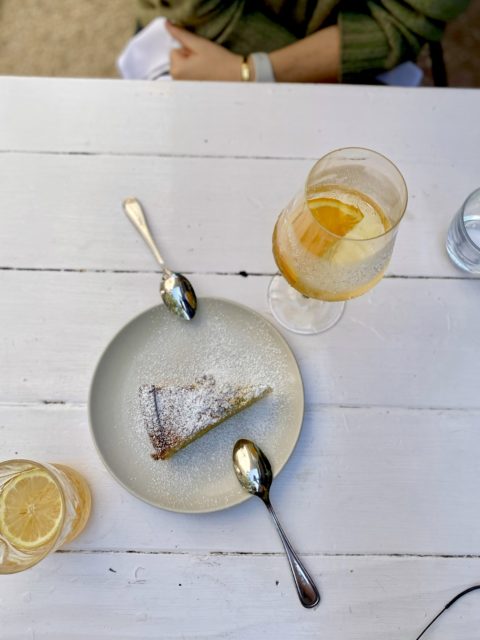
First Things First:
Breakfast (and coffee) are the most important meals of the day, am I right? Here are some of our go-to-selections whether you have 10 minutes or 2 hours:
- God’s Country Provisions (right in the Los Olivos town) – Delicious, crafty donuts.
- Bob’s Well Bread (Ballard or Los Alamos) – The most insane artisanal pastries and delights.
- Queen Cup Coffee (Santa Ynez) – Alyssa would live here if she could. Try the standard coffees or seasonal lattes. You can’t go wrong.
- Neighbor’s Coffee Cart (Los Olivos) – Stop in for a quick pick-me-up while sipping in Los Olivos.
- Brekkies Restaurant (Solvang)
- Succulent Cafe (Solvang)
- Mad & Vin (Solvang) – Brunch!
Ready for Round Two:
Don’t skip on lunch! We promise you won’t regret taking a few extra minutes from your tasting schedule to pop into one these local favorites:
- Corner House Cafe (Los Olivos)
- Panino (Los Olivos)
- Los Olivos Wine Merchant & Café (Los Olivos)
- The Lucky Hen and Larder (Santa Ynez) – Cheese board, anyone? This spot has artisan sandwiches and cut-to-order cheese.
- Peasants Feast Restaurant (Solvang) / Peasants Deli & Market (Solvang)
The Evening Doesn’t Have to End:
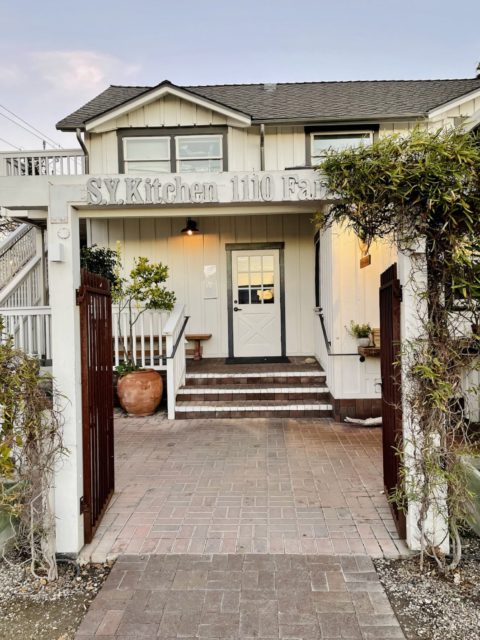
Whether you’re dining for 1 or with a large group of friends, these are a few of our treasured spots for dinner. The chefs, the food, the atmosphere; We can’t rave about each of these enough:
- S.Y Kitchen (Santa Ynez)
- Bell’s restaurant (Los Alamos) – Recently awarded a Michelin Star!
- Nella Kitchen & Bar (Los Olivos) – Sister to S.Y Kitchen
- Bar Le Cote (Los Olivos) – Seafood sister to Bell’s; Same female owner and chef.
- Coast Range & Vaquero Bar (Solvang)
- Industrial Eats (Buellton)
- Pico (Los Alamos)
- Gathering Table (Ballard)
- Full of Life Flatbread (Los Alamos)
For the home chefs: check out El Rancho Marketplace (Solvang) for all your recipe needs. Also, Finley Farms (Santa Ynez) for the best fresh local produce.
The Juice:
We’ve said it before and we’ll say it again, you really can’t go wrong with any of the tasting rooms or wineries within the valley. Here’s what we suggest for your first few visits:
Vineyard and Winery visits:
- Piazza Family Wines, Au Bon Climat, Peake Ranch, Spear, Brave and Maiden, The Hilt Estate / Jonata, Presqu’ile, Folded Hills, Tyler, Foxen, Melville, Sanford, LaBarge, and Roblar.
Tasting Rooms (Just to name a few):
- Lompoc:
- Santa Maria / Los Alamos:
- Bodega (Los Alamos)
- Tatomer (Santa Maria)
- A Tribute to Grace (Los Alamos)
- Los Olivos:
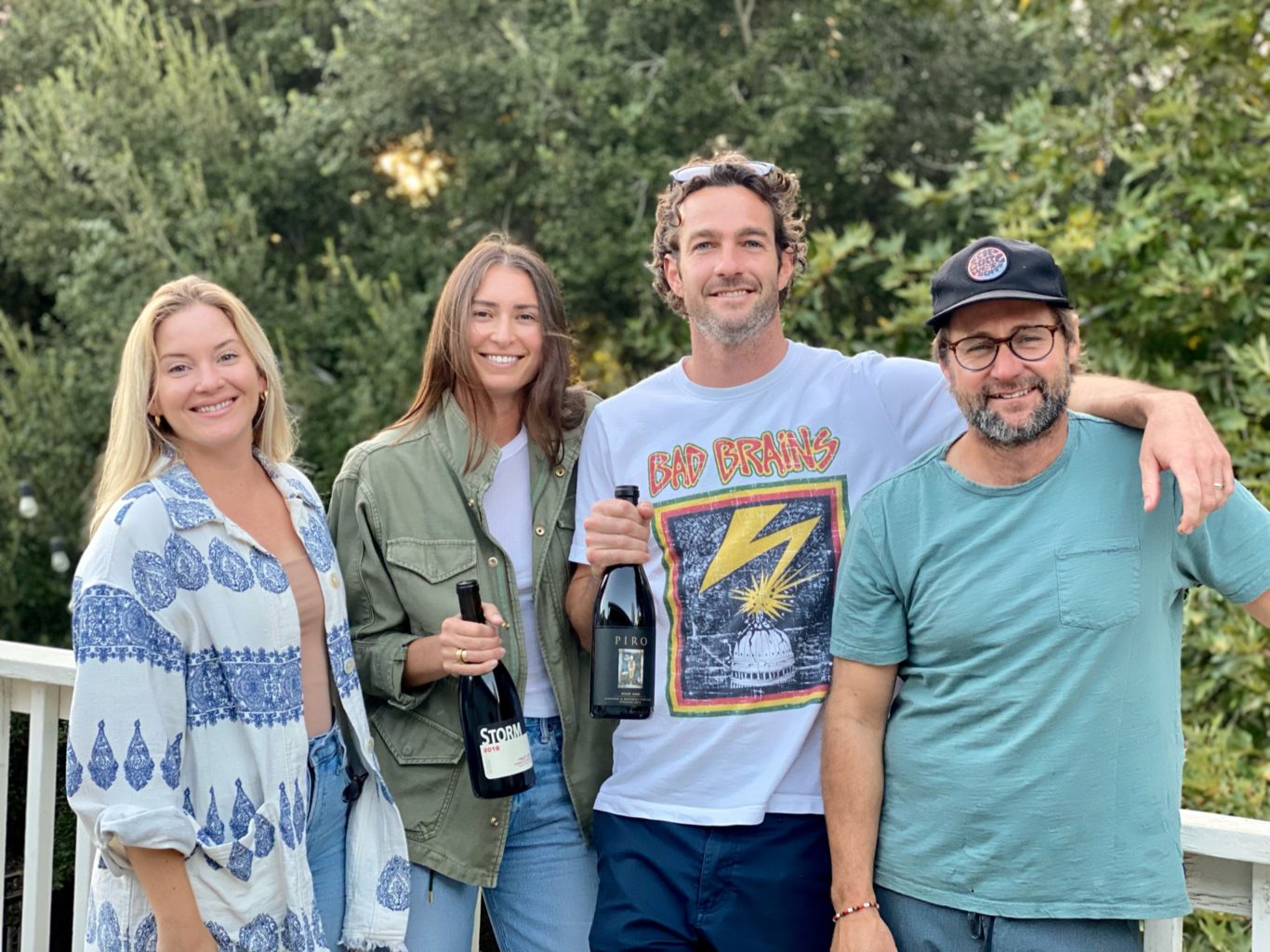
Wine Bars:
- The Hitching Post Restaurant and Winery (Buellton) – For all of our wine geeks, if you’ve seen Sideways, this is a must visit!
Breweries:
- Community Craft (Los Olivos) – Wine bar and craft brews.
- Figueroa Mountain Brewing Co. (Buellton and Los Olivos)
- Firestone Walker Brewing Company (Buellton)
A Little Rest and Relaxation:
The Valley is home to many wonderful (and comfortable) places to rest your head and your feet. These are a few we frequent:
- The Landsby (Solvang)
- Skyview (Los Alamos)
- Hotel Ynez (Solvang)
- Fess Parker Wine Country Inn (Los Olivos)
- 11 Oaks Retreat (Ballard) – Family-owned and operated by our friends at Carhartt, Find it on AirBnB!
- Ballard Inn (Ballard)
- Santa Ynez Inn (Santa Ynez)
We hope you enjoy your stay in our beloved oasis that is Santa Ynez Valley. Cheers!
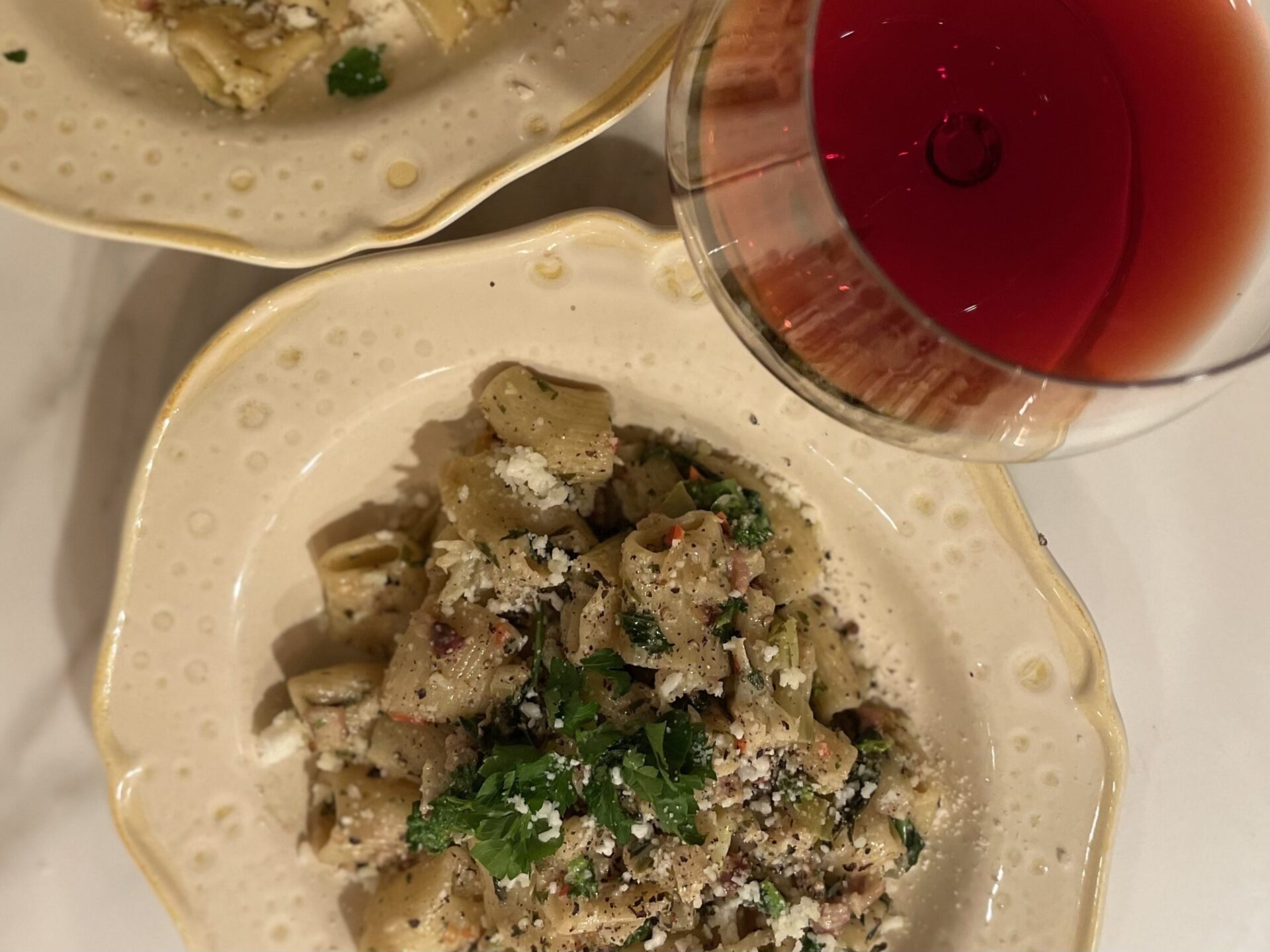
Rigatoni alla Cauliflower
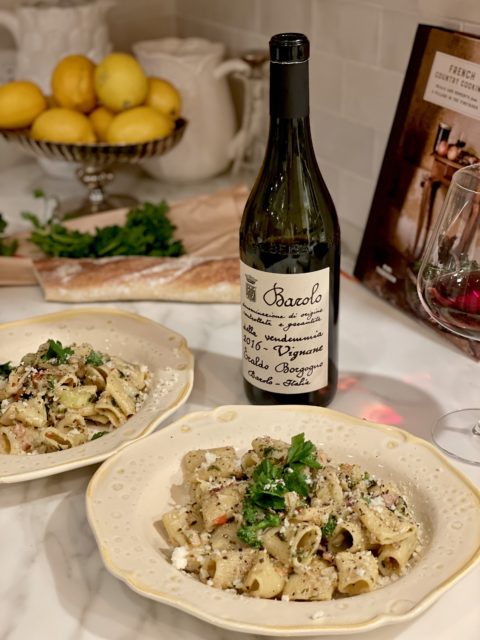
Ingredients:
- 1 head of Cauliflower
- Onion
- 1 tub of Creme Fraiche
- 1 bunch of Parsley
- Red Pepper Flakes
- 2 Red Chilis
- 1 tablespoon Nutmeg
- Pepper
- Salt
- Olive Oil
- 1 bunch of Broccoli Rabe
- 2 garlic cloves
- Lemon (Zest + Juice)
- Rigatoni
- Breadcrumbs
- Pecorino
- 3 pieces of Bacon
Chop the entire cauliflower (leaves, trees stalks, etc.), onion, the entire bunch of parsley (leaving some leaves set aside for garnishing), and the bunch of broccoli rabe (chop some of the leaves and then pick the trees and chop a few or leave them whole, however you prefer). Mince the garlic and chop the red chili. Zest the lemon. Set aside.
Boil water for the pasta.
Mix a handful of breadcrumbs, pecorino, and red pepper flakes together and toast in a skillet until golden. Be careful not to burn! These will toast quickly. Toss them around in the pan so they evenly toast. Set aside in a bowl.
Heat a large pot and add a lug of olive oil to the heated pot. Throw in the minced garlic and onion. Crack some black pepper and mix everything together and simmer until the onions are translucent. Add in the red chili, nutmeg, and chopped parsley and mix. Cut the bacon into 1/2 inch pieces and add to the mixture. Mix everything together and brown the bacon.
Add in the cauliflower and mix everything together. Cover and simmer on low for 20-30 minutes or until cauliflower is tender. Continue to mix and add in olive oil as needed.
Add pasta to the boiling water. While the pasta is cooking, add the broccoli rabe and stir the Creme Fraiche into the cauliflower mixture. The cauliflower by this point should be soft. If it needs to continue cooking let it cook through until soft.
When the pasta is ready, add it to the cauliflower mixture with a 1/2 cup – 1 cup of the pasta water. Mix everything together allowing the pasta water to mix well into the sauce. Season with some sea salt and lemon juice to taste.
To plate, spoon the pasta into a shallow bowl and garnish with parsley, cracked black pepper, pecorino, lemon zest and breadcrumb mixture. A little extra pecorino doesn’t hurt!
Pair with 2016 Eraldo Borgogno Barolo and enjoy!
Barolo Birthday Bash – From Our Co-Founders
It’s our birthday weekend – We’re turning 30 and we can’t believe it! As many of you know who have been with Argaux since the beginning, this company is about more than wine. Our story starts with friendship…
We met in college at the University of Arizona where we bonded over a shared passion and love for cooking. We became known as “dinner party enthusiasts” and our appetite for all things food and cooking fostered a newfound interest in wine. Various wine bars around campus became our library where we’d ponder the possibilities and dream up a business plan for what once was a passion project, and now a budding business. By our senior year in college friends called us Argaux and we were off to The International Culinary Center to become Certified Sommeliers.
We discovered early on in our friendship that we share the exact same birthday which gets us every year! So, every year on our birthday, we are reminded of this strange coincidence and always reflect on both our friendship and what we’ve created here at Argaux…
When Argaux first started 7 years ago, Margaux was the Chef and Arden was the Sommelier – Together we hosted private dinner parties throughout Southern California. Every week we met in the kitchen for a brainstorming session where we’d dream up and test original recipes, menus, and pairings for upcoming dinner parties. Cooking is Argaux’s first love and what opened the door for us to the world of wine. When asked what our favorite wines are, the unanimous answer, “…it depends on what we’re eating,” typically follows.
Our product is wine, but it’s our mission to inspire and connect people from all walks of life through food & wine, and the power that those two things have on our intellectual and emotional health. Wine is a catalyst for so much more than the glass in front of you. Paired with food, it brings people together around a table where ideas are born and connections are made. When that happens, anything is possible.
So, as we celebrate the end of a decade, a decade where Argaux was born and realized, we’re in the kitchen – celebrating the only way we know how! The recipes we are featuring this weekend are inspired by quality ingredients and the art of pairing wine with food…
The Spicy Italian Sausage Pizza is has a touch of heat that is complemented in contrast by the Castelvetrano olives from Sicily are buttery, sweet, and crisp!
The Chicken Marsala was a hit! We created a Marsala x Milanese situation that just WORKED! This dish is at once crunchy, savory, fresh, and a perfect pairing with Barolo.
Tonight we’ll be whipping up Rigatoni alla Cauliflower…
Italian food & wine holds a near and dear place in our hearts. We’ve traveled to Italy together, and so much of the culture there naturally bleeds into the culture here at Argaux given our obsession with quality ingredients. Some of our most memorable and favored meals/pairings have been with Italian food & wine.
We hope you were able to snag a bottle of the 2016 Eraldo Barolo we featured this weekend so you can toast with us to the next decade of Argaux with a classic wine that only gets better with age. The best is yet to come. Thank you for joining us on this journey as we continue to build a brand that reflects the simple pleasure in life and exists for the moments that matter most.
Cheers,
Arden + Margaux
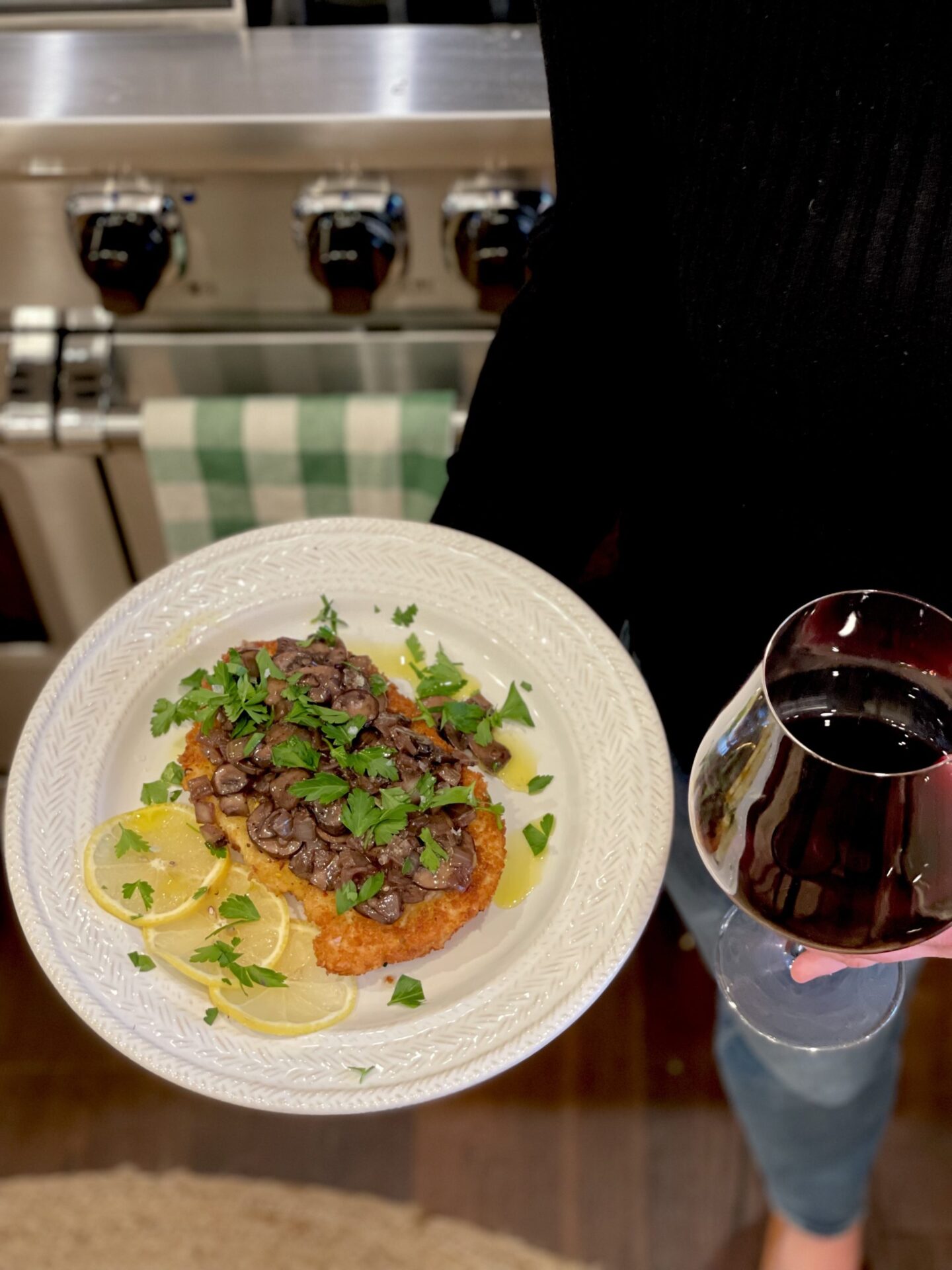
Chicken Marsala
- 2 tablespoons olive oil
- Salt and fresh ground pepper
- Red pepper flakes (optional)
- 8 oz. cleaned and thinly sliced button, Crimini or Shiitake mushrooms (or a combination)
- 2 shallots, minced
- 1/2 cup 2019 Domaine de la Tour Vieille Banyuls “Rimage” more as needed
- 4 tablespoons chicken stock, more as needed
- 2 tablespoons butter
- 1 tablespoon chopped parsley (optional, for garnish)
- 2-4 chicken cutlets
- Eggs
- Parmesan
- Bread crumbs
- Flour
- Sunflower oil
- Parsley
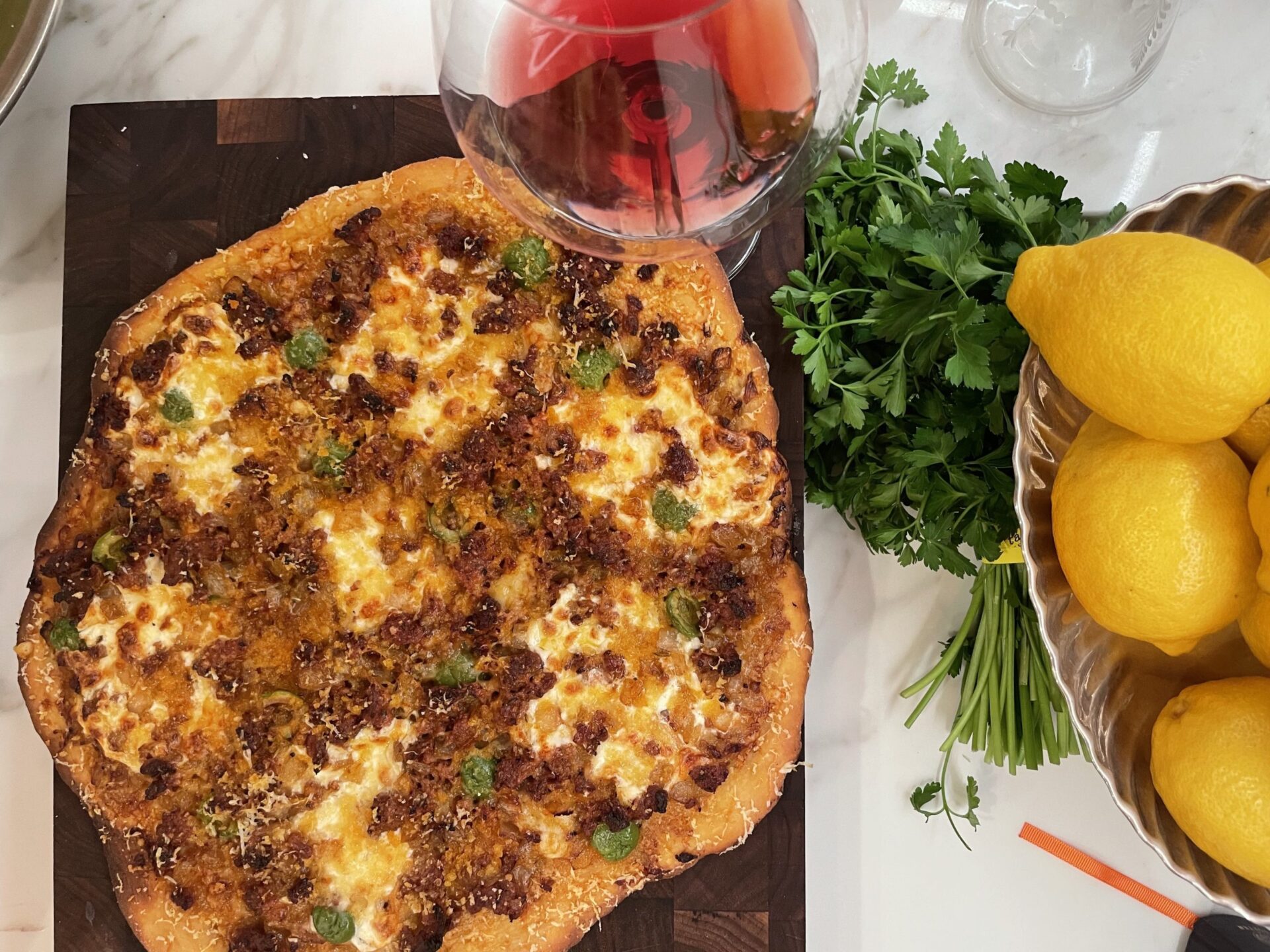
Spicy Italian Sausage + Green Olive Pizza
Ingredients:
- Pizza dough
- Fontina cheese
- Mozzarella cheese
- Castelvetrano olives
- Spicy Italian sausage
- Chili oil
- Olive oil
- Lemon zest
- Optional: Caramelized onions
Preheat oven to 500 degrees. Brown the sausage in a skillet until brown on each side and almost cooked through. The sausage will finish cooking through once in the oven. Shred your fontina and slice your mozzarella. Slice your olives in half lengthwise. Zest your lemon.
*If making caramelized onions, allow the onions to caramelize in a pan with butter for about 10 minutes.
Assemble your pizza! Drizzle some olive oil over the dough and start to layer the pizza with the fontina and mozzarella. Sprinkle the olives and sausage over the cheeses. Add the onions if you are using the caramelized onions. Sprinkle more cheese to your liking before placing in the oven. Bake the pizza for about 10 minutes and then check on it. All ovens are different so see where the pizza is at around 10 minutes and then gauge how much longer it needs to cook for depending on how crispy you’d like it.
Before serving, let sit for a minute or two and then sprinkle lemon zest and drizzle chili oil over the pizza. Pair this pizza with the 2016 Eraldo Borgogno Barolo and enjoy!
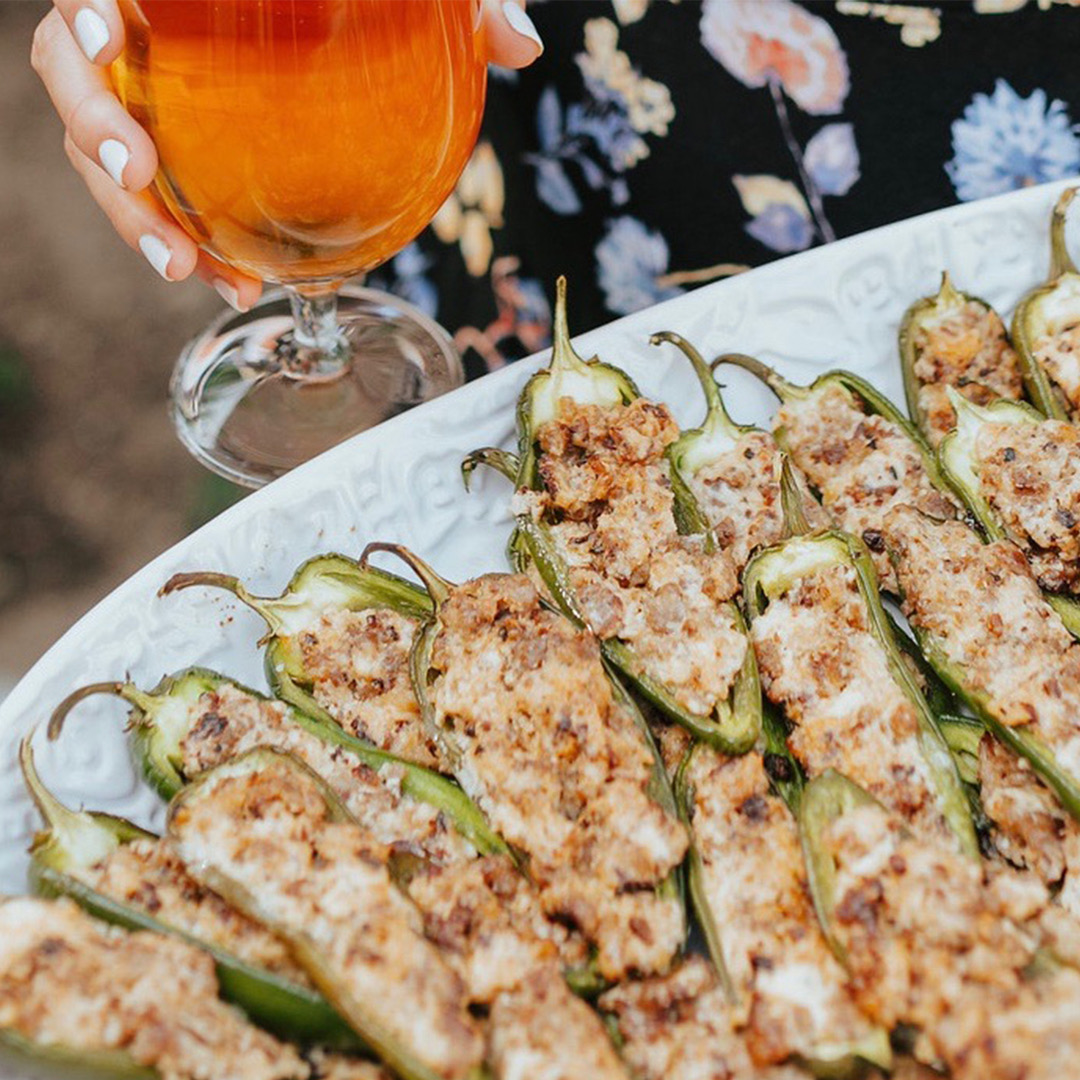
Super Bowl Sunday Jalapeño Poppers
10 Jalapenos